


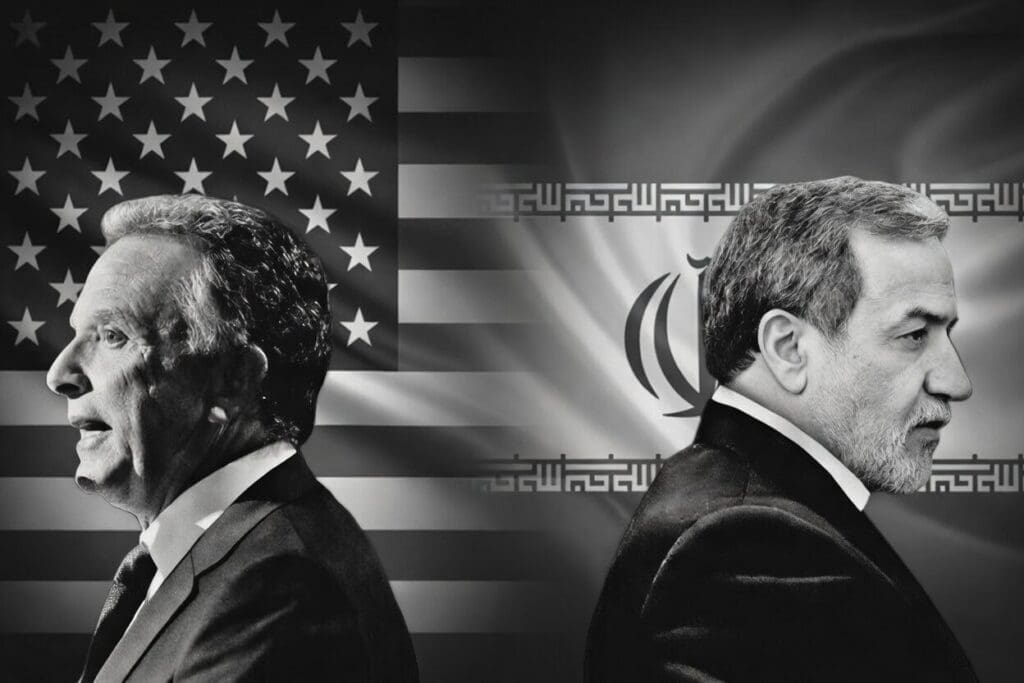
The second round of indirect high-stakes nuclear negotiations between the United States and Iran wrapped up in Geneva on Thursday with the Omani mediator hailing “significant progress,” but no breakthrough deal emerged. Technical discussions are now scheduled for next week in Vienna, even as the Trump administration maintains a firm stance on Iran’s uranium enrichment program and sanctions relief. The diplomatic momentum is tempered by aggressive US military posturing across the Middle East, a notable lack of public commentary from American negotiators, an urgent trip by Oman’s foreign minister to Washington, and a wave of international travel advisories for both Iran and Israel.
Omani Foreign Minister Sayyid Badr Al Busaidi, who has been shuttling between the two sides as intermediary, issued a measured update immediately after the day’s sessions. “We have finished the day after significant progress in the negotiation between the United States and Iran,” he posted. “We will resume soon after consultation in the respective capitals. Discussions on a technical level will take place next week in Vienna.” Iranian Foreign Minister Abbas Araghchi echoed the positive tone, calling the round one of the most intense yet and noting that Tehran had submitted written proposals. He added two sides agreed that technical teams will begin discussions and reviews in Vienna starting Monday and new round of negotiations will be held in less than a week.In stark contrast, the US delegation led by Special Envoy to Middle East Steve Witkoff and Jared Kushner has remained largely silent, with the White House declining to issue any detailed readout or optimistic statements of its own.
Oman FM’s Urgent Dash to Washington
Hours after the Geneva sessions concluded, Al Busaidi was already en route to the United States for high-level meetings in Washington today. The Omani minister is scheduled to brief Vice President JD Vance and other senior officials in an explicit push to keep the diplomatic path open and avert any military confrontation. The trip is highlighted as a last ditch effort to bridge remaining gaps before the Trump administration’s self-imposed deadline loom closer.
US Military Posturing Reaches Peak Intensity
While talks continue, the Pentagon has assembled what analysts describe as the largest US military presence in the Middle East in more than two decades. Two aircraft carrier strike groups including the USS Gerald R. Ford are converging on the region, accompanied by over 150 additional combat aircraft, including F-22 Raptors and F-35s forward-deployed to bases in Jordan, Qatar, Saudi Arabia, and even Israel. E-3 Sentry AWACS aircrafts and additional tankers support have been rushed into theater.
CENTCOM Commander General Brad Cooper personally briefed President Trump and Joint Chiefs Chairman General Dan Caine on potential strike options against Iranian targets. Reports also indicate non-essential personnel are being quietly moved out of vulnerable forward bases such as Al Udeid in Qatar and facilities in Bahrain a precautionary “evac” posture widely interpreted as “EVC” (enhanced vigilance and contingency evacuation measures) on US airbases in the Gulf. Iran has publicly highlighted these same bases as potential targets in any conflict.
Multiple Countries Issue Travel Advisories for Iran and Israel
Following the first round of negotiations and the subsequent escalation in rhetoric, embassies across the globe have issued urgent travel warnings. China became the latest major power to urge its citizens in Iran to evacuate immediately, citing the rapidly deteriorating security situation. Multiple other nations including Germany, France,Australia, India, and South Korea have advised their nationals to reconsider or defer travel to Israel as well as Australia, Brazil, China, Cyprus, Finland, Germany, India, Poland, Serbia, Singapore, Japan,South Korea, Sweden, and the United States have issued travel advisory for Iran.Note that some nations, such as the UK, have issued strong “do not travel” warnings or withdrawn diplomatic staff without explicitly calling for all citizens already in Iran to depart, so they are not included in this explicit evacuation list.The US State Department has gone further, authorizing non-essential embassy personnel and families in Israel to depart and warning American citizens to “reconsider travel” due to the risk of sudden escalation.
Israel Prepares Defenses, Strikes Hezbollah Targets, and Warns Against Involvement
On the Israeli front, the IDF has placed the entire country on heightened alert. Recent airstrikes have targeted Hezbollah missile production and storage sites in Lebanon’s Bekaa Valley, aimed at degrading the group’s ability to join any wider conflict. Israeli officials have delivered blunt warning to Hezbollah and Lebanese authorities: any involvement in a US-Iran war even limited will trigger massive retaliation, including strikes on civilian infrastructure such as Beirut’s airport. Hezbollah has signaled it will not intervene in a “limited” US strike on Iran but maintains red lines if Iranian leadership or territory faces existential threat. Israeli defense officials are simultaneously assessing the risk of Iran activating its full “axis of resistance,” including coordinated attacks from Yemen’s Houthis and Iraqi militias.
What Comes Next
The coming week will be decisive. Technical experts head to Vienna on Monday for detailed discussions on uranium stockpiles and verification mechanisms, while political-level talks could resume shortly thereafter. Oman’s intervention in Washington today is viewed by diplomats as the final push to find common ground before President Trump’s threats of military action become reality.


