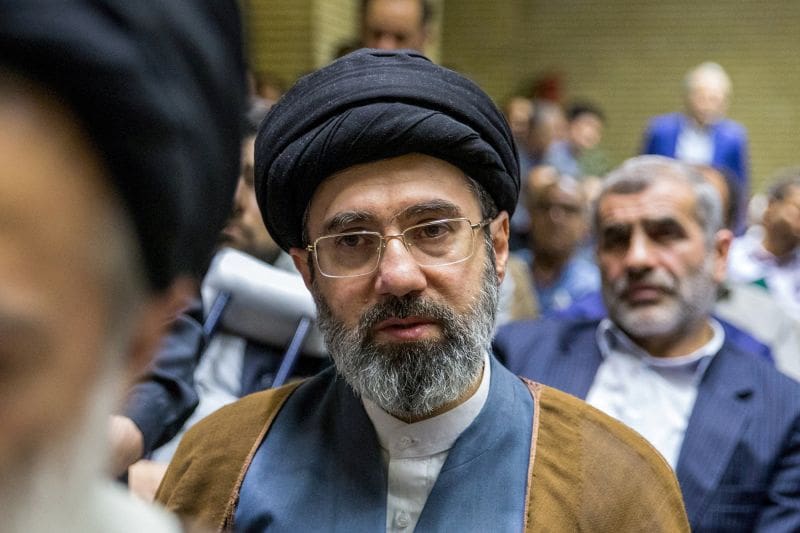
The United States has confirmed that Iranian Supreme Leader Mojtaba Khamenei survived the initial Feb. 28 airstrike that killed his father, then-Supreme Leader Ali Khamenei, a senior State Department official told Faytuks Network. U.S. intelligence was able to establish that Mojtaba survived the opening attack, but his physical whereabouts afterward have remained unclear to American intelligence, according to the official. The assessment provides new insight into what Washington knew about the fate of one of Iran’s most consequential political figures during the chaotic opening phase of the conflict.
Ali Khamenei was killed on Feb. 28 as U.S.-Israeli military operations against Iran began, a death subsequently acknowledged by the Iranian government. Iran’s Assembly of Experts announced on March 9 that Mojtaba Khamenei had been selected as the country’s third Supreme Leader, placing him at the top of Iran’s political and military system less than two weeks after his father’s death. Iranian state institutions, including the armed forces and Islamic Revolutionary Guard Corps, subsequently pledged allegiance to the new leader.
Since taking office, Iranian authorities have continued issuing decrees, statements and messages attributed to Mojtaba Khamenei. The Supreme Leader’s official website has published several communications under his name, including messages addressing the armed forces, workers, teachers and Iran’s confrontation with the United States. Iranian President Masoud Pezeshkian’s office also reported that he met Khamenei on Aug. 9 to discuss major national issues. Those official accounts establish Tehran’s public position that Khamenei remains actively exercising the powers of Supreme Leader, but they do not necessarily provide outside intelligence services with independently verifiable information about his precise location.
The United States intelligence community’s official assessment therefore draws a distinction between confirming Khamenei’s survival and determining where he has been operating since the February attack. Iran has historically maintained extensive security measures around its senior leadership, and those protections intensified following strikes that killed top political and military figures. The continued uncertainty surrounding Khamenei’s location suggests Tehran has been able to conceal the movements of its new leader even while maintaining the appearance of an active and functioning leadership structure through official statements and carefully controlled public communications.