


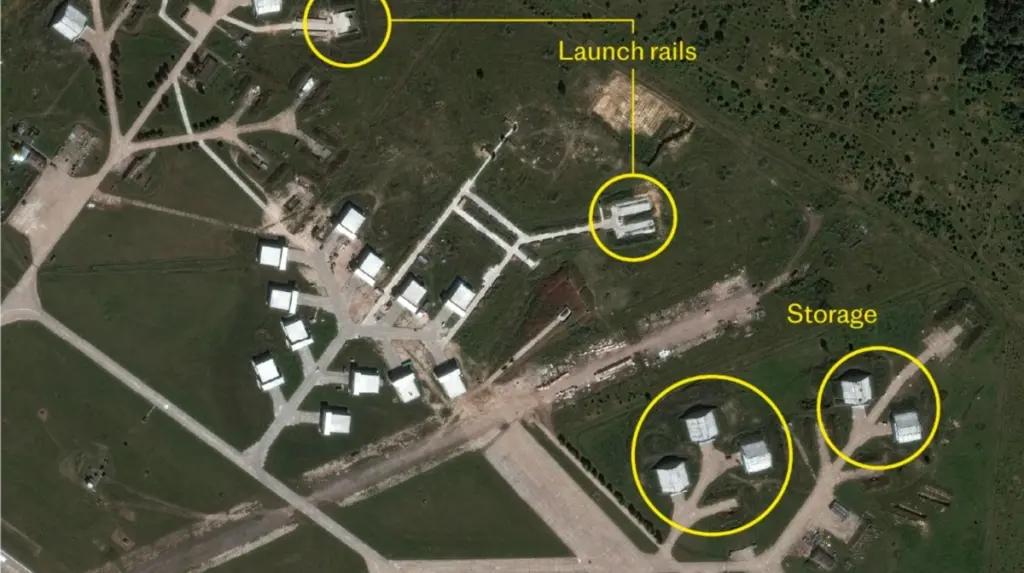
Russia has built or expanded at least 10 drone bases with 59 launch rails across its western regions, according to an investigation by The Telegraph, adding new long-range strike infrastructure near NATO’s eastern flank as the alliance confronts a series of drone incursions.
The Telegraph identified the sites using satellite imagery, leaked documents and analysis from drone specialists. Around 20 of the launch rails appear long enough to support newer Russian long-range drones, according to the investigation. Several of the bases have already supported attacks on Ukraine.

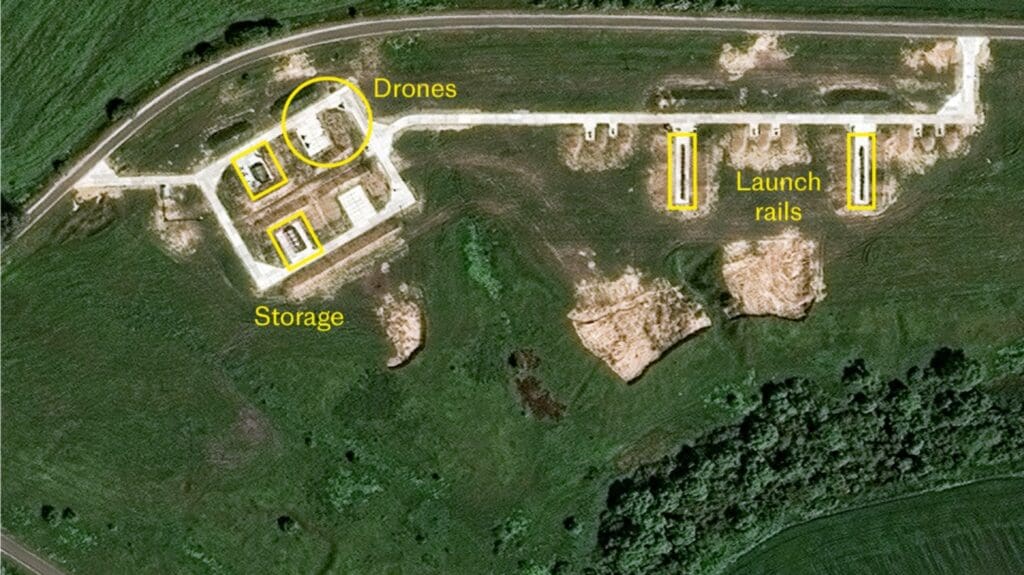
The infrastructure is primarily being used in Russia’s war against Ukraine. But some of the sites could also place NATO territory within range if Moscow deployed its newest systems against the alliance. Ukrainian intelligence assessments cited in reporting on the investigation put the range of some newer Geran variants at hundreds of miles, potentially bringing Warsaw within reach from several locations. The Telegraph found no evidence Russia is preparing to attack Poland from the bases.
The findings come as drones from the war increasingly cross NATO’s eastern frontier.
A NATO fighter shot down a drone of unknown origin over Latvia on Aug. 14 after it entered the country’s airspace near the Russian border. Latvia said Russian electronic warfare contributed to the incursion, though authorities had not determined the drone’s origin. NATO scrambled Italian Eurofighters and Turkish F-16s in response.
Two days later, a fighter operating under NATO’s air policing mission shot down another drone after it entered Romanian airspace from Moldova. Romania did not initially identify its origin, but a NATO spokesperson told Reuters that the aircraft appeared to be Russian. It was the fourth drone incident involving Romanian territory this year.
The incidents follow a major breach of Polish airspace in September 2025, when Poland and allied aircraft fired on suspected Russian drones during a large Russian attack on Ukraine. Polish officials said 19 objects entered the country’s airspace, prompting Warsaw to request consultations under NATO’s Article 4.
Concern over the incursions has grown alongside warnings that Russia may be studying NATO’s defenses and weighing how the alliance would respond to a more direct challenge.
The Wall Street Journal reported Aug. 6 that new U.S. intelligence assessments found Russian President Vladimir Putin could seek to test NATO with a limited assault on an allied country in the next few years. Scenarios considered by U.S. intelligence ranged from a cyberattack to a small-scale land incursion. The assessment did not say such an attack was imminent or that Moscow had made a decision to carry one out.
Germany’s top military officer, Gen. Carsten Breuer, separately told the Journal that Russia has been systematically using drones to probe European air defenses and study how NATO responds. Breuer said Moscow is shifting its military and economy toward preparations for a possible wider conflict with the West.
Poland and the Baltic states are already tightening security around power plants, dams and other critical infrastructure. Reuters reported this month that regional intelligence assessments have raised concern Russia could stage a false-flag incident involving drones to create confusion and test NATO’s response. Moscow has rejected Western accusations that it is preparing clandestine attacks against alliance members.
The newly mapped drone bases do not establish Russian intent to attack NATO. But their location, growing launch capacity and ability to support longer-range systems give Moscow additional strike infrastructure near the alliance at a time when NATO governments are increasingly focused on drone threats and the risk of a wider confrontation.


