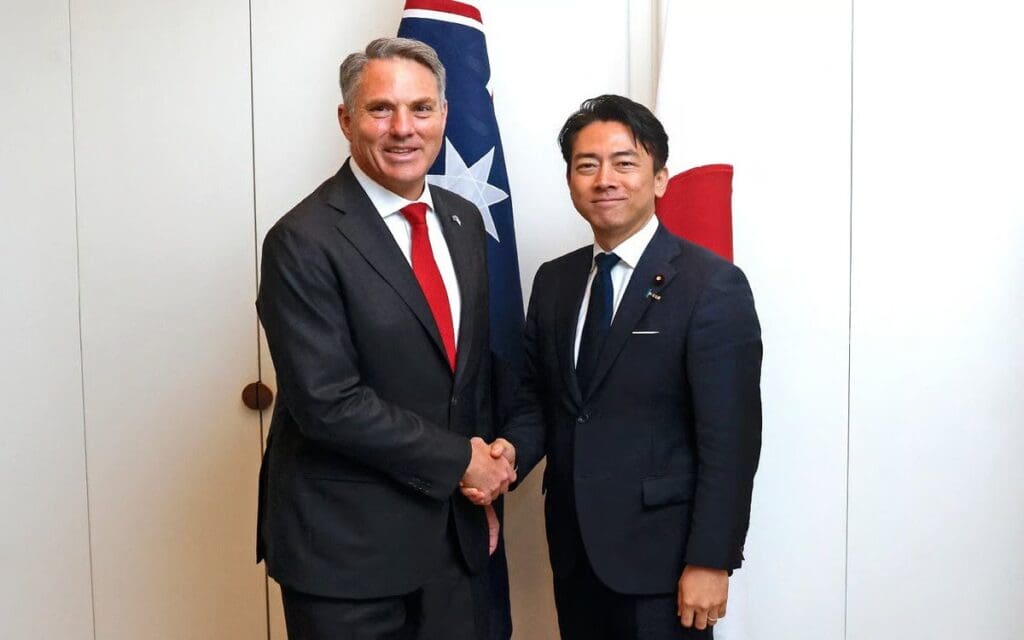
Japan and Australia agreed Tuesday to expand Japan’s access to Australian weapons ranges, opening the way for future tests of Japanese hypersonic missiles as the two countries deepen military cooperation amid rising security concerns in the Indo-Pacific.
Australian Deputy Prime Minister and Defense Minister Richard Marles and Japanese Defense Minister Shinjiro Koizumi announced the plan after talks in Canberra. The countries will establish a framework over the next decade for testing advanced weapons and emerging technology in Australia, including systems tied to Japan’s hypersonic missile program.

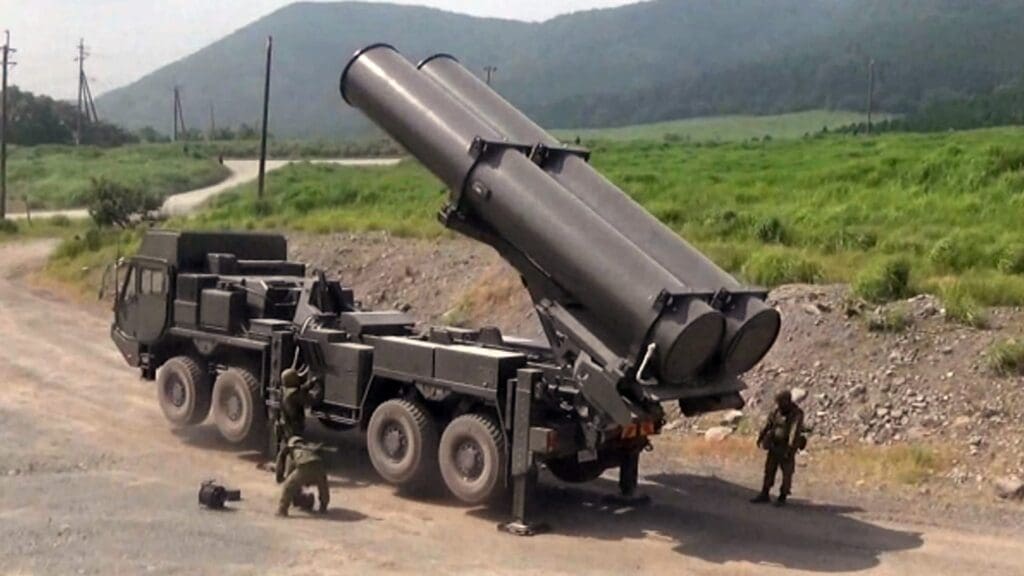
The agreement does not mean Japanese hypersonic missile launches have already been scheduled. Koizumi said the two governments will accelerate discussions aimed at allowing Japan’s Self-Defense Forces to conduct test launches of stand-off weapons, including hypersonic missiles, on Australian territory. He called such access a groundbreaking step that would put Australia behind only the United States in this kind of weapons-testing cooperation with Japan.
Australia offers something Japan cannot easily provide at home, vast and relatively isolated ranges where long-range weapons can be tested at scale. Marles said the arrangement would give Japan greater “strategic depth” as Tokyo develops longer-range strike systems.
The ministers also announced the successful field testing of Project Boobook, the first defense technology co-development project between Australia and Japan. The prototype high-energy laser system was tested in South Australia and is designed to improve surveillance and help detect incoming threats from land and coastal platforms.
The project brings together Australia’s Defence Science and Technology Group, Mitsubishi Electric Australia and Mitsubishi Electric Corp. Canberra said Mitsubishi Electric Australia is also investing about $70 million in new facilities in New South Wales that could support future defense manufacturing.
A complicated history between Japan and Australia
The new agreements are the latest step in a relationship that has changed sharply over the past eight decades.
Australia and Japan were enemies during World War II. Australian forces fought Japan across the Pacific and Southeast Asia, and the war left deep scars in Australia. Formal bilateral relations were restored in 1952, beginning a long shift from wartime hostility toward economic partnership.
Trade drove much of the early reconciliation. The two countries signed a major commerce agreement in 1957, helping Japan secure Australian coal, iron ore and other raw materials for its fast-growing postwar economy. Japan, in turn, became one of Australia’s most important export markets. Their ties expanded further under the 1976 Basic Treaty of Friendship and Cooperation, a landmark pact that helped broaden the relationship beyond trade.
That treaty marks its 50th anniversary this year. Security cooperation followed more gradually. Australia and Japan signed their first Joint Declaration on Security Cooperation in 2007, creating a framework for work in areas including maritime security, counterterrorism, disaster response and nonproliferation. The countries elevated their ties to a Special Strategic Partnership in 2014.
The pace accelerated as both governments grew more concerned about the regional military balance. In 2022, Australia and Japan signed a Reciprocal Access Agreement to make it easier for their armed forces to train and operate in each other’s countries. The agreement entered into force in August 2023 and became Japan’s first visiting-forces agreement with a country other than the United States. Since then, Japanese and Australian aircraft and troops have taken part in increasingly complex exercises on each other’s territory.
Their industrial ties have expanded as well. Australia selected Japan’s upgraded Mogami-class frigate for its general-purpose frigate program in 2025. The two governments signed a further memorandum on the project in April 2026, and Australia says the first ship remains on track to enter Royal Australian Navy service in 2029.
Prime Minister Anthony Albanese and Japanese Prime Minister Sanae Takaichi moved the partnership another step forward during talks in May, agreeing to deepen cooperation in defense, economic security, energy, critical minerals and cyber issues. Australia’s Foreign Affairs Department now describes the two countries as having unprecedented strategic alignment.
That alignment is increasingly shaped by a shared view of regional threats. In their Tuesday statement, Australia and Japan cited concerns about tensions in the East and South China seas, opposed attempts to change the regional status quo through force or coercion and condemned North Korea’s nuclear and ballistic missile programs. Both countries also remain treaty allies of the United States and have expanded three-way military exercises and information sharing with Washington.
The planned missile-testing framework shows how far the relationship has moved. What began after World War II as a cautious diplomatic and commercial rebuilding effort has evolved into a defense partnership involving joint exercises, weapons development, warship construction and, potentially, Japanese hypersonic missile launches from Australian soil.