


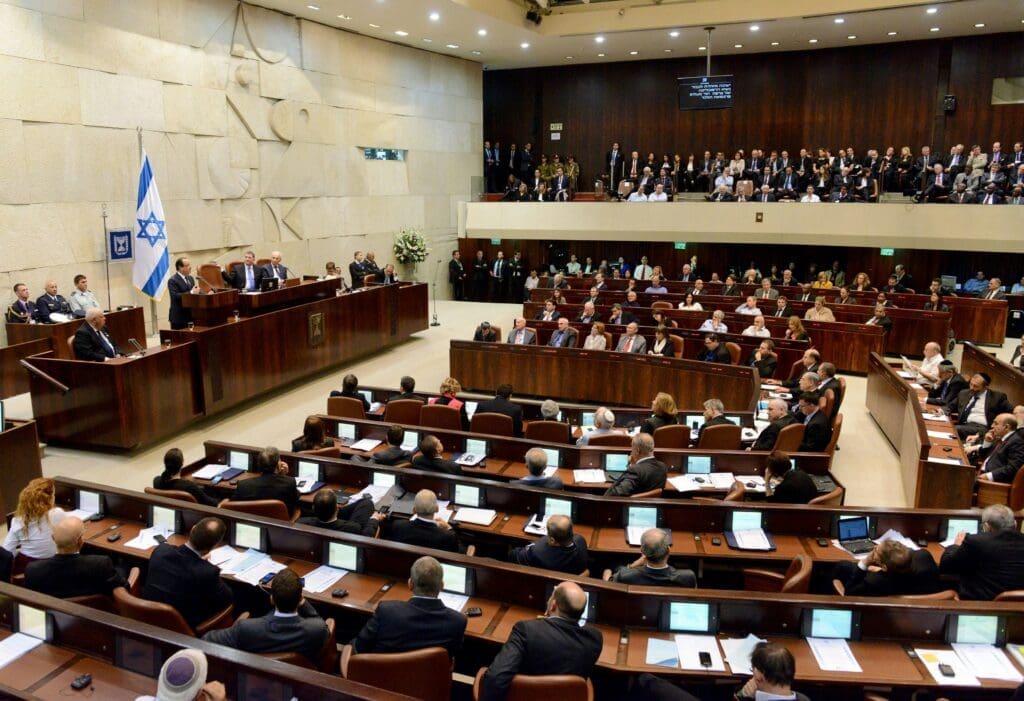
Israel may be nearing the end of the Benjamin Netanyahu era after Oct. 7, but the coming election is unlikely to bring the peace many outsiders imagine. Instead, it may reveal a harsher reality.

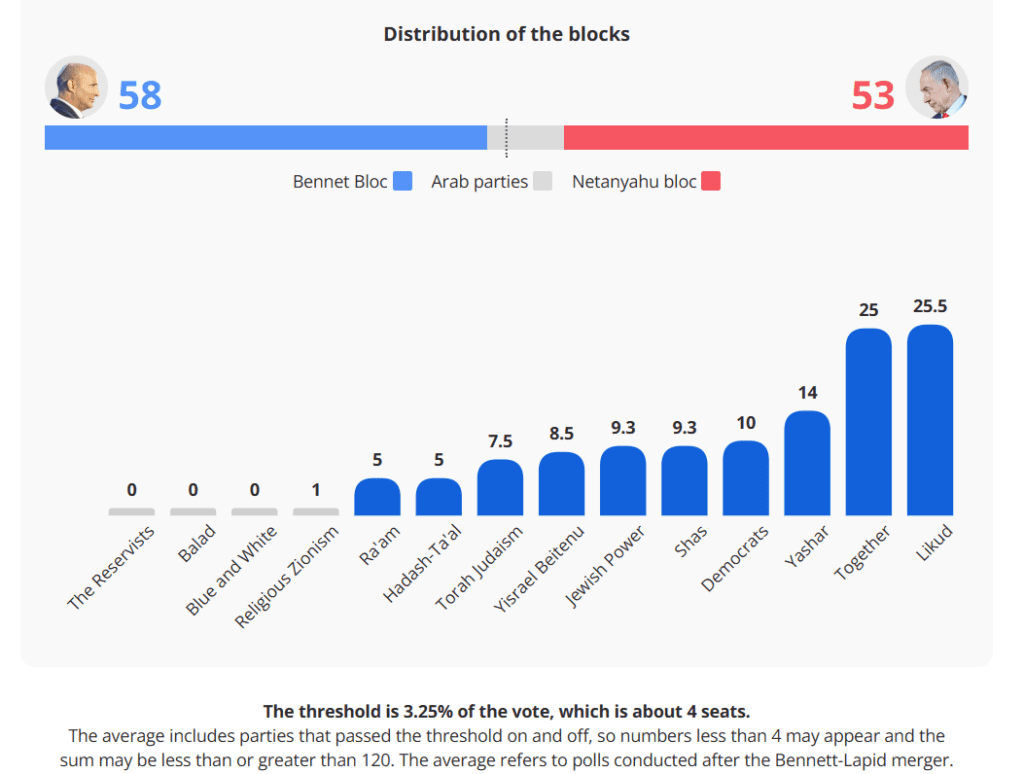
Israel is heading toward an election that could finally end Benjamin Netanyahu’s long domination of its politics. For many Israelis, that alone would be historic. For the rest of the world, it may be tempting to read such a result as the beginning of a dramatic turn, away from war, away from the far right, perhaps even back toward diplomacy with the Palestinians.
That would likely be a mistake.
The coming election may change Israel’s leadership, its tone abroad and the balance of power inside its fractured political system. It may open the door to a long-delayed reckoning over the failures that led to Oct. 7, the deadliest day in the country’s history. It may restore some measure of seriousness to institutions battered by years of polarization, judicial crisis and war.
But even if Netanyahu is replaced, there is little evidence that Israel is preparing to return to the diplomatic assumptions of the 1990s peace process.
The central drama of the vote is not whether Israelis are about to choose reconciliation with the Palestinians. They are not. The more realistic question is whether they will choose a government of institutional repair and cautious security management, or remain under a coalition shaped by Netanyahu’s survival instincts and the ambitions of the far right.
That distinction matters. It could determine the future of Gaza’s reconstruction, the stability of the Palestinian Authority, the pace of settlement expansion in the West Bank, the conduct of Israeli security policy and the country’s relationship with Washington, Europe and Arab states.
But it is not the same as a diplomatic revolution.
Since Oct. 7, Israeli politics has moved through grief, rage and exhaustion. The old peace camp is weaker than ever. The center has become more security-driven. The right has become more confident. Palestinian politics, meanwhile, remains fractured between an aging Palestinian Authority in the West Bank and Hamas, battered but not erased, in Gaza. Palestinians will not vote in Israel’s election, but they will live with its consequences.
That is what makes the vote so consequential, and so easily misunderstood.
A Vote About Accountability, Not Peace
The election, legally required by late October 2026 but widely expected to be brought forward, is likely to become one of the most important in Israel’s history. It will be a referendum on Netanyahu’s leadership, on the failures that preceded Oct. 7, on the long war in Gaza and the following regional war, on the character of the Israeli state after years of internal crisis.
For Israelis, the campaign will revolve around accountability.
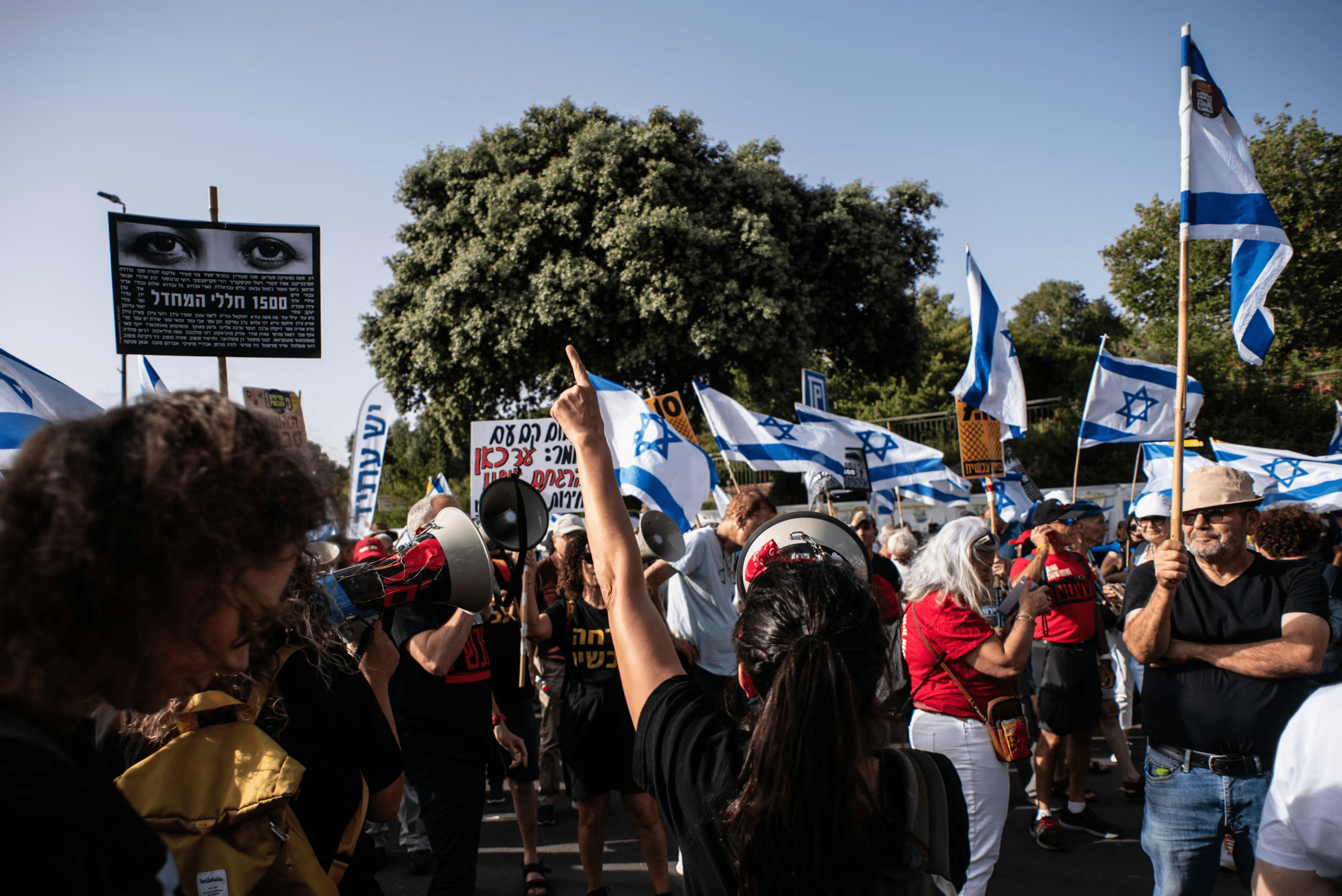
Who failed before Oct. 7? Who ignored the warnings? Who built the assumptions that allowed Hamas to prepare for the deadliest attack in Israel’s history? Families of hostages, soldiers, reservists and civilians will demand answers. So will large parts of the public that feel the state failed twice, first in not preventing the attack, and then in struggling to provide basic wartime competence afterward.
For Palestinians, the stakes are different. They will not vote in this election, but Israeli decisions will shape their daily lives across Gaza and the West Bank. The outcome could affect military operations, reconstruction, border crossings, settler violence, movement restrictions, tax transfers, the future of the Palestinian Authority and the question of who governs Gaza after the war.
That asymmetry is one of the central facts of the conflict. Israeli democracy, however divided and angry, still produces elections that can change governments. Palestinian national politics, by contrast, has been frozen for years. Palestinians have not held a national legislative election since 2006, nor a presidential election since 2005. Mahmoud Abbas, now 90, remains president of the Palestinian Authority long after the expiration of his original mandate, while the split between Fatah in the West Bank and Hamas in Gaza has become a permanent feature of Palestinian political life.
So Israel’s election will matter far beyond Israel. It will help shape Palestinian futures, regional diplomacy and American policy. But the direction it offers is likely to be narrower than many outside observers hope.
It may change how Israel manages the conflict. It is unlikely to decide to end it.

Netanyahu’s Broken Promise
Netanyahu’s political career has rested on a core claim: that he, more than any other Israeli leader, understood the Middle East as it really was.
He presented himself as the man who could deter Iran, contain Hamas, manage Washington, expand ties with Arab states, restrain international pressure and prevent the emergence of a Palestinian state without paying a major price. To his supporters, he was cautious, experienced and strategically patient. To his critics, he was cynical, divisive and more interested in surviving politically than solving anything.
For years, that argument worked, then came Oct. 7.
The attack shattered the image Netanyahu had spent decades cultivating. The doctrine that Hamas could be contained in Gaza through deterrence, economic pressure, intelligence monitoring and periodic military operations collapsed in a single morning. The war that followed exhausted Israeli society, strained the economy, mobilized hundreds of thousands of reservists and left the country in a state of prolonged war.
For Netanyahu’s opponents, the case against him is simple. A leader who presided over such a failure cannot be the person to investigate it. A prime minister who spent years attacking, weakening or politicizing institutions cannot credibly promise to rebuild them. A politician who depends on far-right partners for survival cannot be trusted to make sober national decisions about Gaza, the West Bank or Israel’s place in the world.
And yet Netanyahu is not finished.
His core supporters have not abandoned him in large numbers. Many see the criticism against him not as proof of failure, but as part of a broader campaign by hostile elites, media institutions and political rivals. Others argue that Israel remains surrounded by threats and cannot afford political upheaval in wartime. Netanyahu’s message is familiar: his opponents are weak, naive and too vulnerable to foreign pressure.
It is a message that still resonates with parts of the Israeli public, especially during a war.
But Netanyahu’s greatest political asset may be the system itself. Israel’s fragmented parliamentary politics often rewards survival more than popularity. Governments are built through coalitions in the 120-seat Knesset, where 61 seats are needed for a majority. Small parties can become kingmakers. Ideological factions can extract enormous concessions. Netanyahu has mastered this world better than anyone in Israeli history.
That mastery is also what has made his dependence on the far right so consequential.

The Opposition’s Promise, and Its Limits
Netanyahu’s leading challengers are not running as peacemakers.
Naftali Bennett, Yair Lapid and Gadi Eisenkot represent different parts of the anti-Netanyahu camp, but none is offering Israelis a return to the diplomatic optimism of the 1990s. Their argument is not that Israel should take a historic gamble on Palestinian statehood. Their argument is that the state needs to be repaired.
Bennett offers right-wing voters a way to leave Netanyahu without leaving the ideological right. A former prime minister, former settler leader and high-tech entrepreneur, he speaks the language of nationalism, security and competence. He does not ask his voters to support a Palestinian state. He does not ask them to trust the Palestinian Authority. He offers them a cleaner and more disciplined version of Israeli conservatism.
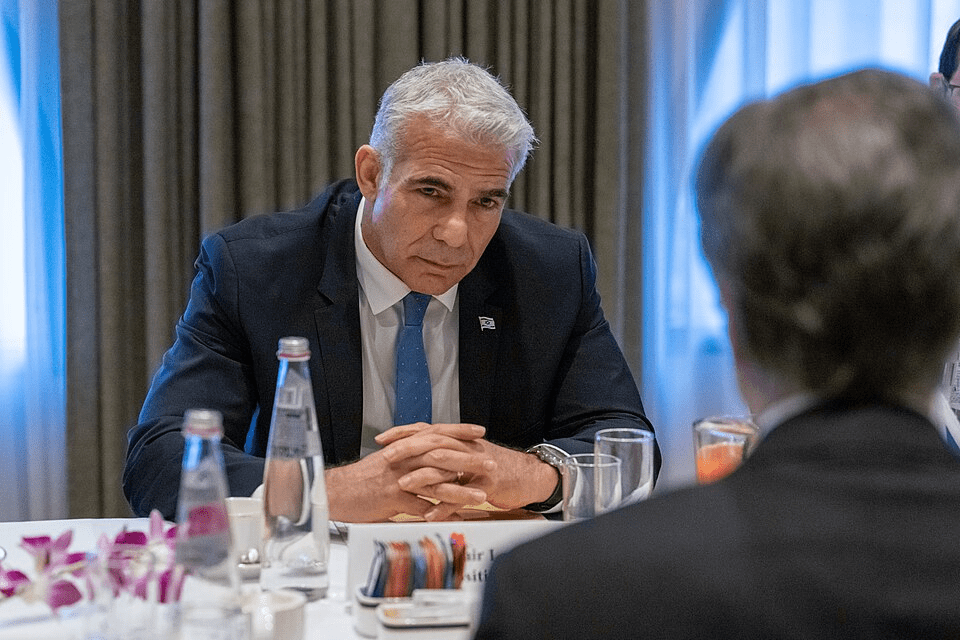
Lapid speaks to secular, liberal and middle-class Israelis who want a government less dependent on religious parties and less isolated internationally. His politics are pragmatic, Western-facing and institutionally minded. He is not a leftist, but he represents an Israeli center deeply uncomfortable with the far-right forces Netanyahu empowered.
Eisenkot brings something different: military credibility and personal sacrifice. A former military chief whose son was killed in the Gaza war, he carries moral weight in a grieving country. His appeal is not ideological excitement, but seriousness.
Together, figures like these could form the basis of a broad anti-Netanyahu bloc. But the glue holding that bloc together is not a shared vision for peace with the Palestinians. It is a shared belief that the state itself needs repair.
Such a government would almost certainly establish an independent state commission of inquiry into the failures of Oct. 7, something Netanyahu has resisted. It would likely try to restore public trust in the judiciary. It would confront the explosive question of ultra-Orthodox military draft exemptions, a dispute that has divided Israeli society for decades and has become sharper after a long war fought largely by secular, traditional and national-religious reservists.
It would also seek calmer relations with Washington, Europe and moderate Arab states. The tone would change quickly. The chaos would likely diminish. The diplomatic language would become more careful.
But on the Palestinian issue, the change would be limited.
Bennett remains firmly opposed to Palestinian statehood. Lapid has spoken in favor of separation from the Palestinians in principle, but he would govern a country where the old formulas of the Oslo peace process are widely seen as obsolete. Eisenkot, like much of Israel’s security establishment, may support pragmatic arrangements, regional coordination and a stronger Palestinian alternative to Hamas, but not a sweeping gamble on sovereignty after Oct. 7.
This leaves the opposition in a revealing position. It can argue that Netanyahu failed Israel. It can argue that he empowered extremists, damaged institutions, polarized society and placed personal survival above the national interest. But it cannot easily argue that Israel should return to the diplomatic assumptions of an earlier era.
The Israeli center’s promise is not historic reconciliation, it is better management.
Why That Still Matters
To foreign ears, “better management” may sound depressingly small. In today’s Israel, it is not meaningless.
A different government could reduce the influence of far-right ministers over the most sensitive questions in the conflict. It could curb some forms of settler violence more seriously. It could release withheld Palestinian tax revenues to prevent the Palestinian Authority from collapsing. It could coordinate more effectively with the United States, Egypt, Jordan, the United Arab Emirates and Saudi Arabia. It could also stop treating every institutional demand for accountability as a personal threat to the prime minister.
That would not be peace. It would not be partition. It would not be a final settlement. But for Palestinians living under Israeli control, and for diplomats trying to prevent another explosion, the difference between ideological escalation and cautious management can be significant. It can affect movement, policing, economic survival, reconstruction, security coordination and the likelihood of wider unrest.
The danger is that outsiders may underestimate both sides of this reality.
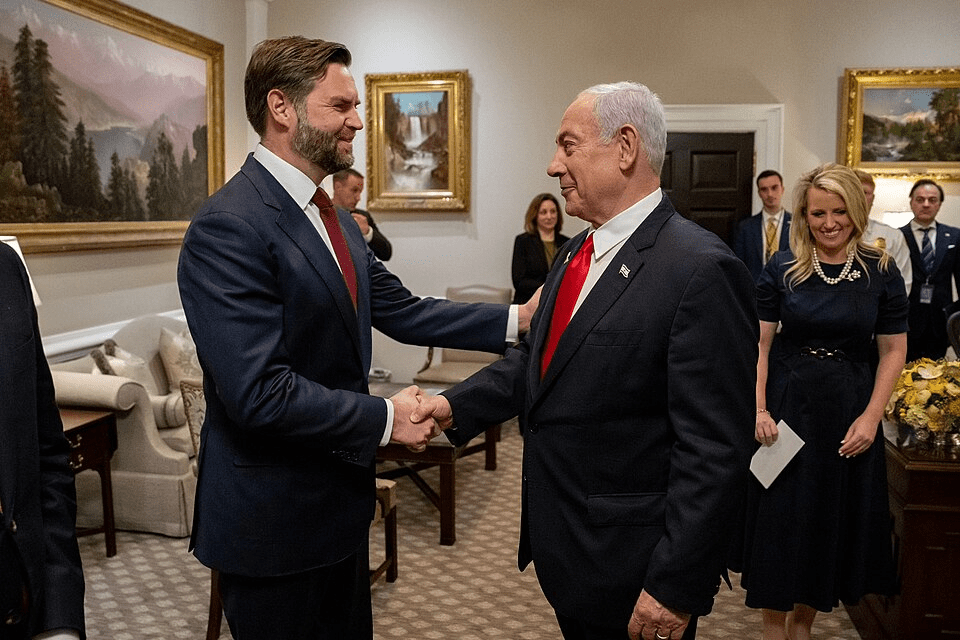
On one hand, replacing Netanyahu would matter. His political survival has become inseparable from the demands of his coalition partners, including figures such as Bezalel Smotrich and Itamar Ben-Gvir, who seek a far more aggressive Israeli policy in the West Bank and Gaza. Their leverage has helped push Israel toward settlement expansion, harsher policing, deeper control over the West Bank and rejection of any Palestinian political horizon.
On the other hand, removing Netanyahu would not automatically produce a moderate revolution. The Israeli public has changed. The trauma of Oct. 7 did not create a hunger for bold diplomatic experiments. It hardened skepticism toward them.
The old Israeli left has collapsed as a major political force. The center is cautious. The right is strong. Even many Israelis who despise Netanyahu do not trust Palestinian leadership, do not believe Hamas can be deterred by agreements and do not see a Palestinian state as a safe near-term option.
This is the uncomfortable truth at the heart of the election: Netanyahu may be uniquely divisive, but he is not the only reason the peace process is dead.
Gaza and the Impossible Triangle
No issue exposes the limits of Israeli politics more clearly than Gaza.
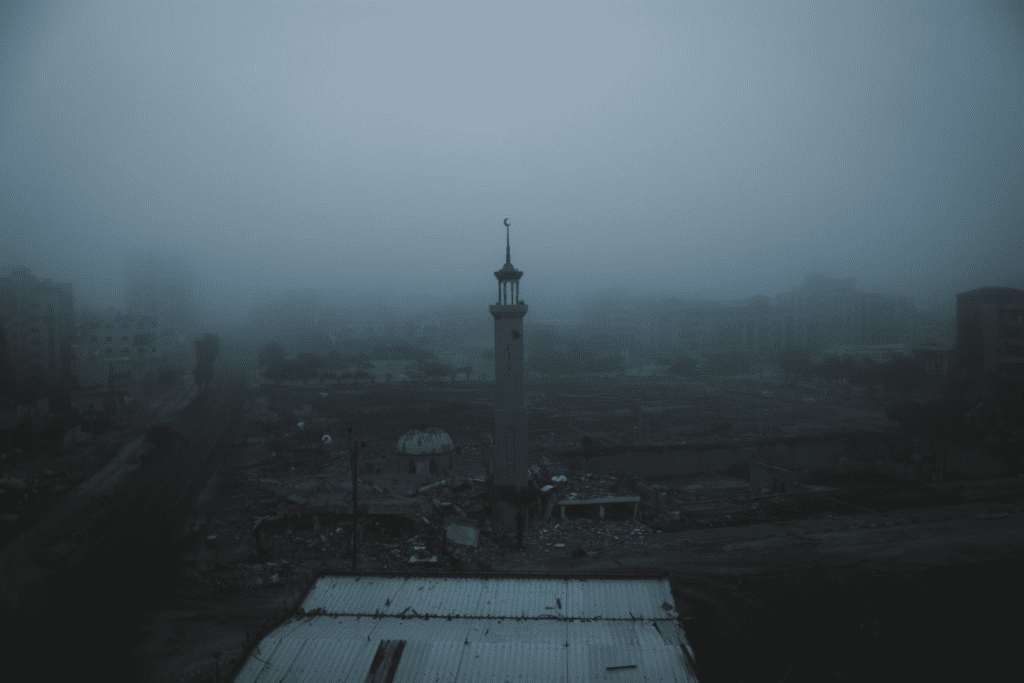
The war has devastated the enclave. Civilian life has been shattered. Hamas has been badly damaged militarily, but not eliminated as a political or underground force. Israel does not want Hamas to rule Gaza again. But Israel also does not want to take full responsibility for governing more than two million Palestinians. That leaves a vacuum.
Every Israeli government will face the same impossible triangle. Hamas cannot be allowed to rebuild its military capabilities. The Palestinian Authority is too weak, unpopular and compromised to simply return to Gaza on the back of Israeli tanks. And Israel’s military does not want to become the permanent administrator of Gaza’s civilian population.
International actors keep circling around versions of the same idea: a transitional administration backed by Arab states, supported by the United States and Europe, involving Palestinian technocrats and eventually connected to a reformed Palestinian Authority.
On paper, it sounds reasonable. In reality, every part of it collides with politics.
Arab states do not want to be seen as subcontractors for Israeli security control. The Palestinian Authority does not want to enter Gaza looking like an Israeli-approved replacement for Hamas. Israel does not want to empower a Palestinian leadership that could later demand sovereignty. Hamas will try to sabotage any arrangement that excludes it. And no serious reconstruction effort can succeed without a governing authority capable of maintaining order.
A Netanyahu government dependent on the far right would likely resist any arrangement that strengthens the Palestinian Authority or points toward future statehood. It would prefer open-ended Israeli security control, local Palestinian administrators with limited authority and a slow, conditional reconstruction process.
A centrist or center-right government might handle Gaza differently. It would probably coordinate more seriously with Washington and Arab capitals. It might allow a technocratic Palestinian administration to emerge. It might improve aid distribution, border procedures and reconstruction planning.
But it would still stop short of what many outside powers say is necessary: a credible political horizon for Palestinians.

Palestinians Without a Vote, and Without Accountable Leadership
The election also exposes a broader asymmetry. Israelis are arguing over who should govern them after a national catastrophe. Palestinians, meanwhile, remain trapped in a political system that has offered no comparable renewal for nearly two decades.
That failure is not only the product of Israeli control, occupation or regional indifference. It is also the result of Palestinian political decay.
Palestinians have not held a national legislative election since 2006, nor a presidential election since 2005. Mahmoud Abbas, now 90, remains president of the Palestinian Authority long after the expiration of his original mandate. His leadership has become a symbol of a political order that survives without democratic consent, sustained by patronage, security coordination, foreign backing and the absence of a viable alternative.
The Palestinian Authority still represents Palestinians in international forums. It still pays salaries. It still coordinates with Israel in parts of the West Bank. But among many Palestinians, especially younger ones, it is viewed as corrupt, authoritarian, aging and ineffective. It has failed to renew its institutions, failed to produce a credible succession process and failed to convince large parts of its own public that diplomacy can deliver anything tangible.
Hamas offers a different failure, and a more destructive one. Its rule in Gaza was authoritarian, militarized and deeply repressive. It invested in armed confrontation while leaving civilians exposed to the consequences of wars it could not win and devastation it could not repair. Its Oct. 7 attack brought catastrophe on Israelis first, and then on Palestinians in Gaza, whose lives were shattered by the war that followed.
Even after devastating military losses, Hamas has not disappeared from Palestinian politics. But its endurance is not proof of legitimacy. It reflects the weakness of its rivals, the depth of Palestinian despair and the absence of a credible national project. The movement has repeatedly shown that it is capable of sabotaging alternatives to its rule, but incapable of building a state, protecting civilians or offering Palestinians a future beyond permanent confrontation.
This leaves Palestinians with a political class that is both divided and exhausted. Fatah has become associated with stagnation and corruption. Hamas has become associated with repression, war and ruin. Between them, they have helped turn Palestinian national politics into a closed arena where ordinary Palestinians are asked to endure the consequences of decisions they did not meaningfully choose.
This matters because diplomacy requires more than slogans. A final settlement would require a Palestinian leadership capable of negotiating, governing both Gaza and the West Bank, enforcing security commitments, restraining armed factions and winning public legitimacy. That leadership does not currently exist in any convincing form.
When American, European or Arab officials speak of a “revitalized Palestinian Authority,” they are describing an aspiration, not a reality. When they call for a pathway to a Palestinian state, they are invoking an outcome that lacks a functioning political vehicle. Saudi Arabia and other Arab states may demand progress toward Palestinian statehood as part of broader regional diplomacy, but they also need a Palestinian partner capable of governing, negotiating and surviving politically.
The result is that Israeli elections matter even more. In the absence of accountable Palestinian politics, the balance of power shifts further toward decisions made in Jerusalem. Palestinians remain central to the issue, but peripheral to the formal political process that shapes it.
They do not get a ballot. Too often, they do not get accountable leaders either.
What the Election Can Decide
The coming election will not resolve the Israeli-Palestinian conflict. It will not rebuild Gaza by itself. It will not produce a unified Palestinian leadership. It will not remove Hamas from Palestinian politics. Its real significance lies elsewhere.
It will determine whether Israel conducts a serious public reckoning over Oct. 7. It will decide whether the state investigates not only military and intelligence failures, but also the political culture that preceded them. It will test whether Israel’s battered institutions can recover after years of polarization, judicial crisis and war.
It will decide whether Israel remains governed by a coalition in which far-right ministers hold decisive power over the West Bank, policing and Palestinian policy. It will shape whether Israel’s allies experience the next government as a predictable partner or a constant crisis-management problem.
And it will determine whether the Israeli state returns to a more disciplined form of governance, or continues to operate through the survival logic of one man and the ideological demands of his most extreme partners.
For Israelis, that is an enormous choice. After Oct. 7, many are asking not only who should govern, but what kind of state Israel should be: one driven by institutions or personalities, by strategy or coalition blackmail, by national recovery or permanent emergency.
For Palestinians, the choice is more distant but no less consequential. They may not vote, but they will feel the outcome in Gaza’s reconstruction, in the tax revenues of the Palestinian Authority, in the behavior of settlers, in the rules of movement and in the possibility, however remote, of a future political horizon.
The Illusion of a Clean Break
Israel may well remove Netanyahu from power. If it does, that would be a historic turning point in Israeli politics. It would mark the possible end of an era built around one man’s extraordinary ability to divide, survive and dominate.
But it would not, on its own, transform the conflict.
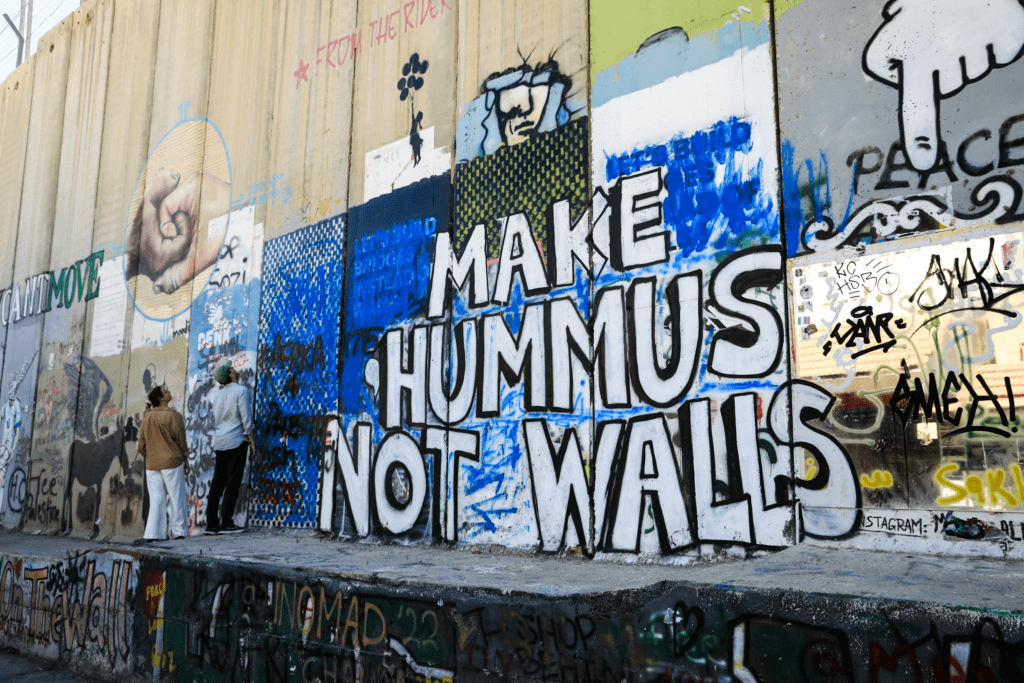
The conflict is sustained by forces deeper than Netanyahu: an Israeli public hardened by Oct. 7, a weakened peace camp, a right wing more confident about permanent control, a devastated Gaza and a West Bank drifting toward deeper Israeli rule. On both sides, distrust has become deeply entrenched. Large parts of the Israeli public no longer believe a negotiated settlement can guarantee security after Oct. 7, while many Palestinians see diplomacy as a process that brought neither statehood nor freedom, only deeper occupation, fragmentation and war.
Palestinian politics is also in no position for a breakthrough. Fatah is stagnant, Hamas is authoritarian, militarized and destructive. No Palestinian leadership currently has the legitimacy or capacity to govern both Gaza and the West Bank, restrain armed factions and negotiate a binding settlement.
So the election should be watched carefully, but not romantically. It may decide whether Israel begins to recover from Oct. 7, or remains trapped in the politics that preceded it. But without Israeli leaders willing to move beyond containment, and Palestinian leaders capable of accountable national renewal, the conflict will remain managed, postponed and repeatedly reignited.


