


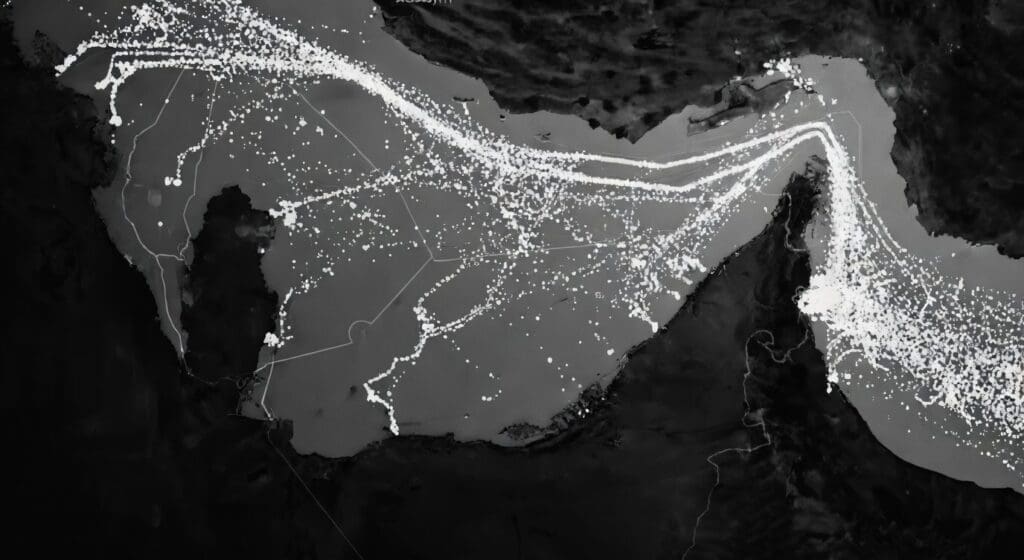
The Strait of Hormuz, a narrow chokepoint linking the Persian Gulf to the Gulf of Oman and carrying approximately one-fifth of global seaborne oil and significant LNG volumes has been effectively closed since early March 2026 amid the ongoing US-Israel military campaign against Iran (initiated 28 February 2026). Iran declared the waterway closed to vessels linked to the US, Israel and allies, with 21+ confirmed attacks on merchant ships and counting (causing at least 11 seafarer deaths/missing and multiple abandonments), threats of further strikes, and retaliatory hits on regional energy infrastructure.
This has driven tanker traffic to near-zero, down from ~153 daily transits pre-crisis, prompting Gulf producers to cut output as storage limits are met. This has spiked global oil prices beyond 2022 highs (briefly exceeding $100/bbl) and forced rerouting or suspension by major shippers. US responses include strikes on Iranian naval assets, destroying a large portion of its regional naval power, but reopening remains contingent on the current scenario. Iran although has stated that countries who complete transaction in Chinese Yuan can be given an allowance to pass
Historical Context
The Strait has faced repeated disruptions tied to Iran-Gulf tensions, establishing a pattern of asymmetric pressure via shipping harassment and infrastructure targeting without full closure until 2026:
- 1980s “Tanker War” (Iran-Iraq conflict): Iran and Iraq attacked neutral and each other’s tankers; Iran mined waters and used speedboats/missiles, disrupting flows but never fully closing the strait.
- 2012–2015: Iran threatened closure amid sanctions; no sustained blockade.
- 2019 Peak Escalation: 14 September drone/cruise-missile strikes on Saudi Aramco’s Abqaiq (world’s largest oil-processing facility) and Khurais field (verified by satellite imagery showing 17+ impact points; 5.7 million bpd — ~5% global supply — offline temporarily). US and Saudi intelligence attributed to Iran (or proxies); Houthis claimed responsibility but trajectory analysis ruled out Yemen launch. Parallel limpet-mine attacks damaged tankers near the strait.
- 2019–2025 Seizures/Harassment: Iran seized ~20 vessels (e.g., Maersk Tigris 2015, British Stena Impero 2019, Greek tankers 2022, multiple “smuggled fuel” cases into late 2025). No full closure; traffic continued amid elevated insurance.
These precedents demonstrate Iran’s proven capability for disruption but also historical restraint until the existential threat posed by the 2026 leadership decapitation strikes.
Current War Context & Verified Developments
Trigger (28 February 2026): Coordinated US-Israel airstrikes (“Operation Epic Fury”/Roaring Lion) targeted Iranian military/nuclear sites and leadership compounds in Tehran. Supreme Leader Ali Khamenei and multiple senior officials were killed (confirmed by Iranian state media and US/Israeli statements). Iran retaliated immediately with missiles/drones on US bases in UAE/Qatar/Bahrain, Israeli territory, and Gulf targets.
Iranian-made Strait Disruption (from 1 March):
IRGC declared the strait “closed” to adversary-linked shipping (2–4 March formal announcements), warning of attacks on any transiting vessel. Tactics: drones, sea drones/USVs, projectiles, fast boats, and mines. The US Navy struck Iranian minelayers and Kharg Island oil terminal.
Verified Ship Attacks (UKMTO/IRGC-corroborated; 21+ by 12 March, additional through 19 March; total ~24 documented incidents):
- 1 Mar: `, captain +1 killed; MKDVYOM abandoned, 1 killed; multiple others (Hercules Star, Ocean Electra, LCT Ayeh) damaged.
- 2 Mar: Stena Imperative (US-linked, Bahrain) fire (1 port worker killed, 2 wounded); AtheNova drone strike.
- 4–6 Mar: Sonangol Namibe (oil spill); Mussafah 2 tug sunk (4 killed).
- 11 Mar: Mayuree Naree (Thailand bulk) abandoned, 3 missing; Safesea Vishnu & Zefyros (Iraqi waters) ablaze by Iranian boats, 1 killed; ONE Majesty, Star Gwyneth, Source Blessing projectiles.
- Later: Parimal abandoned (captain missing), others minor damage. Traffic: 70% drop Day 1 → virtual standstill (only selective Chinese/Turkish/Saudi-approved passages; many AIS-dark or anchored).
Casualties: 11+ seafarers killed/missing; 1+ port worker.
This comes amid the dangerous and costly escalation of strikes on the oil facilities

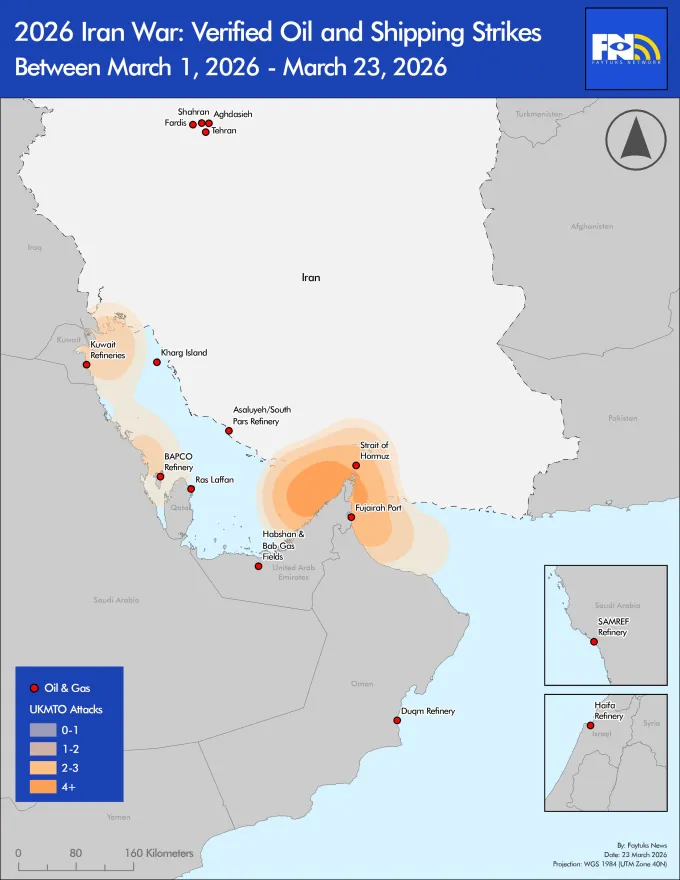
Verified Hits on Oil/Gas Facilities
Israel:
- Bazan Group (Oil Refineries Ltd.) complex in Haifa, Israel
Gulf Nations:
- Saudi Arabia: Drone strike on SAMREF refinery (Yanbu, Red Sea — alternative bypass route); earlier references to Ras Tanura targeting. Production rerouting disrupted.
- Qatar: Missiles caused extensive damage to Ras Laffan LNG (exports -17%, ~$20B annual revenue loss projected); part of South Pars shared field.
- Kuwait: Drone/missile fires at Mina Al-Ahmadi and Mina Abdullah refineries (no fatalities reported).
- UAE: Habshan gas field & Bab field shut; Fujairah port drone; vessels ablaze off coast; Abu Dhabi operations halted.
- Bahrain: BAPCO facility hit; Stena Imperative port strike.
- Others: Oman Duqm fuel tank ; Iraq ports and oil fields force majeure on oil exports.
Iranian Facilities (targeted by Israel/US):
- South Pars/Asaluyeh (world’s largest gas field; Israeli strike 18 Mar — explosions, refinery/storage damage, production halted at two units).
- Kharg Island (major Iranian oil export hub; major US strike; Trump noted restraint on full destruction but threatened escalation).
- Asaluyeh petrochemical/storage tanks.
US/Gulf Responses: Trump offered Navy escorts, political-risk insurance, and continued strikes on Iranian naval/minelaying assets. G7 discussed escorts; China pressed Iran privately while routing select vessels. Iraq declared force majeure; shipping firms (Maersk) suspended.
Detailed Analytical Timeline
- 28 Feb: Strikes begin; iInitial IRGC VHF warnings + early ship strikes (3+ tankers).
- 1–2 Mar: Traffic -70%; 5+ ship hits,Stena fire by hits in Bahrain.
- 3–4 Mar: Formal closure announcement by IRGC; 8+ vessels damaged; US destroys minelayers.
- 5–11 Mar: Selective passages allowed (China etc.); peak attacks (11 Mar wave: 6 vessels); insurance 4–6x; Fujairah/Duqm hits.
- 12–19 Mar: Near-zero traffic; additional hits (Parimal etc.); selective approvals; Trump: “dribble” of tankers resuming under pressure; Gulf facility strikes intensify (Yanbu, Ras Laffan, Kuwait pair).
- Ongoing (to 21 Mar): No changes in strait situation and condition.
Conclusion:
Iran’s asymmetric playbook selective enforcement allowing approved passages while punishing Western-linked vessels, paired with retaliatory strikes against critical infrastructure exploits existential stakes to impose global leverage without inviting total naval defeat. US/Israeli Strikes on its naval fleet has degraded but not eliminated Tehran’s drone/USVs/shore-missile capacity, sustaining functional denial.
Strategically, this proves selective disruption outperforms absolute blockade: it has spiked oil prices, forced Gulf curtailments, triggered force majeures, and exposed bypass-route fragility delivering outsized economic coercion at sustainable risk. As of 21 March 2026, the chokepoint remains contested, underscoring hybrid warfare’s potency at energy arteries: Iran trades short-term pain for diplomatic leverage, while the US retains reopening tools but faces escalation. Absent swift ceasefire, the crisis cements the strait as a durable hybrid battlefield where verified pressure, not conquest, reshapes global energy security.


