


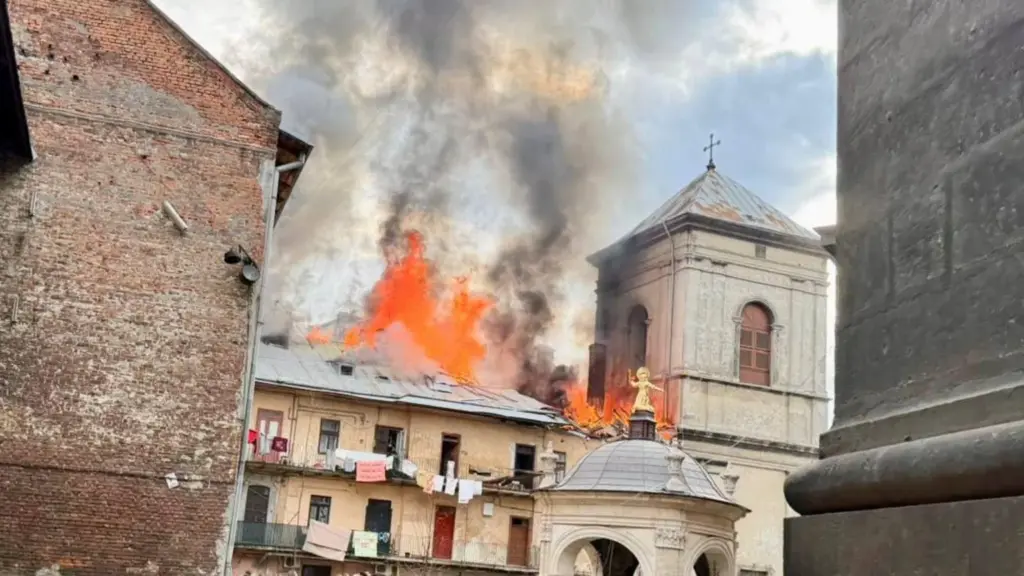
Russia launched a rare large-scale daytime drone and missile barrage across Ukraine on March 24, killing civilians, wounding dozens and striking cities far from the front, in one of the broadest aerial attacks seen in recent weeks. Ukrainian officials said the assault hit at least 10 locations, including Lviv in the west, while Reuters reported that more than 550 drones were launched during the daytime phase and nearly 1,000 drones and dozens of missiles had been fired since the previous evening.
The strikes caused damage across multiple regions and underscored the continued reach of Russia’s long-range attack campaign. In Lviv, local officials said 22 people were wounded and cultural landmarks were damaged, including structures in the city’s UNESCO-listed historic area. Fatalities were in Ivano-Frankivsk and Vinnytsia as well, including a National Guard serviceman and his teenage daughter, while the Associated Press said the nationwide toll had risen to at least six dead and 46 injured.
The scale and timing of the attack made it especially notable. The operation was described as an unusual daytime assault, departing from the nighttime strike pattern that has defined much of Russia’s drone and missile campaign. Ukraine’s air force said Russia launched more than 400 drones in the daytime wave alone, prompting air defense activity around Kyiv and in western Ukraine near the Polish border.
The barrage also appears tied to a broader shift in the war. The Associated Press reported that Russian forces have intensified pressure along the front and that Ukrainian officials and analysts view the aerial assault as a possible sign that Moscow’s anticipated spring offensive is beginning. A day earlier, President Volodymyr Zelenskyy said Ukrainian intelligence was detecting preparations for a new major Russian attack and warned citizens to pay attention to air raid alerts.
Among the most symbolically significant strikes was the attack on central Lviv, a city long seen as one of Ukraine’s relative rear areas. St. Andrew’s Church, a 17th-century structure within the city’s UNESCO World Heritage zone, was hit during daylight hours, with Prime Minister Yulia Svyrydenko saying the attack struck a crowded city-center area. The damage added to a growing record of cultural sites being affected by the war’s expanding aerial reach.
Ukrainian officials used the latest barrage to renew calls for more air-defense support, arguing that the attacks are testing the country’s ability to protect cities as Russia scales up drone usage. Zelenskyy described the assault as further evidence that international pressure on Moscow must increase, while also warning about the strain on Kyiv’s missile supplies. Ukraine is trying to bolster its defenses as Russia presses both from the air and along the front line.
For now, the March 24 barrage stands as both a major standalone attack and a warning sign about the direction of the war. It showed that Russia retains the capacity to launch mass drone strikes deep into Ukrainian territory in daylight, hitting civilian areas, historic districts and infrastructure well beyond the main combat zones. Whether it proves to be the opening signal of a larger spring campaign or a brutal surge in an already attritional air war, the attack marked another escalation in the pressure being placed on Ukraine’s defenses and population.


