


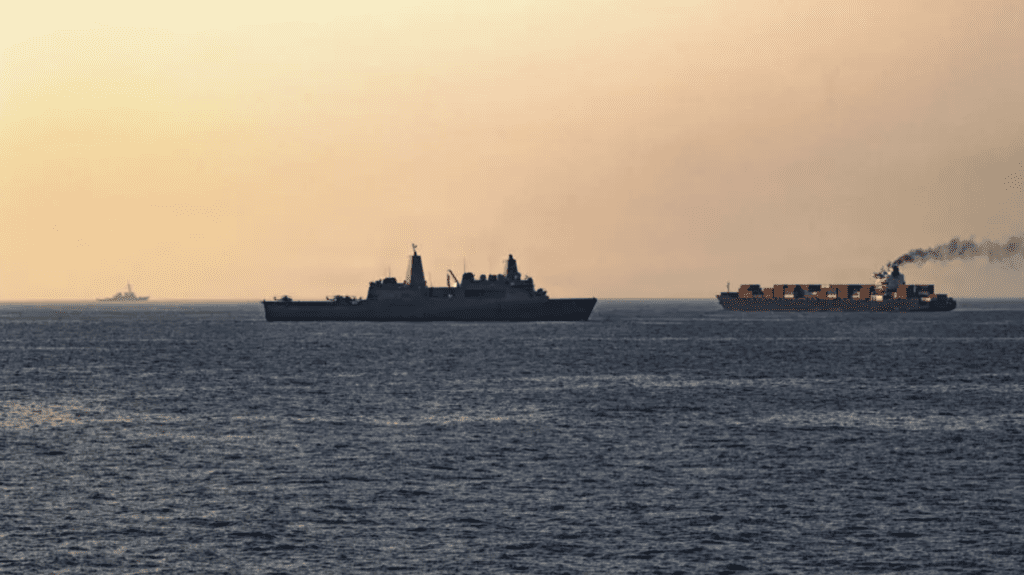
U.S. allies privately believe the Strait of Hormuz may still contain Iranian mines, casting doubt on President Donald Trump’s declaration that the U.S. Navy has completely cleared the key shipping route, Bloomberg reported Wednesday.
Officials from allied countries believe U.S. forces have made progress clearing mines from international waters but may not have found and destroyed all of the estimated 80 to 150 mines Iran is believed to have laid. The officials spoke on condition of anonymity about internal assessments.
The assessment directly challenges Trump’s repeated statements that the strait is now free of mines. Trump said Tuesday that the Navy had informed him that all mines in the international waters of the Strait of Hormuz had been removed or detonated. He repeated the claim Wednesday, calling Hormuz a functioning waterway and saying the mines were gone.
U.S. Central Command declined to comment to Bloomberg on estimates of how many mines may remain.
Allied officials said the task is complicated by ocean currents that can move mines from where they were originally placed. That could make locating remaining explosives more difficult even when military officials know where clusters were initially laid.
The uncertainty matters because the Strait of Hormuz is one of the world’s most important energy corridors. Before the current conflict, more than 20 million barrels of oil passed through the strait each day, roughly one-fifth of global oil consumption. Traffic fell to about 5 million barrels per day earlier this week as the war and threat to commercial shipping disrupted tanker movements.
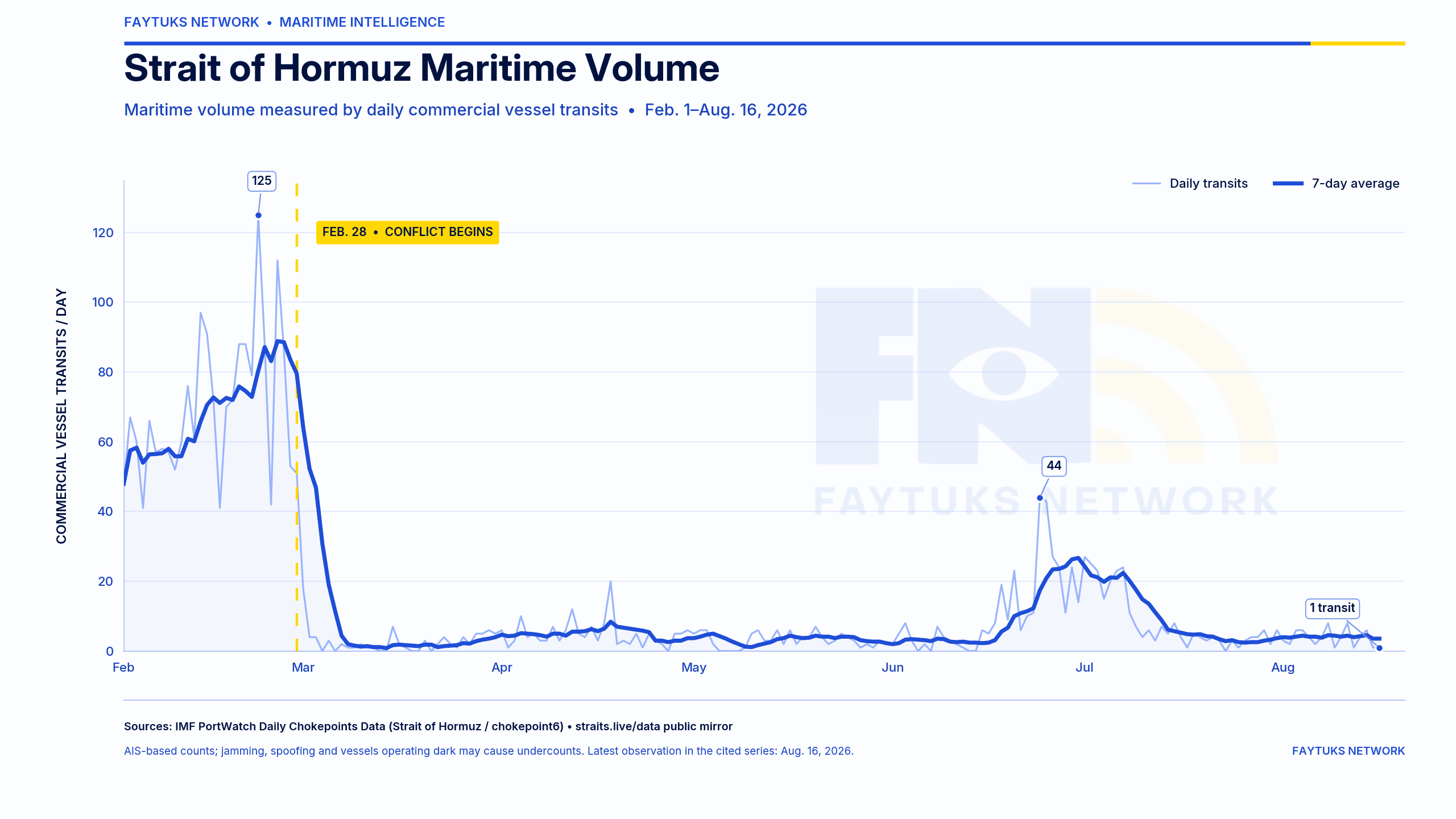
Commercial shipping has begun to increase, but traffic remains well below prewar levels. The International Maritime Organization has continued to urge vessels to use maximum caution when considering passage through the strait.
Iran has also maintained that the waterway is not fully secure. An Iranian deputy foreign minister said Tuesday that Tehran knows the locations of mines in the strait and warned that U.S. mine-clearing vessels could be targeted.
At the same time, Iran and Oman have been discussing a temporary maritime corridor and a joint mine-clearance project designed to restore safer navigation through Hormuz. Those talks continued even as Trump declared the waterway fully cleared.
The competing assessments leave uncertainty over how much danger remains for commercial vessels. While Washington says the mine threat has been eliminated from international waters, allied governments are reportedly preparing for the possibility that a broader international clearance operation will still be needed.


