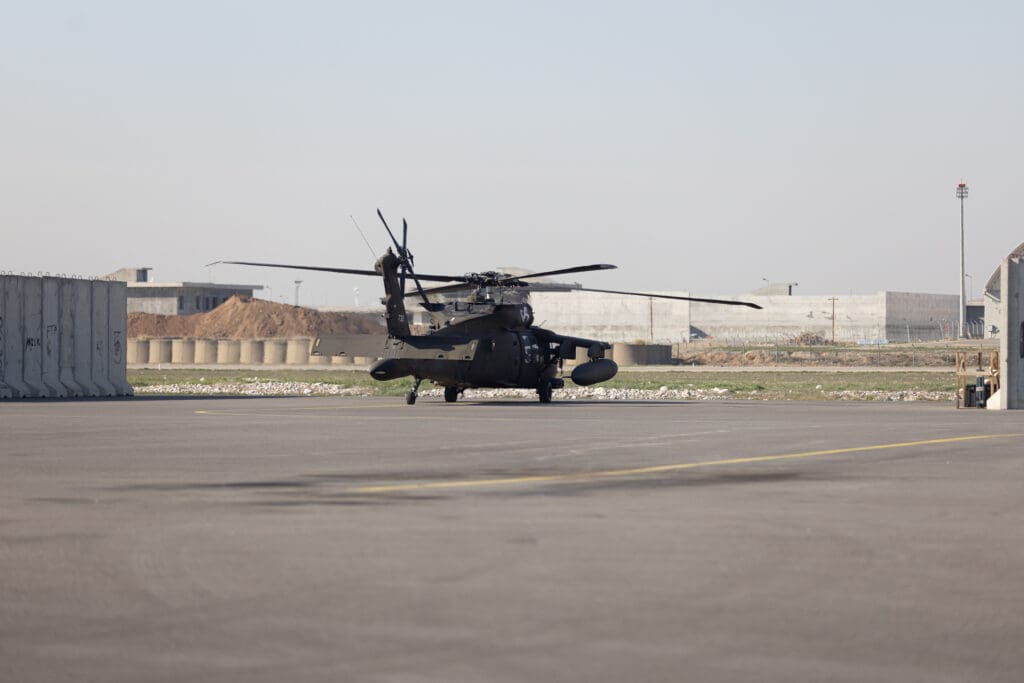
U.S. forces remain on track to withdraw from Iraq by Sept. 30, officials told The Associated Press, pushing the American military presence toward its end as tensions rise between Saudi Arabia and Iran-aligned armed groups operating across the region.
The timing carries added risk. Saudi Arabia warned last week that it expects possible coordinated attacks by Iran-backed Iraqi militias from the north and Yemen’s Houthis from the south. A senior Saudi official stated that intelligence indicated drones and missiles were being moved as part of preparations that could threaten energy sites, ports and airports.
Iraq has already emerged as a potential launch point. On July 30, Saudi Arabia and regional partners assessed that Houthi forces had carried out attacks on the kingdom from Iraqi territory in coordination with Iraqi armed groups. Those assessments said the operations took place under the supervision of Iran’s Islamic Revolutionary Guard Corps. Iraq said it was investigating the claims.
That creates a volatile security environment as the U.S. footprint shrinks. U.S. troops left bases across most of Iraq last year but remained in the semiautonomous Kurdish region, where American positions have repeatedly come under attack since the U.S.-Israeli war with Iran began Feb. 28. Kurdish officials sait that the withdrawal of U.S. troops and equipment from Erbil began about three weeks ago.
The withdrawal also overlaps with an Iraqi government deadline to bring armed factions under state control. Prime Minister Ali al-Zaidi has set Sept. 30 as the date by which non-state groups should surrender their weapons, arguing they will no longer be able to use the presence of foreign troops to justify remaining armed. Powerful Iran-backed factions have resisted disarmament, making that deadline difficult to enforce.
The danger is that armed groups could begin testing the security environment before the U.S. departure is complete. Any surge in militia deployments, drone or missile movements, IRGC-linked messaging or Iraqi security-force activity could signal an effort to establish new red lines as Washington withdraws.
With Saudi Arabia already warning of attacks from both Iraq and Yemen, the final weeks of the U.S. drawdown could become a particularly sensitive period. A strike launched from Iraqi territory could trigger another Saudi or U.S. response inside Iraq, placing Baghdad between its Gulf neighbors, Washington and powerful Iran-aligned factions at the same time it is trying to consolidate state control over weapons.