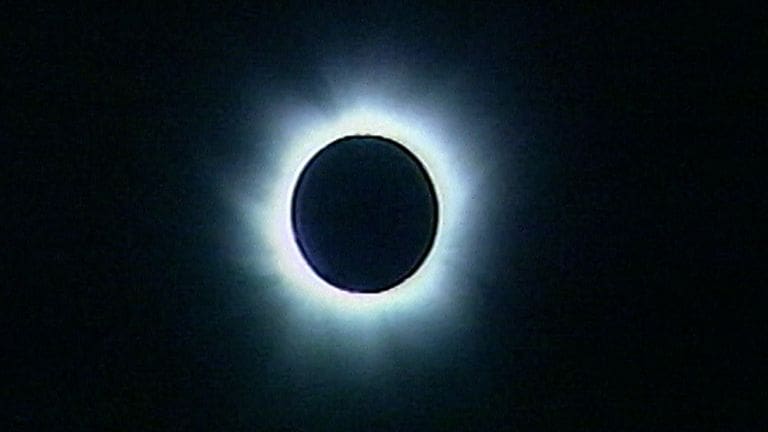
A total solar eclipse will sweep across portions of the Northern Hemisphere on Wednesday, Aug. 12, bringing complete darkness to a narrow corridor stretching from northern Russia through Greenland and Iceland before crossing Spain and a small area of Portugal. Most locations within the path of totality will experience complete coverage of the Sun for less than two minutes, while observers near the center of the eclipse track could see totality lasting slightly longer. The eclipse will reach Spain late in the evening shortly before sunset, producing unusually low-altitude views of the fully obscured Sun.
Much of the rest of Europe will experience a significant partial eclipse. NASA projects approximately 99% solar coverage in Barcelona and Madrid, 94% in Dublin, 92% in Paris and Milan, 91% in London and about 85% in Berlin. In the United Kingdom, the eclipse will begin shortly after 6 p.m., with maximum coverage occurring between roughly 7:05 p.m. and 7:16 p.m. depending on location. London is expected to reach maximum eclipse at around 7:13 p.m. before the event ends shortly after 8 p.m. Current forecasts indicate central, southern and eastern England and Wales are likely to have some of the clearest viewing conditions, while cloud cover could limit visibility across Scotland and Northern Ireland.
The event will be particularly significant for Spain, where the European Space Agency says Wednesday’s eclipse will be the first total solar eclipse visible from mainland Spain since 1905. Spain will also experience the largest European land area within the path of totality, with cities including León and Zaragoza positioned directly beneath the Moon’s central shadow. The eclipse begins a series of major solar events visible from the Iberian Peninsula between 2026 and 2028.
Authorities are urging observers to use certified solar-viewing equipment throughout every partial phase of the eclipse. Regular sunglasses do not provide adequate protection, and viewing the Sun through cameras, binoculars or telescopes requires specialized solar filters. Only observers experiencing complete totality may safely view the Sun without protection, and eclipse glasses must be put back on immediately as sunlight begins to reappear. NASA recommends viewers use equipment compliant with the ISO 12312-2 international safety standard.