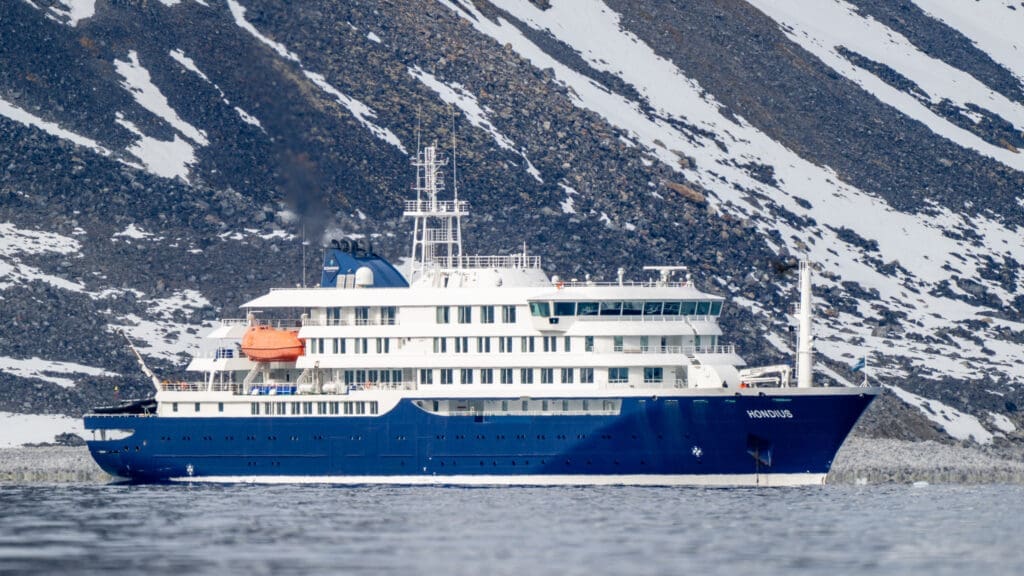
An outbreak of the Andes virus, a particularly lethal strain of hantavirus, has struck the Dutch-flagged cruise ship MV Hondius during a weeks-long voyage to Antarctica, and caused the vessel to anchor near the African island nation of Cape Verde until May 7, when Spanish health authorities authorized the ship to proceed to the Canary Islands for the passengers and crew to disembark; the MV Hondius has since plotted a course toward the Spanish islands.
Belonging to a family of viruses carried by rodents, the Andes virus differs significantly from the rest. Although similarly transmitted to humans through the inhalation of aerosolized rodent saliva, urine, or feces, the virus has a fatality rate between 35% and 50%, making it far deadlier than its counterparts, such as the European variants, which only have an observed 1% fatality rate. The Andes virus is endemic to South America, primarily in Chile and Argentina, the region from which the MV Hondius embarked on its journey across the Atlantic, with approximately 100 cases being reported annually.
Initially identified in Argentina in 1995, the Andes virus has been responsible for several outbreaks associated with human-to-human transmission, primarily through respiratory droplets and sustained contact. Its lengthy incubation period of between one week and two months gives the virus ample time to spread between hosts undetected. While it remains asymptomatic in rodents, transmission to humans can trigger symptoms ranging from mild to severe, often proving lethal by causing sudden respiratory failure. As of now, this strain of hantavirus has no definitive treatment, and available medical care in most cases remains supportive.
Three passengers aboard the MV Hondius have died. While confirmed cases have been either evacuated from the ship or placed under intensive care, a total of 147 passengers and crew members remain isolated in their cabins, awaiting evacuation once the ship reaches Spain’s Canary Islands. Despite the Andes strain taking the lives of three people on board and infecting several others, numerous health experts and officials have assessed that the risk of the virus becoming a major health concern remains low, due to human-to-human transmission being exceedingly rare and typically occurring only after periods of prolonged and close contact between infected hosts and healthy individuals.
Days after the MV Hondius embarked on its transatlantic journey bound for Antarctica, a Dutch couple fell ill, and the husband died on board on April 11. At the time, authorities could not link his death to the virus, attributing it instead to unrelated causes.
The vessel continued its voyage with the body of the deceased man still on board until anchoring at the island nation of Saint Helena on April 24, where medical teams retrieved the body off the MV Hondius, and more than a dozen passengers disembarked. Among those who disembarked was the man’s wife, who boarded a commercial flight to Johannesburg, South Africa, intending to arrange her repatriation to the Netherlands.
The condition of the man’s wife began rapidly deteriorating during the flight, and she collapsed upon arriving at O.R. Tambo International Airport. Responding medical teams rushed her to a medical center and transferred her to intensive care, where she died the following day despite their efforts.
Health officials suspect the couple contracted the virus during their vacation in Argentina, unwittingly carrying it aboard the ship. The lengthy incubation period of the virus likely allowed it to spread undetected to other passengers and crew, who came in close contact with the infected couple. At the same time, officials note it is highly probable the woman contracted the strain directly from her husband, given their prolonged contact and shared cabin quarters.
While the vessel was still anchoring in Saint Helena’s port, the outbreak continued to worsen on the MV Hondius as a British man began developing mild symptoms, seeking treatment from the ship’s doctor. Two days after the vessel left the port, the British man’s condition became critical, and he had to be airlifted for his condition to be assessed and begin the process of treatment accordingly. The man was transported to a medical facility in South Africa that could accommodate his condition, where he still remains in intensive care.
Another woman on board began developing symptoms similar to those observed in the British man, and she died on May 2. On that same day, South African authorities reported that the tests they conducted on the British man came back positive for the hantavirus. Two days later, tests on the deceased Dutch woman’s body also revealed the presence of the hantavirus.
The MV Hondius underwent a quarantine procedure, in which passengers and crew members were confined to their cabins and strict rules were imposed to reduce human contact as much as possible. Once it was revealed there was an outbreak on board the vessel, health authorities of nations with an Atlantic coast and the World Health Organization (WHO) began talks to determine where the ship should dock so that evacuations could be carried out. Talks between the WHO and Spain’s Health Ministry paid off, allowing the vessel to dock in the Canary Islands. The ship safely docked in Tenerife, part of Spain’s Canary Islands, on Sunday, and evacuations were carried out, allowing the repatriation of passengers representing more than 20 nationalities.
In a recent statement from the Netherlands Ministry of Foreign Affairs, repatriation processes of all MV Hondius’s passengers have been completed, and passengers of Dutch nationality arriving in the Netherlands will remain in a home quarantine for the coming weeks, with their health being closely monitored during the quarantine. The MV Hondius has left Tenerife, and is currently sailing to the Netherlands. After the ship docks in the Netherlands, the remaining crew will also undergo the same quarantine process as the passengers.