



Norway’s King Harald Hospitalized in Oslo

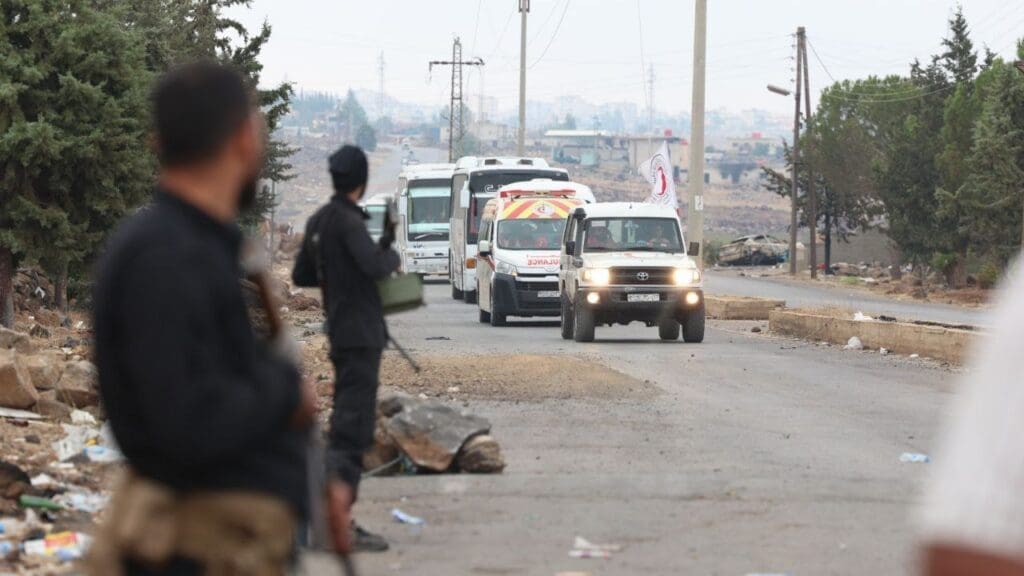
It has now been 10 months since the initial clashes erupted in the Suwayda Governorate, leaving 1,700 dead, 200,000 displaced (UN Syria Commission), and 100 Suwaydans still missing to this day. The National Guard, in coordination with Suwayda’s Druze spiritual leader Hikmat al-Hijri, continues to resist Damascus’s push for centralization. However, three attacks on National Guard-affiliated commanders over just April 27 and 28 raise a critical question: how effectively can Hijri maintain security in a governorate squeezed by an uncooperative Damascus and marred by internal violence?

The Education Impasse
In the struggle for Suwayda, Damascus holds the administrative cards. By refusing to recognize exam results or release salary payments, the central government can effectively paralyze Suwayda’s future. This specific impasse resulted from a communication breakdown between the former education director, Laila Jahjah, and the Syrian Ministry of Education over Damascus’s demand to monitor local exams. To remedy this, the Suwayda governor, Mustapha Bakour, appointed a new director. While a Damascus appointee, Safwan Balan enjoyed support from teachers who had gone unpaid after the prior director failed to refer their names to the ministry.
The National Guard’s response was swift and violent. Within four days of the appointment, six armed men stormed the Education Directorate, firing weapons and abducting Balan. Under apparent duress, he later published a post apologizing for his appointment and praising Hijri. Though the shooter later handed himself in, he was quickly released on bail, and his five other associates faced no action, underlining a climate of impunity. The storming did no favors for Hijri, leading to intensified strike action that had initially started four days prior over salary concerns, with teachers calling for the immediate appointment of Balan and accountability for the armed intruders.
While Suwayda’s armed factions possess the manpower to contest Damascus’s decisions, this reliance on coercion is visibly eroding public trust. A similar crisis unfolded in the southern town of Rassas on April 6, where the appointment of a new municipal governor was met with gunfire and National Guard resistance over the control of local fuel supplies. It took two weeks of negotiation with local notables and sheikhs before the appointment was finally accepted.
There is a clear tension between the Education Directorate’s pragmatism and the idealism of Hijri’s maximalist isolationism. An exclusive report by local media outlet Suwayda 24 claims strike action ended only on April 21, following a coordinated campaign by the National Guard labeling those who opposed Hijri’s order as traitors, despite the directorate’s insistence on the need for cooperation with the ministry. Suwayda 24 has also reported similar treatment of merchants who trade with Damascus. Such rhetoric is not new; it has been used extensively against the Druze Damascus-aligned Men of Dignity (Karama) political movement, shortly preceding the torture and killing of religious figures Raed al-Matani and Maher Falhout.
In recent days, the directorate has heightened dialogue with Damascus. Teachers have since agreed to official oversight, and on April 28 and 29, salary payments and exams were announced. Damascus has been quietly exerting its control and consolidating political loyalties. However, this attempt to bypass the National Guard through coordination with a disenfranchised Education Directorate still does not account for the reflexive, repressive deployment of armed factions, with multiple National Guard-affiliated accounts on social media threatening violence against any entering Damascus officials. On April 23, a student sit-in occurred at the famous Karama Square, a site used prominently in an independence and pro-federalism demonstration just 12 days earlier. The sit-in was forcibly disrupted by the National Guard-affiliated 164th Brigade, with students made to display images of Hijri for the cameras.
The Security Situation
Damascus still holds a presence in the northern and western countryside of Suwayda. Despite the ceasefire and a negotiated prisoner swap in February, there has been intermittent mutual shelling and FPV drone strikes, although these rarely result in casualties. Damascus also maintains checkpoints manned by Internal Security Forces, where Suwaydans are occasionally detained on charges of forgery or carrying arms. Another way Damascus can garner sympathy is by providing security for the repair of electrical infrastructure damaged in the last bout of fighting. Electricity was restored only recently, on April 21, for the first time in nine months.
Suwayda’s uncomfortable reliance on Damascus extends to the supply of food. By cutting off flour or being lax with renewing aid contracts, Damascus can inflate food costs, delegitimizing local administration as failing to provide for its citizens. It can then sweep in with subsidization, as it did on April 9 and 11, publicly presenting a benevolent hand to Suwayda’s people. It is worth noting the timing in relation to the teacher strikes.
A key factor in the fighting that occurred last July was the apparent security vacuum in the wake of Assad’s fall. Simply put, this led to a series of unchecked sectarian escalations between Arab Bedouin families and Druze factions, resulting in the complete ethnic cleansing of Bedouins and a brutal sectarian campaign of revenge against the governorate’s Druze inhabitants. Ten months later, there is still a vacuum in parts of the governorate. The National Guard is simply not vast enough to cover all territory and largely remains in the city of Suwayda. The impact of this radical social change is still felt. On April 24, a clash broke out in the northern city of Shahba between two Druze families over seized Bedouin property. The clashes resulted in one person killed and one wounded.
Narcotics trafficking still poses a threat and continues to expand. Wadah Gaz Al-Din is a prominent figure in the local Suwaydan narcotics trade. Recently, Gaz Al-Din threatened to storm a security building, aiming to forcibly release his family members and associates detained during a recent anti-drug sweep. This was met by an immediate public show of force by the National Guard’s Rapid Intervention Battalion on April 21 in the threatened building’s vicinity, a clear sign of wariness and an intention to prevent the image of a security vacuum.
Yet there is another tense dimension at play here, because the National Guard often describes such criminal gangs as Damascus proxies. On April 14 and 23, the National Guard shot down balloons carrying captagon pills allegedly launched from government-controlled territory. On the same day, a drug dispute erupted between two National Guard factions over a shipment of drugs. Only material damage was recorded, but it is hard for Hijri to present himself as above corruption when the National Guard is prone to the same factionalism and underhanded methods to make money.
Factionalism in Suwayda
Which brings us back to the events of April 27 and 28, and what they reveal when read against the pattern established above. Together, the three attacks suggest a coordinated warning shot on Suwayda’s critical security components. It is immediately worth pointing out that on April 28, just seven days after the Rapid Intervention Battalion’s show of force, the home of its commander, Abdul Khaleq, came under fire.
The attack on Farouk al-Naddaf is particularly interesting. As commander of the 111th Brigade, he plays an important role in the National Guard’s defense. However, his prior and likely concurrent leadership of the Noor al-Tawhid forces, or Light of Monotheism, an independent formation, highlights the networked, rather than monolithic, nature of Suwayda’s security and a potential threat to Hijri’s loyalty.
Basel al-Shaer is both a commander and activist close to Hijri. He is an outspoken critic of Damascus and uses his voice to broadcast calls for federalism and report on government abuses to the international community, critically, Druze communities in Israel. Al-Shaer, in a recent interview with Asia News Agency, described the attacks as a “warning message” from “government loyalists.” He explicitly mentioned Druze groups like Laith al-Balous’ Karama movement, purged by Hijri in November, asserting the attack comes in response to a strengthened and unified Suwaydan security apparatus. Perhaps in response to the recent deterioration of security, Balous made a statement in March affirming loyalty to Damascus as the only guarantor for stability in Suwayda. Some commentators have also suggested Balous took part in imagery related to Sunni Islam, even leading to some unconfirmed suggestions he has converted.
Despite an ongoing media blackout and climate of fear, local media and observers have suggested this represents an internal purge. Such purges are not unfamiliar. The attribution remains contested, but the rhetorical framing applied to these attacks, such as fifth columns, government loyalists, and threats to unity, is structurally identical to what preceded the Karama purge. Whether Damascus’s hand is genuinely present or not, Hijri has demonstrated a willingness to use that accusation as political cover for internal consolidation. Supporting the view of an internal purge, SyriaTV quoted an anonymous civil activist claiming these attacks were orchestrated outside of the National Guard with help from Hijri’s own son, Salman al-Hijri. The claim traces back to a similar statement using the same “security office of Salman Hijri” framing by an anonymous former officer known only as S.O. The statement alleges a leaked list of 77 assassination targets, largely oppositionists, a detail so operationally explosive and so conveniently timed that it reads more credibly as strategic disinformation than genuine intelligence.
Returning to the opening question: how effectively can Hijri maintain security in a governorate squeezed by an uncooperative Damascus and internal violence? April offers a partial but telling answer. Hijri’s model of maximalist isolation, coercive enforcement, and media projection has produced a security apparatus with strong centralized optics and real peripheral fragility. Damascus does not need to send armored columns. It can subsidize flour, slow-walk salary payments, quietly cultivate a disenfranchised Education Directorate, and play a host of loosely aligned factions against each other. All while Hijri projects Suwayda as the paranoid security state he sought to avoid.
Jordan’s Airstrikes
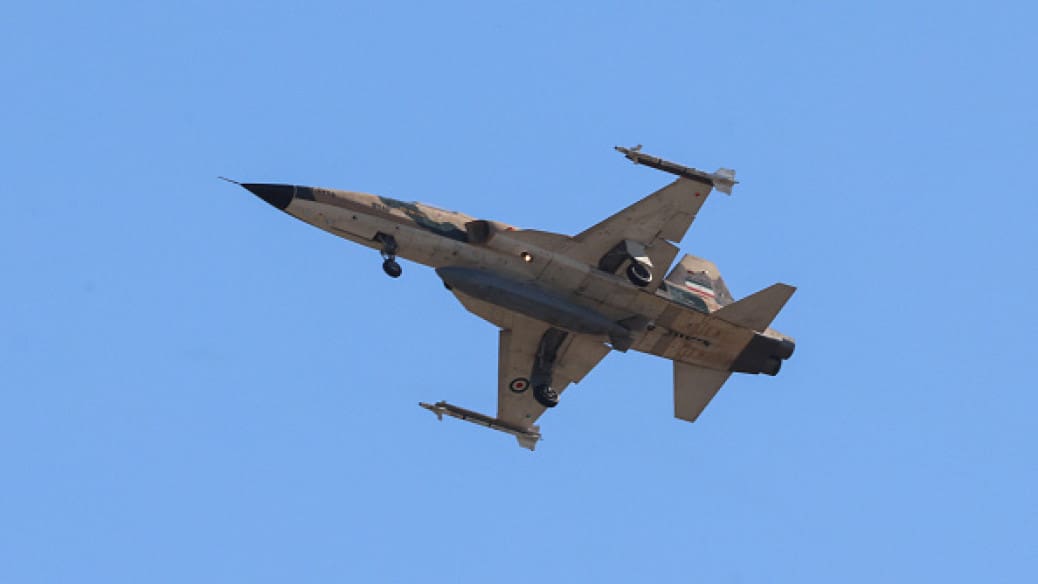
As this article was being written, the security situation in the Suwayda countryside was further complicated by a series of Jordanian airstrikes targeting the Shahba region and southwestern countryside. These strikes, according to Jordan, targeted narcotics infrastructure that the National Guard has proven unable or unwilling to dismantle, despite Jordanian bombing last December. While the National Guard suggested the strikes hit civilian homes and infrastructure based on “destabilizing” intel from the central government, local reports from As-Suwayda Press identified one target as the home of Fares Sima’a, a known figure in the regional narcotics trade. Diaspora-owned properties under construction and agricultural land reportedly sustained damage. Whether Hijri’s invocation of humanitarian concern reflects genuine outrage or convenient deflection, the underlying indictment stands: a neighboring state felt compelled to act where Suwayda’s own security forces have not, and civilians are paying the price.

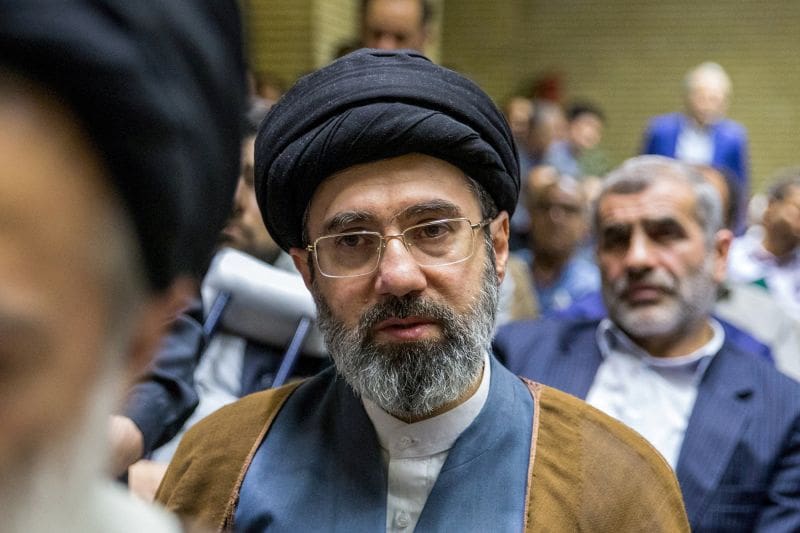
A senior CIA official tells Faytuks Network the US can confirm Mojtaba Khamenei survived the initial airstrike on February 28 that killed his father, then-Supreme Leader Ali Khamenei, but his whereabouts since have been a mystery.
U.S. forces are still on track to leave Iraq by Sept. 30, Reuters reports, even as regional tensions rise. Saudi Arabia is warning that Iran-backed groups in Iraq and Yemen could be preparing coordinated attacks on the Kingdom.


No comment yet, add your voice below!