



Norway’s King Harald Hospitalized in Oslo

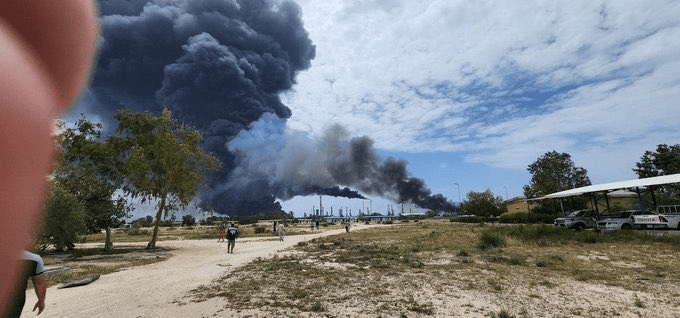
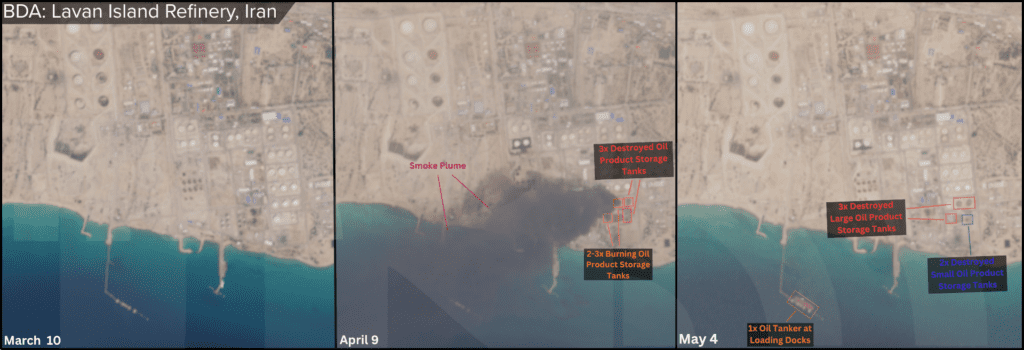
A strike on Iran’s Lavan Island refinery destroyed five oil storage tanks in early April, according to satellite imagery reviewed by Faytuks Network, hitting a Persian Gulf energy site as the war around Iran widened beyond its opening U.S.-Israeli phase.
The National Iranian Oil Refining and Distribution Company said the refinery was targeted at around 10 a.m. local time on April 8 in what it called an “enemy attack,”. The company said the strike caused a fire but no casualties, and that safety and firefighting teams were working to contain the blaze and secure the site. Israel’s military denied involvement when asked, according to Reuters.
The imagery shows three large oil tanks and two smaller tanks burning after the strike. Later imagery from May 4 shows the same five tanks destroyed. The imagery confirms the damage pattern at the refinery, but it does not identify the aircraft, weapons system or state responsible for the attack.
The Lavan strike has become one of the clearer indicators of pressure on Iranian energy infrastructure during a conflict that had increasingly drawn in Gulf states. The facility is smaller than Iran’s largest refineries, but its location on Lavan Island, in the Persian Gulf south of the Iranian mainland, gave the attack broader significance. It showed that Iranian energy assets offshore and near key Gulf routes were vulnerable even after public discussion of a ceasefire.
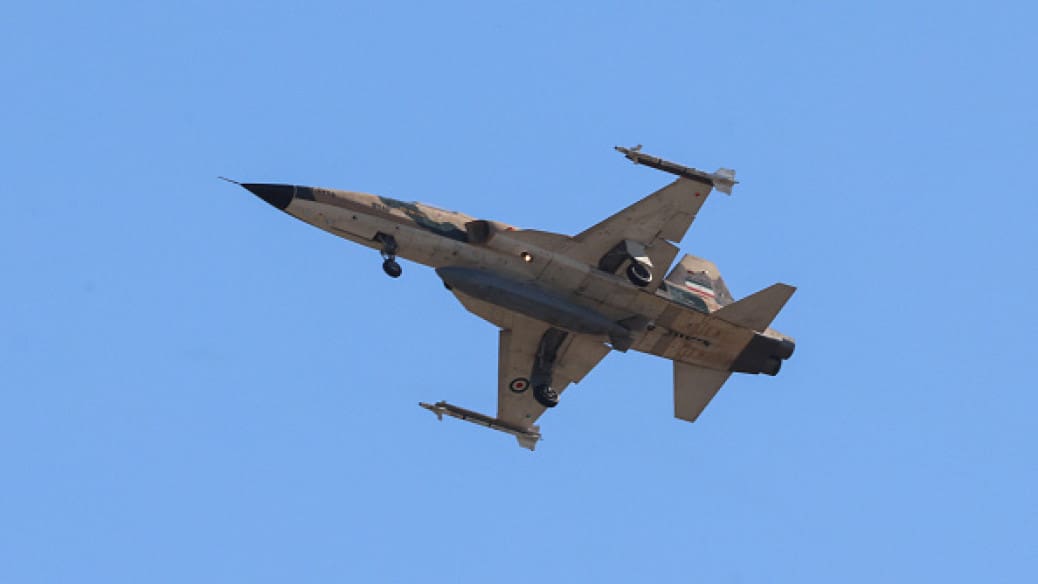
Iranian state television accused the UAE of carrying out strikes on the Siri and Lavan islands, however confirmed attribution remains unresolved. Iran’s judiciary-affiliated Mizan News Agency alleged that Mirage fighter jets used by the United Arab Emirates carried out the attack, according to Iran International and Liveuamap. The claim has not been independently confirmed, and Faytuks Network is not attributing the strike to the UAE.
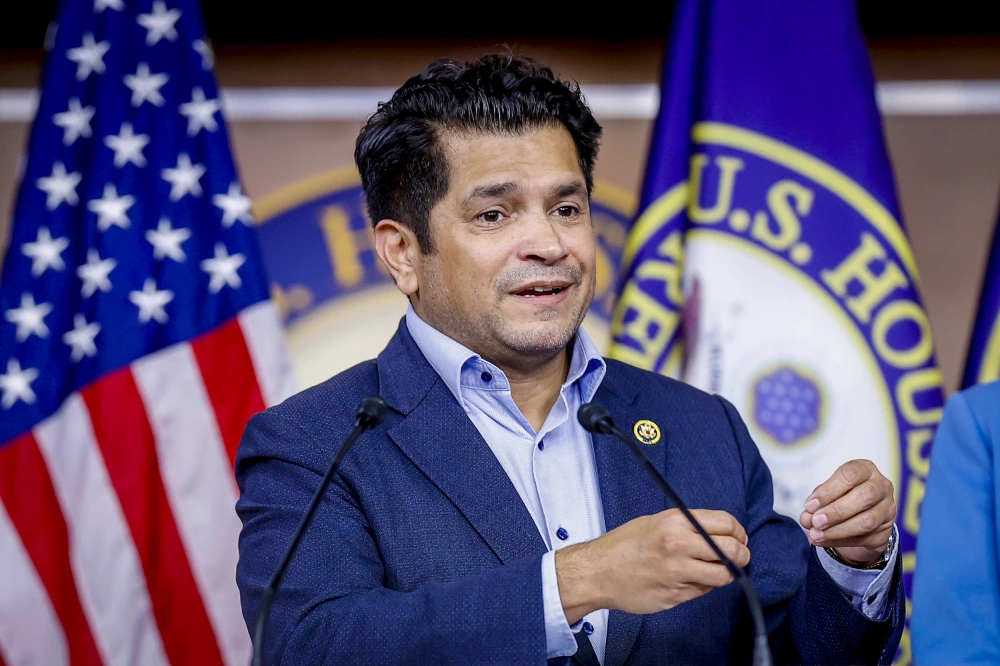
The broader context points to a changing regional picture. In a March 27 interview with Preston Stewart, Rep. Adam Smith of Washington, the ranking Democrat on the House Armed Services Committee, said that Gulf states had “on some occasions already attacked Iran here and there.” On May 11, the Wall Street Journal, citing sources, said the UAE has carried out military strikes on Iran, including against the Lavan Island. Additionally, Reuters reported on May 12 that the Kingdom of Saudi Arabia had carried out airstrikes in Iran in retaliation.
Separate Israeli reporting also fueled the debate. On March 3, The Times of Israel reported that Channel 12, citing unnamed Western sources, said Qatar had carried out strikes in Iran in response to Iranian attacks across the Gulf. Qatar denied joining the campaign, saying it was exercising its “right in self-defense and deterring Iranian attacks against our country”, according to Qatari Foreign Ministry spokesman Majed Al Ansari. The same Times of Israel article stated that a senior Israeli official told Kan that Israel assessed that Saudi Arabia would soon strike Iran. At the time, Gulf states had not publicly confirmed offensive operations, though several had intercepted Iranian attacks.
That reporting is notable but it’s not conclusive. Channel 12’s claim relied on unnamed Western sources, while Qatar’s denial was public and attributable. The best analysis is that Israeli officials and media were openly discussing possible Gulf state offensive involvement by early March, not that public evidence proves any specific Gulf state carried out the Lavan attack.
The downing of a drone near Shiraz added another piece to the puzzle. Iran’s semi-official Tasnim News Agency initially claimed Iranian air defenses had shot down two U.S. MQ-9 drones in southern Shiraz. Anadolu reported that several open-source intelligence platforms instead assessed that at least one of the aircraft appeared to be Chinese-made, with one report saying the debris likely matched a Wing Loong II operated by Saudi Arabia or the UAE. Anadolu said the Iranian claim and the drone identity could not be independently confirmed.
South China Morning Post later reported that Iran demanded explanations from two Gulf states equipped with Wing Loong II drones after one was reportedly shot down over Shiraz. Both Saudi Arabia and the UAE are known operators of the Chinese-made reconnaissance and strike drone, the report said. Iranian Foreign Ministry spokesman Esmail Baqaei posted photos of the wreckage and said clarification was needed from one of the two regional users of the drone.
The Wing Loong II evidence supports a limited conclusion. The wreckage imagery from Shiraz appears to have raised legitimate questions about Gulf state drone operations over Iran. But, it does not establish who operated the aircraft.
Taken together, the evidence shows a conflict in which Gulf-state participation had become plausible, publicly discussed and in some cases supported by circumstantial or apparent physical evidence. It does not support a firm, attributable state actor responsible for the Lavan refinery strike.
The confirmed facts are narrower but significant: Iran’s Lavan Island refinery was hit in an enemy attack on April 8 and five oil tanks were destroyed. Israel denied involvement, and the strike occurred just as evidence mounted that the Gulf was moving from a defensive battlespace into a more active front of the war. Who exactly executed the Lavan strike remains unconfirmed, and will remain the subject of analysis for some time.

A senior CIA official tells Faytuks Network the US can confirm Mojtaba Khamenei survived the initial airstrike on February 28 that killed his father, then-Supreme Leader Ali Khamenei, but his whereabouts since have been a mystery.
U.S. forces are still on track to leave Iraq by Sept. 30, Reuters reports, even as regional tensions rise. Saudi Arabia is warning that Iran-backed groups in Iraq and Yemen could be preparing coordinated attacks on the Kingdom.


No comment yet, add your voice below!