

Throughout the history of modern crises, the standoff revolving around Iran differs significantly from the rest. It is not only viewed as highly controversial by opposing spheres, but it also appears to be stuck in an endless loop of stalled diplomatic efforts and restrained military action. The conflict itself has reached a state of perpetuity, regarded as such by both the domestic audiences of the nations involved and the broader international community. After more than four months of continued hostilities, a concrete agreement that could put an end to this state of war has yet to materialize, even though Gulf mediators have made numerous diplomatic attempts at brokering one between the main belligerents, the U.S. and Iran. The standoff has been dictated by telegraphed strikes, media posturing to control the leading narrative, countless last-minute decision reversals, and a seemingly mutual effort to keep the hostilities within the range of what could only be described as a limited-scale conflict — or, in the words of U.S. President Donald Trump, “shooting in a more moderate manner.” Four months of hostile exchanges only to regress back to the outset brings up the crucial question of what exactly the U.S. endgame is: is Washington looking for an off-ramp opportunity, prolonging the conflict to bring Tehran to the table through economic attrition, or is there a more unprecedented strategy at play, leaving even the most probable answers open-ended.
Looking back at the events that triggered the current crisis, the elimination of Iran’s Supreme Leader Ayatollah Ali Khamenei on February 28 was regarded as a calculated risk. What was not calculated, however, was the Islamic Revolutionary Guard Corps’s (IRGC) firm grasp on the Iranian state, dictating both the political and military wings, and their ability to steer the narrative in favor of this ‘shadow’ ruling establishment. As U.S.-led strikes continued to target the regime’s prominent figures, Tehran proved resilient. Even though the nation’s top brass and influential political figures have been eliminated, their offices have never stayed vacant, and the regime quickly filled the vacuum. The U.S.’s Operation Epic Fury had predefined objectives, including the removal of the regime and deterring Iran from ever achieving a nuclear capacity against its adversaries. While these objectives were considered somewhat achieved during the initial days of the operation, as time progressed, the strategic shortcomings have far exceeded what was once heralded as a decisive victory for the U.S. and its allies.
Initially, U.S. decapitation strikes successfully paralyzed the regime’s decision-making apparatus and disoriented IRGC forces, evidenced by their disjointed retaliations against Israel and Gulf nations. However, adaptation to these strikes began shortly after, and the Iranian regime successfully reorganized its crippled military and political wings both during the active conflict and the temporary ceasefire that lasted more than a month. The core of this resilience lies in a doctrine Iranian Foreign Minister Seyed Abbas Araghchi outlined on March 1. Detailing Tehran’s ‘mosaic defense’ strategy, Araghchi stated: “We’ve had two decades to study defeats of the U.S. military to our immediate east and west. We’ve incorporated lessons accordingly. Bombings in our capital have no impact on our ability to conduct war. Decentralized Mosaic Defense enables us to decide when — and how — war will end.”
The ‘mosaic’ doctrine Tehran embraced essentially dismantled its 36-year-old centralized decision-making process, replacing it with a decentralized structure where the true decision-makers remain obscured beneath the fallout of U.S. decapitation strikes. Meanwhile, President Donald Trump’s public remarks have sparked mounting suspicion over whether Washington is actively managing the crisis or sinking into a quagmire. As concerns mounted, they were directly addressed by the U.S. president on March 23, when he stated his administration was negotiating with an unnamed leader figure within Tehran, confirming that the leader in question was not the newly appointed Supreme Leader, Mojtaba Khamenei. Tehran, on numerous occasions, has vehemently rejected the existence of any back-channel talks beyond standard diplomatic exchanges conducted by its civilian government and regional mediators. The fact that both sides continue to contradict each other regarding the very existence of negotiations — let alone a tangible agreement — undermines the Trump administration’s credibility in this conflict and heightens the risk for regional stakeholders, primarily Israel and U.S. allies in the Gulf.
As the newly adopted decentralized structure by Tehran continues to be a major hurdle standing between the U.S. and its ability to establish direct communication channels with the IRGC’s obscured leaders, what had reportedly been settled on was a basis for formal negotiations contingent on both sides’ contradicting demands. On one hand, Washington’s 15-point proposal for establishing a framework revolved around crippling Iran’s nuclear aspirations beyond recovery. On the other hand, standing in stark contrast, was Tehran’s 10-point proposal, which included the withdrawal of U.S. military assets from the region, war reparations, and Iran’s right to enrich uranium. Following weeks of back-and-forth mediation, accompanied by ongoing military aggression from both sides, the diplomatic track has settled into a hard deadlock with no resolution in sight.
BREAKING: Trump says a deal with Iran will be signed tomorrow, followed by the immediate reopening of the Strait of Hormuz. pic.twitter.com/yLCwolVAlE
— Faytuks Network (@FaytuksNetwork) June 13, 2026
As a result, Washington’s viable paths to confront Tehran have diminished, leaving the Trump administration with options that severely disadvantage U.S. allies, and reckless escalations that threaten to shatter the fragile Middle Eastern balance with severe domestic and international blowback. This dilemma brings up the question of whether the U.S. is looking for an off-ramp opportunity that could, practically, allow Washington to emerge from the conflict unscathed while leaving other involved actors to fend for themselves. Signals from both sides thus far imply Trump’s willingness to achieve an agreement in the form of a memorandum of understanding, leaving most negotiation points open-ended to be discussed at a later date. This drastic de-escalation — from threatening Tehran with unprecedented destruction, even to the point of targeting civilian infrastructure, to settling for a vague memorandum — strongly implies Washington has opted for the ‘off-ramp’ path. That is, of course, if the agreement materializes and involved regional stakeholders adhere to the process. However, there is also the profound risk that this diplomatic track is simply a feint by Tehran to stall for time, prolong the war, and squeeze the global economy by maintaining military control over the Strait of Hormuz until Washington capitulates to Iran’s initial 10-point proposal.
According to Iran’s semi-official Fars News Agency, citing a source close to the negotiating delegates, a memorandum of understanding has not yet been agreed upon by Tehran. Additionally, the IRGC has publicly dismissed rumors of a Sunday signing ceremony, stating the draft remains entirely unfinalized. At the same time, the IRGC pointed out that signing the document would coincide with the U.S. president’s birthday on June 14, an optic that could be leveraged by Washington as domestic publicity geared toward the media, transforming what is seemingly supposed to be a diplomatic settlement into a personal media victory for the U.S. president.
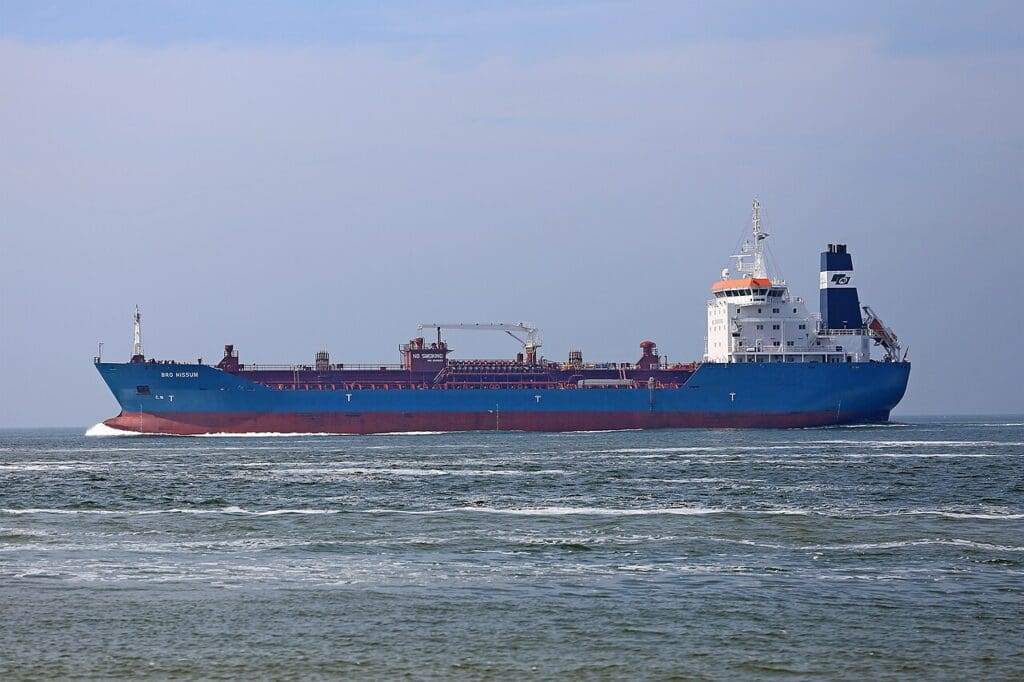
Attempting to force Tehran to the negotiating table through economic attrition presents another path for Washington. After continuous shortfalls in negotiations between the U.S. and Iran, the Trump administration imposed a counter-blockade on the Strait of Hormuz on April 13, establishing that Iranian-flagged ships could be legitimately targeted if they tried to cross the U.S. blockade, hoping to deplete Iran’s primary revenue source. Yet, this counter-blockade has failed to yield tangible strategic results. In fact, Tehran’s own blockade of the maritime chokepoint has inflicted far more damage on the global economy, effectively neutralizing and exhausting Washington’s strategy of attrition. Given this reality, several extreme suggestions have resonated within the political echelons of Washington, including deploying boots on the ground to seize Iran’s central production facilities, and striking infrastructure with precision munitions. So far, however, these options have not made their way to the materialization phase, remaining purely theoretical.
With Washington’s two primary pathways effectively exhausted, the U.S. may be forced to pivot to a far more unorthodox approach. Facing depleted options, Washington and its allies could refine and unleash a previously attempted, albeit historically unsuccessful, strategy: sidestepping direct foreign intervention to instead weaponize internal dissent within the IRGC itself. Sowing distrust throughout Tehran’s military and political wings, while organizing both high-ranking defectors and grassroots opposition, could engineer a sudden power vacuum. If these internal fractures multiply faster than Iran’s decentralized ‘mosaic’ doctrine can mitigate them, the regime could face total collapse from within. Yet, orchestrating an internal fracture remains a desperate last resort. As witnessed during the initial phase of the conflict, popular uprisings in Iran resulted in thousands of casualties and widespread suffering. If a similar strategy is to be discussed, it must be prepared highly delicately, fully accounting for the IRGC’s grip on the Iranian populace and its demonstrated ruthlessness in suppressing dissent.

No comment yet, add your voice below!