


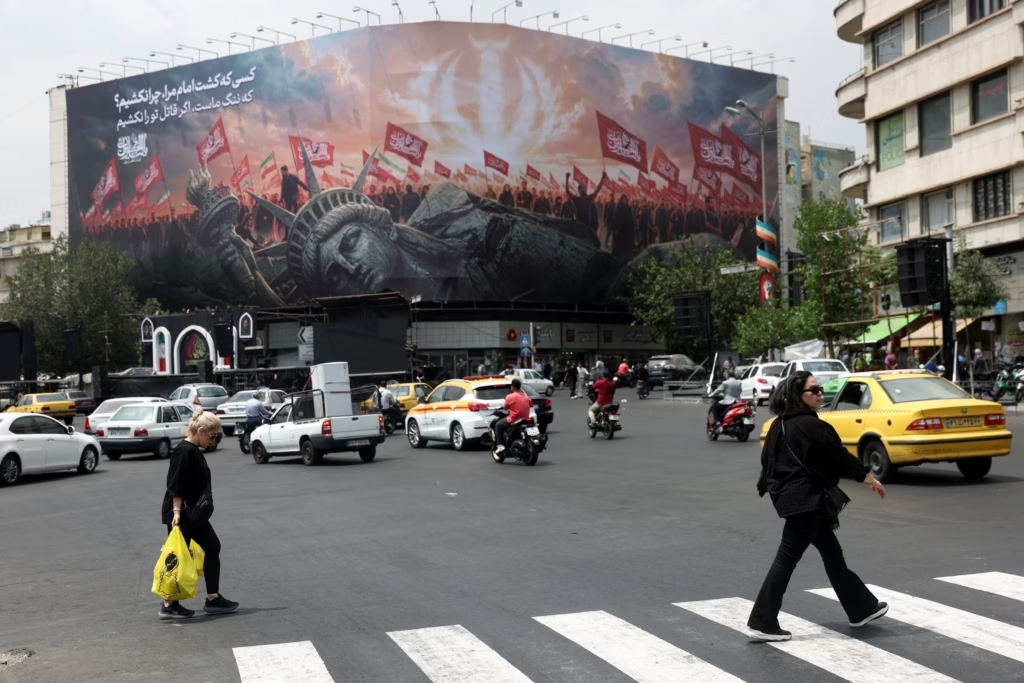
Iran’s leadership has spent the period following its June memorandum of understanding with the United States preparing for a potentially larger and more prolonged conflict, according to officials familiar with internal planning. Senior Iranian figures reportedly viewed the agreement not as the beginning of a durable settlement, but as a tactical pause that could give Washington and Israel time to regroup for another campaign. Since then, Tehran has strengthened the Islamic Revolutionary Guard Corps’ influence over military decision-making, accelerated missile and drone production and expanded preparations for operations extending beyond the Persian Gulf.
Recent leadership changes have reinforced that shift. Supreme Leader Mojtaba Khamenei appointed several veteran commanders to senior posts, including former IRGC chief Mohsen Rezaei as his representative to the Supreme National Security Council. President Masoud Pezeshkian later named Rezaei secretary of the council, placing one of Iran’s longest-serving Revolutionary Guard figures at the center of national security policy. Iran has also appointed new commanders across the Armed Forces General Staff, IRGC, IRGC Navy and Basij. Iranian officials have publicly described the appointments as strengthening the country’s ability to confront continued pressure from the United States and Israel.
The buildup has been accompanied by increasingly aggressive operations and warnings across the region. Iranian forces have continued pressuring commercial shipping around the Strait of Hormuz, while Tehran has threatened energy infrastructure in Gulf states if Iranian facilities are targeted. Iranian officials have simultaneously emphasized that the country remains capable of sustaining missile production despite months of fighting, while military commanders continue framing the confrontation as an extended struggle rather than a temporary crisis.
The strategy complicates efforts to turn the June agreement into a broader settlement. Tehran and Washington remain divided over sanctions relief, frozen Iranian assets, control of the Strait of Hormuz and the future U.S. military presence in the region. Iran’s recent military restructuring suggests its leadership is preparing for negotiations and renewed fighting at the same time, preserving diplomatic channels while rebuilding the capacity needed for another escalation. That approach leaves the regional conflict vulnerable to another rapid expansion even as mediators continue seeking a longer-term agreement.


