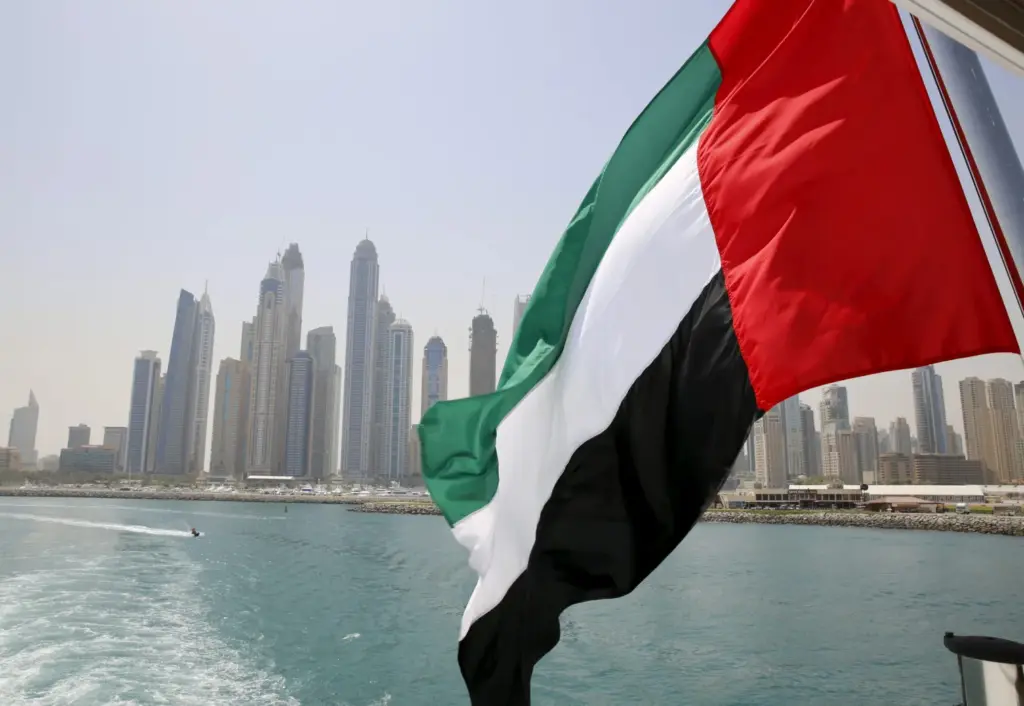
The Dubai Marina skyline in the United Arab Emirates. Photo by CENA.
The United Arab Emirates has halted all trade, commercial exchanges and financial transactions with Iran until further notice, according to an announcement attributed to the UAE Foreign Ministry on Tuesday, marking a major economic break between the Gulf neighbors as regional tensions surge.
The decision could deal a significant blow to Iran’s economy. The UAE has long served as one of Tehran’s largest trading partners and a critical gateway for Iranian imports, re-exports and financial activity, particularly through Dubai.
Director of the Strategic Communications Department at MoFA: All Trade, Commercial Exchange, and Financial Transactions with Iran Halted
The Director of the Strategic Communications Department at the Ministry of Foreign Affairs (MoFA), Afra Al Hameli, rejected all allegations…
The UAE has recently been widely ranked as Iran’s second-largest trading partner after China. World Trade Organization data shows Iran imported about $21 billion in goods from the UAE in 2024, accounting for 30.6% of all Iranian imports that year. Iran exported another $7.16 billion in goods to the Emirates.
Tuesday’s move comes amid a renewed escalation in the region. The UAE Defense Ministry said two ballistic missiles were launched from Iran toward the country Tuesday. One fell outside Emirati territorial waters and another landed within them, with no reported injuries or damage.
The UAE has also accused Iran of a series of attacks on vessels linked to Abu Dhabi National Oil Company in the Strait of Hormuz. Three such incidents were reported in less than a week, prompting the Foreign Ministry to call on Tehran to halt what it described as unprovoked attacks and fully reopen the strategic waterway. Iran had not immediately commented on the latest UAE accusations.
The economic cutoff represents a sharp reversal in a relationship that Abu Dhabi spent years trying to stabilize.
The UAE downgraded diplomatic ties with Iran in 2016 amid a wider confrontation between Tehran and Gulf Arab states. It began rebuilding the relationship several years later, returning its ambassador to Tehran in 2022. Iran appointed an ambassador to the UAE the following year.
Economic ties continued to deepen despite longstanding political disputes. In April 2024, the two countries convened their joint economic commission for the first time in a decade. Iranian customs figures at the time showed the UAE was Iran’s largest source of imports, shipping $20.8 billion in goods to the country during the fiscal year that ended in March 2024.
That thaw began to unravel after the U.S.-Israeli war with Iran erupted on Feb. 28, 2026. Iran launched missile and drone attacks across the Gulf in retaliation, including strikes targeting the UAE. Abu Dhabi closed its embassy in Tehran and withdrew its diplomatic mission on March 1, warning that the attacks would have serious consequences for bilateral relations.
Despite the fighting, Emirati officials continued to publicly favor diplomacy and de-escalation. That position has come under growing pressure as attacks on shipping resumed and tensions around the Strait of Hormuz intensified. Before the conflict, roughly a fifth of the world’s oil and liquefied natural gas moved through the narrow waterway between Iran and Oman. Shipping through the strait has since been heavily disrupted.
A full UAE trade and financial halt would therefore go well beyond a diplomatic protest. It would sever one of Iran’s most important commercial links to the outside world at a time when Tehran is already under heavy international sanctions and facing mounting pressure on its shipping, banking and energy sectors.
A senior CIA official tells Faytuks Network the US can confirm Mojtaba Khamenei survived the initial airstrike on February 28 that killed his father, then-Supreme Leader Ali Khamenei, but his whereabouts since have been a mystery.
U.S. forces are still on track to leave Iraq by Sept. 30, Reuters reports, even as regional tensions rise. Saudi Arabia is warning that Iran-backed groups in Iraq and Yemen could be preparing coordinated attacks on the Kingdom.
Faytuks Network is built by volunteers and powered by its community. Contributions help cover the hosting, security and infrastructure costs that keep the site running. Plus, exclusive Discord and X benefits!
We use cookies to ensure that we give you the best experience on our website. If you continue to use this site we will assume that you are happy with it.AcceptPrivacy Policy










No comment yet, add your voice below!