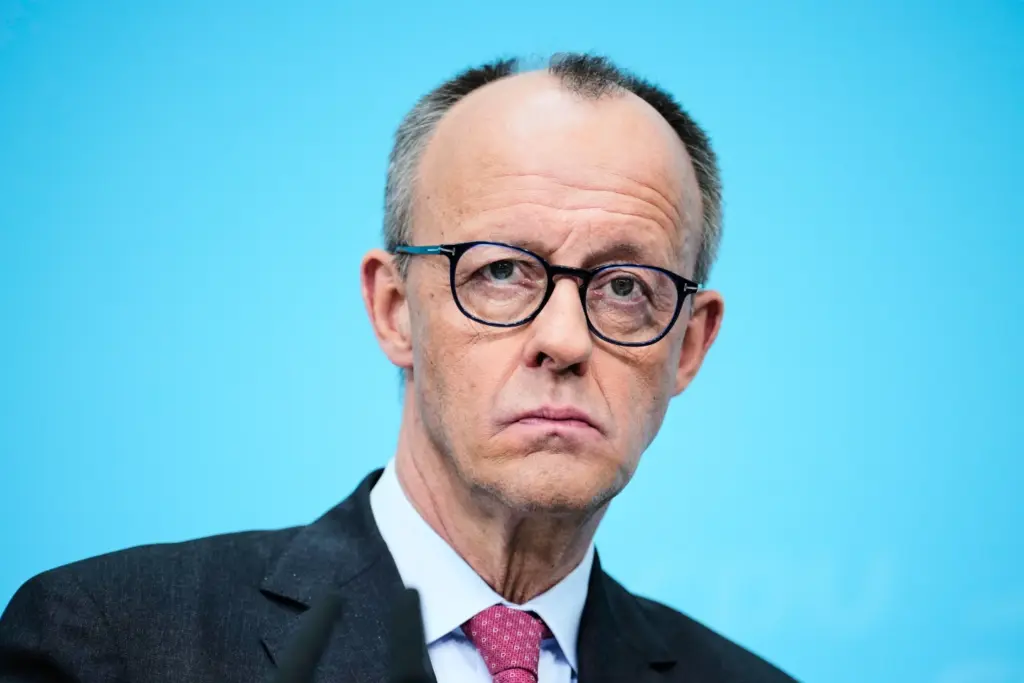
Senior Christian Democrats have moved swiftly to dismiss media speculation surrounding a mid-term replacement of Chancellor Friedrich Merz by Hendrik Wüst, warning that internal division threatens the stability of Germany’s ruling coalition at a time of mounting domestic pressure.
Whispers of a ‘Reserve Chancellor’ ensnare Berlin
Germany’s ruling Christian Democratic Union (CDU) has found itself confronted with an unexpected midterm leadership debate following explosive reports from domestic outlets Focus and Stern. The publications alleged that high-level party circles have quietly evaluated the possibility of a historic swap at the Chancellery, aiming to replace Chancellor Friedrich Merz with North Rhine-Westphalia’s popular Minister President, Hendrik Wüst.
While other alternative figures – including CSU leader Markus Söder and Union faction heavyweight Jens Spahn – have occasionally surfaced in background whispers, it is Wüst who has been thrust into the spotlight as the primary hypothetical successor. The reported scenarios suggest that Wüst’s reputation for “quiet governance” in his regional coalition could serve as a stabilizing alternative for the federal party.

CDU Heavyweights Rally Behind Merz
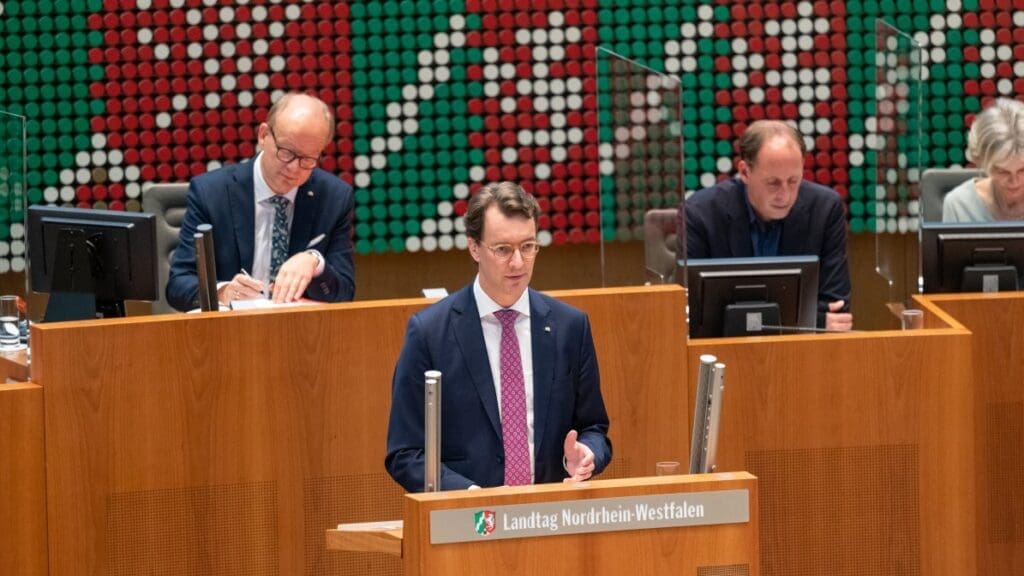
In response to the growing media storm, top-ranking party figures have been hard at work to douse the speculation and reinforce the Chancellor’s authority. Most notably, North Rhine-Westphalia’s Minister President Hendrik Wüst – the figure at the center of the successor theory – strongly rejected the reports. Speaking to the dpa news agency, Wüst labelled the talk of a leadership swap as “complete rubbish” and warned against damaging personnel speculation. He emphasized that Merz can firmly rely on the support of his state’s CDU.
Other senior figures quickly joined the defensive front. Sven Schulze, the Minister President of Saxony-Anhalt, explicitly rejected the reports, labeling the talk of an impending leadership swap as total “nonsense.” Echoing this stance, Union parliamentary group leader Jens Spahn dismissed corresponding reports as “completely unfounded,” while Hessian Minister President Boris Rhein declared, “We don’t need less Merz; we need more Merz.”
The pushback from within the Chancellery itself was equally sharp. Allies close to the Chancellor characterized the talk as a “dangerous playing with fire,” while Head of the Chancellery Thorsten Frei warned against self-sabotage, calling the claims an entirely “unfruitful debate.”
Meanwhile, Chancellor Merz dismissed the speculation through his spokesperson, Stefan Kornelius, who stated that the federal government remains strictly “focused on the reform process” and views external personnel chatter as “not relevant.” Kornelius brushed the reports aside as mere “side-debates” that the party should simply ignore.
Plummeting Polls and Stalled Reforms Fuel Discontent
The underlying catalyst for the sudden leadership debate is a shifting political landscape and growing friction within the federal government. Just over a year after taking office, Chancellor Merz is grappling with historically low approval ratings for a sitting head of government. In a recent survey published by German public broadcaster ARD at the beginning of May, only 16 percent of those questioned were satisfied by the Chancellor’s work, while 83 percent were not. The administration has faced consecutive international crises – including the wars in Ukraine and Iran – alongside a sluggish domestic economic environment.
Compounding these challenges is growing frustration over the pace of promised social and economic overhauls. Within the political spectrum, critics have pointed to high-profile friction points, such as the cancellation of a promised €1,000 tax relief bonus, alongside gridlock surrounding income tax brackets, healthcare, student loan and pension reforms. With the opposition Alternative for Germany (AfD) continuing to post strong numbers in national polls, anxiety within the Union ranks has fueled background murmurs, even as leadership officially maintains a united front.
High Constitutional Hurdles Render a Swap Unlikely
Despite the backroom chatter, both political reality and Germany’s legal framework suggest that a mid-term ouster remains highly improbable. Germany’s Basic Law (Grundgesetz) deliberately sets remarkably high barriers for replacing a sitting Chancellor to prevent political instability.
For a change in leadership to materialize, Merz would either have to resign voluntarily, fail a formal vote of confidence, or be replaced by parliament via a constructive vote of no confidence. Because the current government relies on a delicate partnership with the Social Democrats (SPD), any unilateral attempt by the CDU to swap leaders mid-legislature would likely collapse the coalition entirely and force early federal elections.
For the time being, party leadership remains firm: the solution to the government’s polling slump, they say, lies in resolving complex policy disputes rather than engaging in high-risk personnel changes. Yet, the sole existence of such ideas within party circles, although not supported by leading figures, displays growing uneasiness about the Chancellor’s ability to turn the tide in his battle against a rising AfD.