
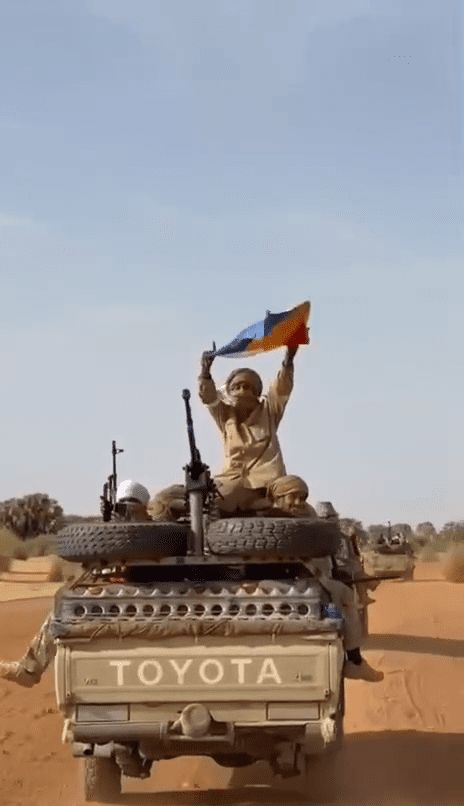
After being gripped by a years-long internal conflict shaped by broken promises to the peoples of the Sahara, extrajudicial killings by paramilitary forces, the suspension of democratic values, and ongoing struggles with Jihadist Salafist groups, Mali, Jewel of West Africa’s Crown, is on the brink of a new chapter in a war that first began in 2012. Until now, the conflict was considered semi-stagnant, limited to sporadic engagements between the nation’s military junta and dissident factions. However, coordinated attacks against the junta that emerged on Saturday suggest the conflict is rapidly regaining momentum. This newly established escalation may prove severe enough to put the military government in jeopardy, potentially paving the way for a Mali entirely splintered by separatist and Islamist forces.
Since gaining independence from France in 1960, Mali has been undergoing a societal decline, with the nation’s governing structure failing to address issues that prevented the establishment of a stable modern state free from external interference and separatist movements demanding increased autonomy. As successive governments prioritized consolidating power to mould a centralized state over the years, the nation’s remote lands were heavily neglected, leaving the Saharan people politically and economically isolated.
The Tuaregs were among the ethnic groups most severely impacted by the wave of post-colonial independence across Africa, largely due to their nomadic lifestyle and the resource-rich territories they traditionally inhabited. Having never achieved independence of their own, the Tuaregs have been subjected to marginalization on both a political and an economic level in several African nations, most notably in Mali and Niger. With their societal structure and culture at risk of being subjugated by centralized governments, Tuaregs have waged insurgencies in the areas they inhabit, with many of these attempts failing to achieve lasting success.
However, in 2011, the toppling of Muammar Gaddafi in Libya shifted the balance of power in favor of the Tuaregs. Heavily armed Tuareg veterans of the Libyan military returning to Mali brought back extensive combat experience and an understanding of militaristic structure, transforming a disordered insurgency reliant on hit-and-run tactics into a highly organized conventional force. Amidst this arrival of Tuareg veterans, the National Movement for the Liberation of Azawad (MNLA) was formed to operate in Mali’s northern provinces. Mostly consisting of Tuaregs among their ranks, the MNLA vowed to declare independence from Mali in order to defend the rights of not only the Tuaregs, but the entire populace of the Sahel region, placing them directly at odds with the Malian government’s efforts to establish a highly centralized state.
The events of 2012 decisively marked a turning point in the history of Mali. For the first time since gaining independence in 1960, the state was overwhelmed by an organized uprising of nomadic forces, which, for a long time, was not considered a major threat by the upper echelons of Mali’s political and military apparatus. Although the capabilities of the Tuaregs were downplayed, the rebel forces were able to capture the northern provincial capitals of Kidal, Gao, and Timbuktu with the help of Ansar Dine, a Salafi-jihadist group that formed a short-lived alliance with the MNLA during the Tuareg rebellion.
The seemingly unusual alliance of convenience between the secular separatist MNLA and the Salafi-jihadist Ansar Dine against the Malian government only lasted for a year. The alliance collapsed after the formation of the State of Azawad in the city of Gao due to disagreements that arose over whether to impose Sharia law within the newly founded nation, or maintain traditional governance aligning closer with Tuareg values. With no reconciliation achieved, both insurgent groups turned their weapons on each other with the end goal of eradicating each other’s influence over the captured northern territories of Mali. By the end of that same year, Ansar Dine, garnering the support of the local population, managed to overrun MNLA forces, taking control of the State of Azawad’s major cities and confining the remaining MNLA forces to the small towns and villages they still held.
On the other side of the conflict, weakened by the Tuareg offensive, the Malian Armed Forces (FAMa), were incapable of mounting a counteroffensive to recapture the fallen provincial capitals. Capitalizing on FAMa’s immobility, Islamist forces were given enough time to regroup and to begin advancing toward the center of the nation. Facing this threat, Mali’s interim government issued an urgent plea for international assistance, and, in response, a UN Security Council resolution was passed; On January 11, 2013, a French military campaign dubbed Operation Serval, aimed at rooting out Islamist influence in Mali, was given the green light. The operation lasted for a year and a half before being replaced by a more comprehensive military campaign, Operation Barkhane, which expanded to the entirety of the Sahel region. During this time, joint French-Malian forces were able to retake cities occupied by Ansar Dine, with control of Kidal being retained by the MNLA until July 26, 2013.
What emerged after the French intervention was a period of neutrality between Tuareg separatists and the Malian government. However, Islamist groups operating within the borders of Mali and neighboring nations were adamant about accumulating support for their cause, despite international efforts revolving around counterinsurgency operations. The first group to surface was the Islamic State’s Sahel Province (ISSP) arm in 2015, mainly operating in Mali, Niger, and Burkina Faso, with their presence heavily felt in Mali’s Gao and Ménaka regions. Two years later, another prominent jihadist group known as Jama’at Nusrat al-Islam wal-Muslimin (JNIM) was formed by the merging of Ansar Dine and its splinter group, Katiba Macina. JNIM, pledging allegiance to Al-Qaeda, rapidly exerted influence across the northern territories, imposing strict Sharia law, and by establishing itself as a shadow authority in these regions, the group has severely crippled Malian central government’s ability to intervene.
As the claws of separation continue to pierce through Mali’s remaining stability, what really led to the tipping point of this decade-old conflict was the overthrow of Mali’s President Ibrahim Boubacar Keïta by dissidents within FAMa’s ranks in 2020. Orchestrated by former special forces officer Assimi Goïta, the coup d’état of 2020, and a subsequent one in 2021, resulted in the formation of a military junta. Elections were postponed indefinitely, protests against the regime were banned, opposition members were silenced, and the constitution of Mali was suspended. In the aftermath of Goïta’s seizure of power, the junta established diplomatic channels with Russia in hopes of striking a deal to hire more than 1,000 mercenaries linked to Russia’s Wagner Group. By the end of 2021, Wagner mercenaries were deployed across the Malian capital of Bamako and the rest of the country. In 2022, French troops began withdrawing from Mali, and subsequently, UN Peacekeeper forces began withdrawing on June 30, 2023, gradually handing over control of UN military bases to FAMa forces.
Concerned by the developments shifting Mali’s course toward absolutism, Tuareg separatists demanded that UN Peacekeeping forces’ military bases located in the Kidal and Ber regions be placed under their control, with the Permanent Strategic Framework for the Defense of the People of Azawad (CSP-DPA) calling on the junta to resolve this issue through negotiations. In spite of efforts to solve the crisis regarding the handing over of UN bases through talks, an umbrella faction aimed at achieving independence for Azawad was formed on November 30, 2024, following the dissolution of the CSP-DPA and the integration of MNLA elements. The formation of the Azawad Liberation Front (FLA), combined with expanding Islamic influence in Mali, has led to the events of 2026, which are considered to be a new stage in this conflict.
Tuareg rebels have announced an agreement with Russian soldiers from the Africa Corps to withdraw from the city of Kidal in northern Mali – RFI
— Faytuks Network (@FaytuksNetwork) April 26, 2026
At dawn on Saturday, joint FLA and JNIM forces launched assaults against FAMa positions, completely overrunning the northern provincial capital of Kidal, seizing the residence of the Kidal Region’s governor, and capturing a FAMa base in Gao. Additionally, FLA forces have taken control of Tessalit in the north of the country, and rebel presence has been reported in the towns of Ber, Labbezanga, and Intahaka. Similarly, the rebel forces targeted parts of central Mali, with Modibo Keïta International Airport in Bamako and the city of Sévaré being among the targets. According to TV5MONDE, Russia-affiliated Wagner forces deployed in the northern territories are preparing to withdraw from the region. In addition, France 24 correspondent Wassim Nasr confirmed negotiations between the dissidents and Wagner forces for safe passage out of Kidal, which would effectively leave northern Mali in the hands of joint FLA-JNIM forces.
Mali Defense Minister Sadio Camara has been killed amid coordinated attacks across the country – Al Jazeera
— Faytuks Network (@FaytuksNetwork) April 26, 2026
On the same day joint FLA-JNIM operations began, Malian Defense Minister Sadio Camara was killed in a JNIM attack when a truck loaded with fuel struck his residence. Modibo Koné, Malian National Intelligence Chief, and Oumar Diarra, Chief of Army Staff, were also targeted by JNIM, although their conditions remain unknown. In a recent statement, JNIM remarked that the group conducted an operation targeting Malian President Assimi Goïta as well. However, the circumstances surrounding the situation and its aftermath cannot be independently verified by Faytuks Network.
Whether the dissidents will achieve their objectives remains to be seen, but the parallels between the uprisings of 2012 and the offensives of 2026 are stark. If history is taken to be an indicator of what’s to come, the Tuareg alliance with a jihadist group may, once again, prove to be a grave mistake—one that could result in catastrophic territorial losses and deepen the fractures currently tearing the nation apart under the claws of separation.


No comment yet, add your voice below!