Norway’s King Harald Hospitalized in Oslo

Unemerged Threat: The Houthi Position in the U.S.-Iran Equation
- Last Saturday, Yemeni Houthi forces carried out a ballistic missile strike against Israel, triggering sirens over Beersheba and surrounding towns, entering the equation after declaring their firm support for the Islamic Republic.
- By Wafelyn
- • March 31 2026
- •
- 4 minutes
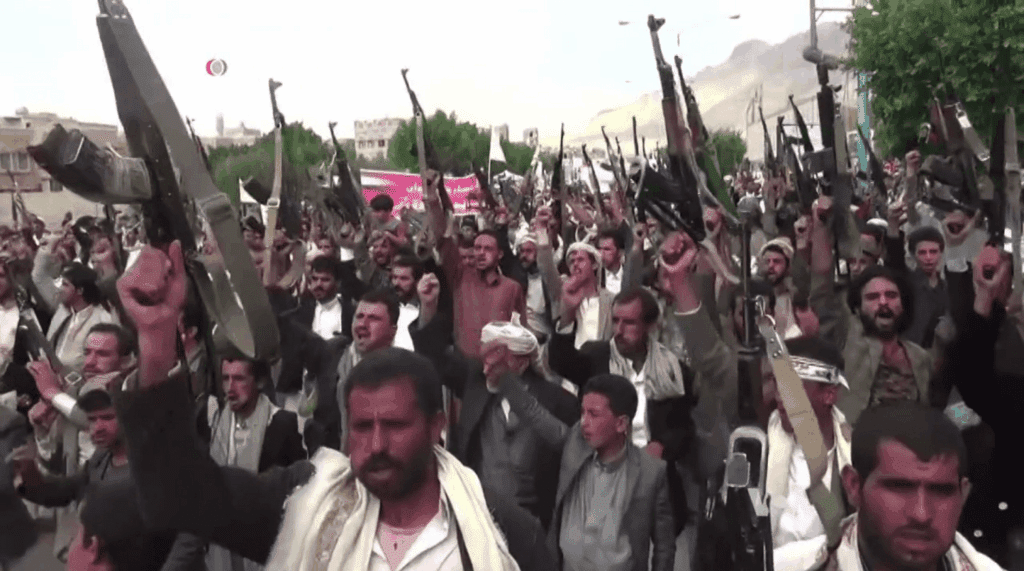
In the midst of an ever-growing conflict between Washington and Tehran, Yemen’s insurgent group, the Houthis, entered the equation last Saturday after declaring their firm support for the Islamic Republic. Although the Houthis had previously remained a non-belligerent in the conflict, their posture has rapidly shifted from non-interference to aggressive measures, standing in solidarity with Tehran’s broader proxy network. The involvement of Yemen’s Houthis came after military spokesman Yahya Saree’s televised remarks on the Houthi media channel, Al-Masirah, confirming the launch of a “barrage of ballistic missiles” targeting sensitive military sites across Israel. Until now, the insurgent group has carried out a ballistic missile attack and a combined attack of cruise missiles and drones toward Israel on March 27 and 28.
On March 27, Yemeni Houthi forces carried out a ballistic missile strike against Israel, triggering sirens over Beersheba and surrounding towns. According to the Israel Defense Forces (IDF), the ballistic missile was successfully intercepted and no casualties were reported as a result of the Houthi retaliation. The day after, Israeli media reported a subsequent, combined cruise missile and drone attack launched by the insurgent group. Following the consecutive strikes, a senior IDF official speaking to Kann News commented on the matter, expressing that the attacks are a “distraction”, while vowing that the Houthis will “pay the price” for targeting Israel.
NEW: A senior IDF official tells Kann News that the Houthis will "pay the price" for firing at Israel
— Faytuks Network (@FaytuksNetwork) March 28, 2026
During his remarks on Al-Masirah, Houthi military spokesman Yahya Saree emphasized that strikes against Israel will continue until all aggression toward Iran’s proxies ceases and the insurgent group’s predetermined objectives are achieved. Concurrently, Houthi Deputy Information Minister Mohammed Mansour spoke to local media, warning that closing the Bab el-Mandeb Strait to global maritime traffic remains a viable option for the group. Since March 28, no further strikes toward Israeli territory from the insurgent group have been identified—strengthening the possibility that the initial attacks, and the recent messaging from Mohammed Mansour, were aimed at conveying a threat toward Iran’s adversaries rather than sparking a direct escalation.
Yemen’s Houthi movement said it will continue launching attacks on Israel until the war against Iran stops, according to an official statement
— Faytuks Network (@FaytuksNetwork) March 28, 2026
Initially emerging as a social and religious movement, the insurgent group garnered support from Yemenis suffering from deteriorating economic conditions. Aligned with Zaydi Shia teachings, the Houthis seized control of Yemen’s capital, Sana’a, in 2014. Following a series of devastating internal conflicts, the group successfully absorbed the majority of Yemen’s governmental institutions, restructuring the state apparatus to align with their ideological framework. Since the fall of the capital, Yemen has remained deeply fractured, with the Houthis operating as a de facto authority, dictating both domestic governance and regional foreign policy from their territories—while being provided the necessary expertise and funds by Tehran to further strengthen control over their domain.
The insurgent group has conducted numerous operations targeting vessels off the Yemeni coast following the initial stages of Israel’s extensive campaign aimed at taking control over the Gaza Strip. The Houthis continued to actively harass vessels navigating the Bab el-Mandeb Strait, putting regional maritime traffic in jeopardy, until a ceasefire exempting U.S.-flagged vessels was brokered between the U.S. and Yemeni Houthis on May 6, 2025. U.S. vessels were given safe passage through the strait, whereas Houthi attacks on non-U.S. vessels resumed uninterrupted. However, the escalating conflict between Tehran and Washington may put the agreement at risk, causing the global energy crisis to deepen further.
Following Iran’s blockade of the Strait of Hormuz, countries in the region have increasingly diverted their export routes toward the Bab el-Mandeb Strait. This detour allows Gulf countries to access Western markets through the Suez Canal and Asian markets via the Indian Ocean. Among the affected Gulf countries, notably, Saudi Arabia has been routing oil exports to the Port of Yanbu on the Red Sea. Saudi Arabia’s approach at bypassing the restrictions imposed by Iran has led to a significant increase in tanker traffic and provided Saudi Arabia with an alternative to the Strait of Hormuz, even though navigating the Bab el-Mandeb falls under the domain of the Yemeni Houthis and risks serious maritime incidents.
Geographically and strategically, the Bab el-Mandeb Strait is just as vital to global seaborne trade as the Strait of Hormuz. Bab-el Mandeb connects African and Gulf nations to Western markets via the Suez Canal and to Asian markets through the Indian Ocean, essentially acting as a maritime bridge. Presently, Bab el-Mandeb facilitates approximately 10% of the world’s seaborne oil trade. When combined with the Strait of Hormuz, both chokepoints collectively account for over 30% of global maritime oil shipments. Consequently, any synchronal disruption to both transit corridors would severely destabilize the global economy, triggering systemic supply shocks that available alternative routes could not mitigate in the long term.
Despite the fact that the Yemeni Houthis retaliated against Israeli territory on March 27 and 28, the scale of the attacks and accompanying rhetoric from Houthi officials suggest that the insurgent group is unwilling to engage in a direct confrontation with joint U.S.-Israeli forces for the time being. Instead, reflecting Tehran’s strategy, the Houthis aim to disrupt global maritime traffic by imposing a blockade on the Bab el-Mandeb Strait and signaling their willingness to sustain such blockade until operations against Iran’s proxy network cease on all fronts. Ultimately, the Houthis’ “geographic card” at their fingertips positions the insurgent group as a formidable, unemerged threat.
More Stories
from the Faytuks Newsroom.
Share this Story
From Faytuks Network

A senior CIA official tells Faytuks Network the US can confirm Mojtaba Khamenei survived the initial airstrike on February 28 that killed his father, then-Supreme Leader Ali Khamenei, but his whereabouts since have been a mystery.
U.S. forces are still on track to leave Iraq by Sept. 30, Reuters reports, even as regional tensions rise. Saudi Arabia is warning that Iran-backed groups in Iraq and Yemen could be preparing coordinated attacks on the Kingdom.
Support Faytuks Network
Faytuks Network is built by volunteers and powered by its community. Contributions help cover the hosting, security and infrastructure costs that keep the site running. Plus, exclusive Discord and X benefits!
Contribute