



Norway’s King Harald Hospitalized in Oslo

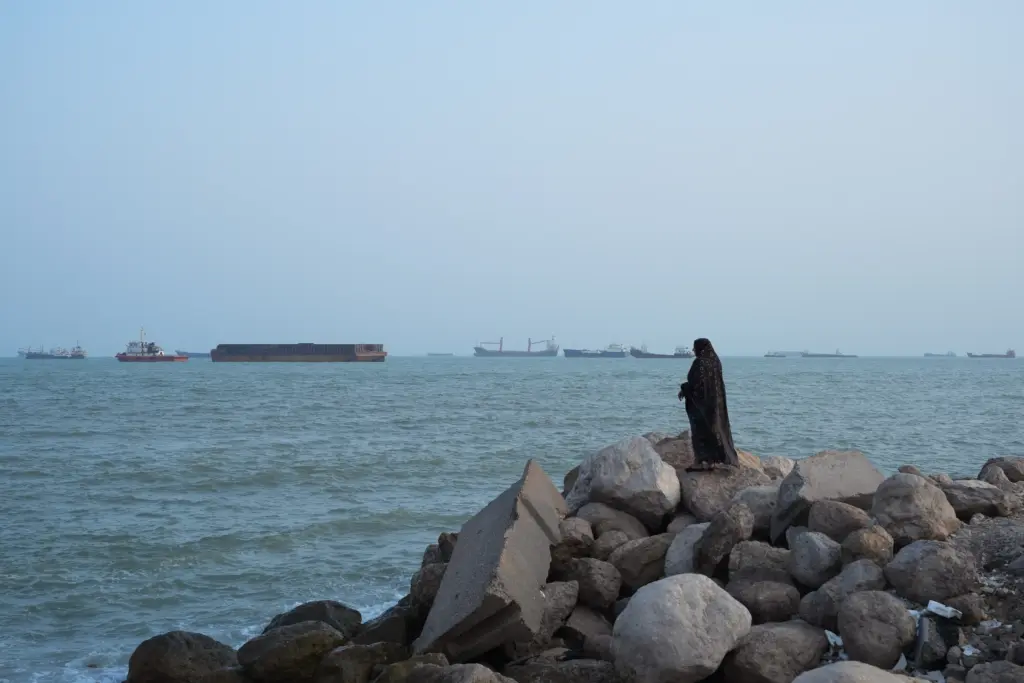
The Strait of Hormuz is a narrow stretch of water separating Iran from the Arabian Peninsula. On a map, it can look like little more than a small opening between the Persian Gulf and the Gulf of Oman.
In reality, it is one of the most strategically important waterways on Earth.
Contents
hide
Oil tankers, liquefied natural gas carriers and commercial vessels passing through Hormuz connect some of the world’s largest energy producers with customers across Asia, Europe and beyond. A serious disruption there can affect energy prices thousands of miles away, even in countries that import little or no oil directly from the Persian Gulf.
That combination of geography, energy and geopolitics is why the Strait repeatedly becomes a focus whenever tensions rise in the Middle East.
A narrow gateway to the Persian Gulf
At its narrowest point, the Strait of Hormuz is about 29 nautical miles, or 54 kilometers, wide. The navigable portion used by large commercial vessels is much smaller.
Internationally recognized shipping routes divide traffic into two lanes approximately two miles wide, one for vessels entering the Persian Gulf and another for vessels leaving, separated by a two-mile buffer. The traffic separation scheme was proposed by Iran and Oman and adopted by the International Maritime Organization in 1968.
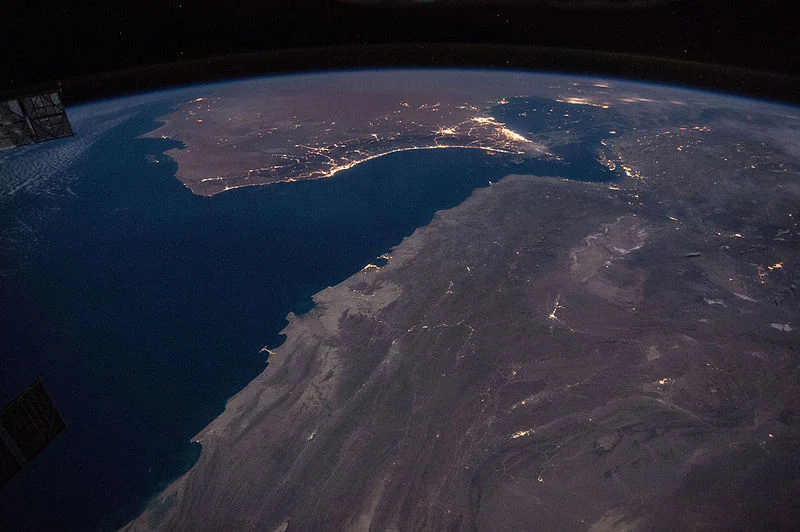
That geography creates a natural chokepoint. Ships carrying energy exports from Kuwait, Qatar, Bahrain, Iraq, Iran and much of Saudi Arabia and the United Arab Emirates must pass through this relatively confined area before reaching the open ocean.
There is no equivalent alternative sea route. A tanker leaving Kuwait, for example, cannot simply sail around the Strait if Hormuz becomes unsafe.
Roughly one-quarter of the world’s seaborne oil trade
The enormous volume of energy moving through Hormuz is what turns that geographical bottleneck into a global economic concern.
Nearly 20 million barrels per day of crude oil and petroleum products passed through the Strait in 2025, representing roughly 25% of global seaborne oil trade. Nearly 15 million barrels per day of that total was crude oil and condensate alone.
Saudi Arabia accounts for the largest individual share, but significant volumes also originate in Iraq, the UAE, Kuwait and Iran. Most of that oil does not go to the United States or Europe. About 80% is destined for Asia, with China, India, Japan and South Korea among the largest buyers. China and India together received about 44% of crude exports passing through Hormuz in 2025.
That does not mean a disruption would be primarily an Asian problem. Oil is traded on a global market. If buyers in Asia suddenly lose access to millions of barrels of Persian Gulf crude, they have to compete for supplies from producers elsewhere. European, American and Asian refiners would then be bidding for many of the same replacement barrels.
The result can be higher crude prices worldwide, regardless of where an individual country’s oil normally originates.
Natural gas makes Hormuz even more important
Oil often receives the most attention, but the Strait is also a critical artery for liquefied natural gas. Qatar is one of the world’s largest LNG exporters, and almost all of its seaborne exports must pass through Hormuz. Together, LNG shipments from Qatar and the UAE passing through the Strait represented about 19% of worldwide LNG trade in 2025. More than 112 billion cubic meters of LNG crossed the waterway that year.
There is an important difference between oil and LNG in this case: Qatar has essentially no alternative route for sending its LNG to the global market.
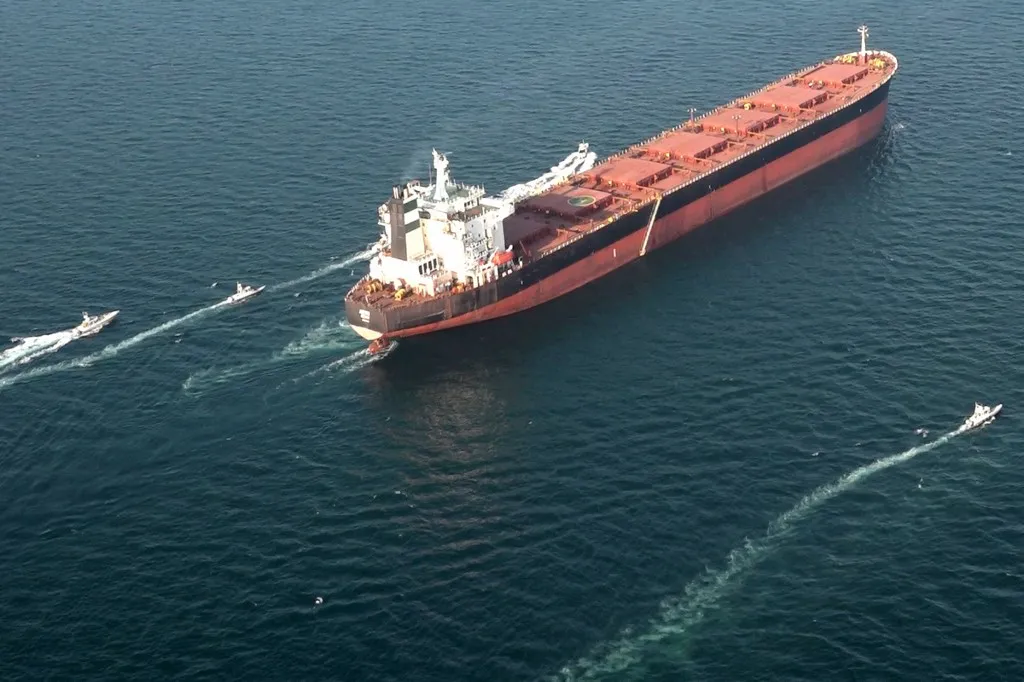
An oil producer may have some ability to use pipelines or alternative export terminals. LNG must first be processed at specialized liquefaction facilities and loaded onto purpose-built carriers. Qatar’s export infrastructure is inside the Persian Gulf.
Nearly 90% of LNG passing through Hormuz in 2025 went to Asian markets. Bangladesh, India and Pakistan were particularly exposed, with nearly two-thirds of their combined LNG imports coming through the Strait.
A disruption could therefore move beyond energy markets and begin affecting electricity generation, fertilizer production and energy-intensive industries in countries heavily dependent on imported natural gas.
Why can’t the oil simply go around?
Some of it can. Saudi Arabia operates the East-West Pipeline, which can move crude from production areas in the east of the country to the Red Sea port of Yanbu. The UAE operates the Abu Dhabi Crude Oil Pipeline to Fujairah, which sits outside the Strait of Hormuz.
But those pipelines cannot replace Hormuz. The International Energy Agency estimates that roughly 3.5 million to 5.5 million barrels per day could potentially be redirected through alternative routes under favorable conditions. That is only a fraction of the roughly 20 million barrels per day normally moving through the Strait.
Other major Gulf exporters have even fewer options. Iraq, Kuwait, Qatar, Bahrain and Iran rely heavily on the Strait for their seaborne oil exports. Building pipelines, terminals and supporting infrastructure capable of replacing Hormuz would require enormous investment and cannot be done in response to a short-term crisis.
The Strait matters, in other words, not only because of how much energy passes through it, but because so much of that energy has nowhere else to go.
The Strait does not have to close to cause problems
Discussion about Hormuz often focuses on the most dramatic scenario: a complete closure.
That is not necessary for the Strait to affect global markets. Shipping companies make decisions based on risk. A missile attack, mine, vessel seizure, drone incident or credible military threat can cause operators to delay voyages or temporarily avoid an area. Insurers can increase premiums. Crews may require additional security measures. Tanker availability can tighten as voyages become more complicated.
Markets can react before a single barrel of physical supply is lost. This is particularly important in a waterway where commercial vessels travel through narrowly defined shipping lanes near the territory of Iran and Oman. The International Maritime Organization considers Hormuz a strait used for international navigation and has repeatedly emphasized the right of vessels to transit it under international maritime law.
The region also has a history demonstrating how quickly commercial shipping can become entangled in military conflict.
During the Iran-Iraq War of the 1980s, both countries attacked oil infrastructure and commercial shipping during what became known as the Tanker War. Iranian mines, missiles and attacks on vessels eventually prompted the United States to escort reflagged Kuwaiti tankers through the Persian Gulf under Operation Earnest Will.
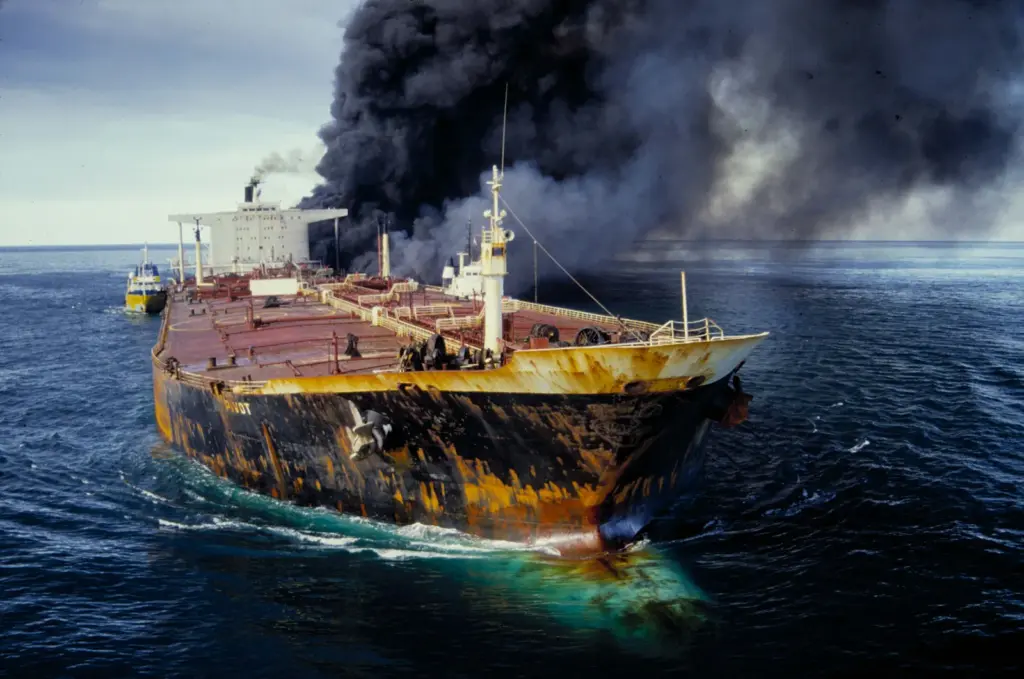
The lesson was straightforward: commercial traffic does not need to stop completely for insecurity around the Strait to have international consequences.
Why military planners watch Hormuz
Hormuz is also strategically important because several major military powers maintain forces in or around the Persian Gulf. Iran sits along the Strait’s northern shore and possesses missiles, drones, naval vessels, fast attack craft and other systems capable of threatening shipping in the region. The United States and allied countries have long maintained naval forces nearby in part to protect commercial navigation and respond to regional threats.
That creates a difficult strategic environment. A confrontation involving Iran and another regional or global power could quickly spill into the maritime domain. Conversely, an incident involving a commercial vessel could escalate into a larger military confrontation.
Mines pose a particular concern because even the possibility of mining can slow or halt commercial traffic while routes are surveyed and cleared. The confined geography of Hormuz magnifies that problem.
What happens if traffic is seriously disrupted?
The first effect would likely appear in financial markets. Oil and natural gas prices could rise as traders price in the possibility of lost supply. Shipping and insurance costs could increase. Countries and companies might begin seeking alternative suppliers.
If the disruption continued, the consequences would become increasingly physical. Refiners dependent on Gulf crude could face supply shortages. LNG-importing countries could compete for a smaller pool of available cargoes. Governments might release strategic petroleum reserves. Producers outside the Middle East could attempt to increase output, while consumers could face higher gasoline, diesel, electricity and manufacturing costs.
The effects could eventually reach goods that appear to have little connection to the Middle East. Energy is embedded throughout the global economy, from transporting food and consumer products to manufacturing plastics, chemicals and fertilizers.
That is why Hormuz can matter to someone who has never seen a tanker and lives thousands of miles from the Persian Gulf.
What to watch during a Strait of Hormuz crisis
When tensions rise, dramatic claims about Hormuz often spread rapidly. Reports that Iran has “closed the Strait,” that shipping has completely stopped or that particular vessels have been attacked should be treated carefully until independently verified.
Actual maritime conditions can be more complicated. Useful indicators include changes in commercial vessel traffic, tanker movements, navigation warnings, insurance rates, reports of mines or attacks, delays at Gulf export terminals, naval deployments and notices from maritime authorities.
Energy markets can also provide an early signal. Sharp moves in crude oil or LNG prices may indicate that traders believe a disruption is becoming more likely, although price movements alone do not prove that shipping has been physically affected.
For OSINT researchers, vessel-tracking data can be valuable, but it also has limitations. AIS signals may be delayed, intentionally disabled, spoofed or disrupted by electronic warfare. A disappearing ship icon does not automatically mean a vessel has been attacked or that the Strait has been closed.
A small waterway with global consequences
The significance of the Strait of Hormuz comes down to a simple imbalance. The waterway is extremely small compared with the global economy that depends on it. Roughly a quarter of the world’s seaborne oil trade and nearly one-fifth of global LNG trade can depend on safe passage through a narrow corridor between Iran and Oman. Alternative routes exist for only a portion of that traffic, and some of the world’s largest energy exporters have practically no way around it.
That does not mean every confrontation in the Persian Gulf will produce an energy crisis, nor does every threat to Hormuz mean the Strait is about to close.
It does mean that events there deserve attention far beyond the Middle East. When traffic through Hormuz is threatened, the question is not simply whether ships can get through a narrow stretch of water. It is whether one of the most important arteries of the global energy system can continue to function.

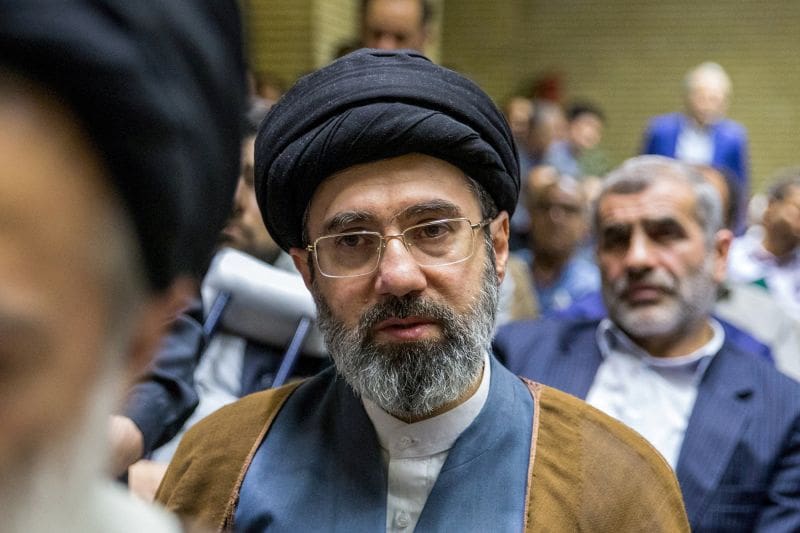
A senior CIA official tells Faytuks Network the US can confirm Mojtaba Khamenei survived the initial airstrike on February 28 that killed his father, then-Supreme Leader Ali Khamenei, but his whereabouts since have been a mystery.
U.S. forces are still on track to leave Iraq by Sept. 30, Reuters reports, even as regional tensions rise. Saudi Arabia is warning that Iran-backed groups in Iraq and Yemen could be preparing coordinated attacks on the Kingdom.


No comment yet, add your voice below!