Built for Smuggling: How Iran’s Revolutionary Guard (IRGC) Runs a Global Drug Cartel

Iran’s Islamic Revolutionary Guard Corps operates one of the world’s largest state-backed drug trafficking enterprises, generating billions of dollars annually through opium, heroin, cocaine, and Captagon networks that span from Afghanistan to Latin America. U.S. Treasury designations, DEA investigations, and UN data collectively paint a picture of an organization that has weaponized the narcotics trade to fund proxy wars, evade sanctions, and project power across four continents — all while executing hundreds of its own citizens each year for low-level drug offenses.
The DEA’s landmark Project Cassandra investigation traced the conspiracy to the innermost circle of Hezbollah and its state sponsors in Iran, estimating that the IRGC-Hezbollah narcotics nexus collects roughly $1 billion per year from drug trafficking alone (Politico/Snopes). This is not rogue activity by individual officers. The systemic nature of the involvement — sanctioned generals, state-controlled ports, military-grade logistics — points to institutional complicity at the highest levels.


A Military Organization Built for Smuggling

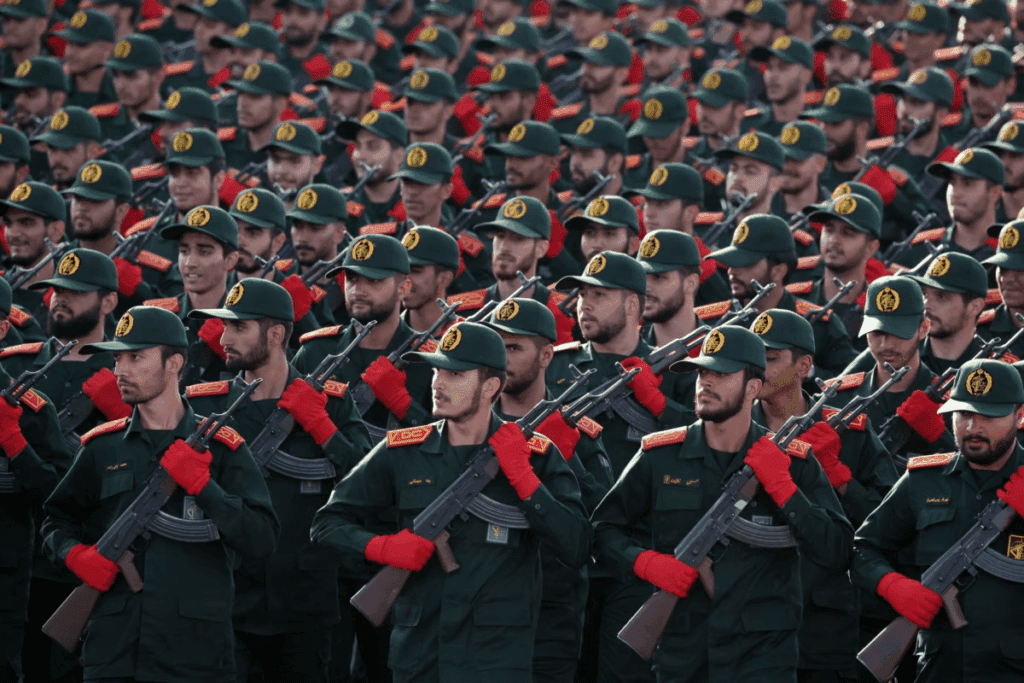
The IRGC’s drug trafficking apparatus runs through its extraterritorial arm, the Quds Force (IRGC-QF), which commands a network of specialized units and regional proxy forces. The organizational structure provides both operational capacity and plausible deniability.

At the center sits the Ansar Corps, the Quds Force sub-unit responsible for Afghanistan and Iran’s eastern border. Below it, Brigadier General Gholamreza Baghbani ran the Quds Force office in Zahedan, near the Afghan-Pakistan border. In March 2012, Treasury designated Baghbani as a Specially Designated Narcotics Trafficker under the Foreign Narcotics Kingpin Designation Act — the first Iranian official ever designated under that statute. According to FDD’s analysis, Baghbani allowed Afghan narcotics traffickers to smuggle opiates through Iran in return for assistance moving weapons to the Taliban (Long War Journal; Atrocities Tracker; AEI).

Other units serve dual purposes. Unit 190 oversees covert smuggling of weapons, equipment, and funds using Iranian airlines — Mahan Air and Qeshm Air — on ostensibly civilian flights, infrastructure that overlaps with narcotics transport (Iran Primer/USIP). Unit 840 handles special operations including assassinations, frequently using drug traffickers as operatives. Branch 4000 of IRGC Intelligence has exploited drug-smuggling routes for weapons trafficking to Jordan and the West Bank, according to the Alma Research Center.

The IRGC’s proxy system extends this reach globally. Hezbollah serves as the primary operational partner. Iraqi Shia militias — Asaib Ahl al-Haq, Kataib Hezbollah, and Harakat al-Nujaba — control border areas critical for smuggling between Iraq, Syria, and Iran. The Houthis in Yemen reportedly receive IRGC-supplied equipment for building Captagon factories. Syria’s 4th Armored Division, under Maher al-Assad, partnered directly with the IRGC and Hezbollah in industrializing the Captagon trade (HSToday).

State infrastructure completes the picture. Tidewater Middle East Co., an IRGC-owned port operator designated by Treasury in June 2011, manages seven Iranian ports including the Shahid Rajaee container terminal at Bandar Abbas — Iran’s main container port.


Four Trafficking Corridors Generating Billions

1. The Afghan Opium Corridor

Iran sits on the world’s busiest drug smuggling corridor: the UN estimates 10 tons of narcotics enter Iran daily from Afghanistan. Raw opium crosses Iran’s eastern border through Sistan-Baluchestan province, where IRGC-controlled laboratories process it into heroin. From there, drugs move westward along the Balkan Route — through Iraq and Turkey into Bulgaria, Romania, Italy, and Western Europe. The route’s annual market value reaches approximately $20 billion, according to the UNODC. In 2017, Italian authorities identified a Baghbani-directed network of nine Iraqis affiliated with the Popular Mobilization Forces smuggling drugs through Iraq and Turkey to Italy (Al Arabiya; Iran News Wire).

2. The Latin American Cocaine Pipeline

The Latin American cocaine pipeline operates primarily through Hezbollah as the IRGC’s proxy. Cocaine flows from Colombia through Venezuela — which serves as the critical transit hub — to the Caribbean, Europe, and the United States. The most notorious operator was Ayman Joumaa, a Lebanese-Colombian drug kingpin designated by Treasury in January 2011, whose network laundered an estimated $200 million per month (Wikipedia; Washington Institute).

The Venezuelan regime under Nicolás Maduro became deeply enmeshed: in March 2020, the DOJ announced narcoterrorism indictments against Maduro himself. Former Venezuelan Vice President Tareck El Aissami was designated under the Kingpin Act in February 2017 (Congressional Research Service). The Atlantic Council documented how Iran-backed networks prop up the Venezuelan regime. RAND Corporation reported on Hezbollah’s expanding network across Latin America.

3. The Syrian Captagon Trade

Under the Assad regime, Syria produced approximately 80% of the world’s Captagon, a synthetic amphetamine. The global Captagon industry reached roughly $10 billion annually, with the Assad family earning an estimated $2.4 billion per year (RUSI; Wikipedia). Production was managed by Maher al-Assad’s 4th Armored Division in coordination with Hezbollah and the IRGC. Most exports transited through IRGC-controlled Latakia port. In July 2020, Italian police seized 84 million Captagon tablets worth over €1 billion at Salerno port, shipped from Latakia (Anadolu Agency).

The U.S. Treasury sanctioned Syrian regime and Lebanese actors involved in illicit drug production, and later targeted Hezbollah’s finance network and Syrian Captagon trafficking directly. Following Assad’s fall in December 2024, the trade has fragmented but not disappeared: the West Point Combating Terrorism Center reported in 2025 that production dispersed to smaller mobile labs in eastern Syria, with new sites emerging in Sudan, Sierra Leone, Yemen, and Libya (Stimson Center; Foreign Policy).

4. Maritime Routes Through the Persian Gulf

Maritime routes through the Persian Gulf and Indian Ocean carry Afghan-origin heroin via dhow from Iran’s Makran Coast into East Africa, South and Southeast Asia, and the Arabian Peninsula. In May 2023 alone, two fishing vessels departing Iran’s Chabahar port were interdicted carrying $30 million and $80 million worth of heroin and crystal meth respectively (Diyaruna).


The Financial Scale: Billions in Drug Revenue

Quantifying the IRGC’s total drug trafficking revenue precisely is impossible given its clandestine nature, but multiple credible sources converge on a range of billions annually.

Iran’s own Interior Minister stated that the IRGC earns $3 billion per year from narcotics sales inside Iran alone, according to reporting cited by the Iran News Wire. Die Welt, citing WikiLeaks cables, reported the IRGC’s income from drug trafficking to Europe amounts to several billion euros (IFMAT). A leaked U.S. Embassy cable from Baku characterized Iran’s government as the biggest drug trafficker in the world.

These figures exist alongside the IRGC’s broader economic empire. The organization’s overall economic empire generates an estimated $30–50 billion in annual turnover (Ainvest; Janes). Drug revenue represents a significant supplementary income stream that becomes especially critical under sanctions pressure.

The Captagon trade alone dwarfed Syria’s legitimate economy — Treasury designated Khaldoun Hamieh in 2024 for controlling Captagon labs in Sayyida Zainab in an area largely under the control of the IRGC and Hezbollah. Hamieh had donated nearly $1 million to Hezbollah from drug proceeds (JISS).


A Network of Global Partners

The IRGC does not operate in isolation. It has cultivated a web of partnerships with state actors, terrorist organizations, and transnational criminal enterprises.

Hezbollah is the indispensable partner. Iran provides approximately $700–800 million annually to Hezbollah via the IRGC Quds Force, but illicit activities — principally drug trafficking — generate an estimated 30% of Hezbollah’s operating budget (FDD; Wikipedia). The DEA identified Hezbollah’s operational arm as the Business Affairs Component (BAC), originally founded by the late terrorist mastermind Imad Mughniyeh (DEA).

Following the 2024 Israel-Hezbollah war and intensified sanctions, Matthew Levitt of the Washington Institute testified to the U.S. Senate that Iran is reportedly unable to foot the bill for Hezbollah’s reconstruction efforts, driving the organization to lean harder into drug trafficking. A November 2025 Treasury designation revealed the IRGC-QF had transferred over $1 billion to Hezbollah since January 2025 alone.

The Venezuelan connection has become a tier-one security concern. Reports indicate nearly 11,000 Hezbollah-linked operatives entered Venezuela between 2010 and 2019, and 400 Hezbollah field commanders were ordered to evacuate to Latin America (Free Beacon; Senate Drug Caucus testimony).

Mexican cartels have also intersected with IRGC operations. In the 2011 Arbabsiar plot, the Quds Force attempted to recruit Los Zetas to assassinate the Saudi ambassador in Washington for $1.5 million — demonstrating direct IRGC-cartel engagement (Politicon; War on the Rocks).

West African networks serve as critical transit nodes, with Hezbollah leveraging the Lebanese Shia diaspora across the region. Cocaine from South America flows through Guinea-Bissau, Ghana, Nigeria, and Benin before reaching Europe (Risk Intelligence).

The IRGC has also increasingly partnered with European criminal organizations. A March 2025 FDD/Long War Journal analysis documented Iran’s partnerships with Sweden’s Foxtrot Network, the Dutch Mocro-Mafia, the Irish Kinahan cartel, German Hells Angels chapters, and Eastern European syndicates. UK MI5 Director-General Ken McCallum stated in October 2024 that Iranian state actors make extensive use of criminals as proxies (ICCT; Atlantic Council; AIJAC).


Drug Profits Funding Proxy Wars and Assassination Plots

The line between IRGC drug trafficking and terrorism is not merely theoretical — it is documented in court records, Treasury designations, and criminal convictions.

Drug proceeds directly fund the IRGC’s proxy warfare infrastructure. The DEA’s Project Cassandra found that Hezbollah’s BAC used proceeds to purchase weapons for its activities in Syria (Project Cassandra). Jordan has responded with military force: Jordanian forces killed 27 drug smugglers in a single January 2022 incident, and the Royal Air Force conducted airstrikes against drug trafficking infrastructure in Syria (Washington Institute).

The IRGC has systematically used drug trafficking networks to carry out assassinations on foreign soil. Naji Sharifi Zindashti, described as Iran’s leading drug lord, runs a criminal network that traffics over 20% of drugs distributed across Iran while simultaneously performing kidnappings and murders of dissidents abroad for Iran’s intelligence services (Iran International; Center for Security Policy). In the Masih Alinejad case, two members of an Eastern European organized crime group were convicted in March 2025 of being hired by the IRGC to murder the Iranian-American journalist (FDD). France’s DGSI intelligence agency stated plainly that Iranian services now more systematically prefer to use people from criminal circles (ICCT).

Perhaps the starkest human cost falls on Iran’s own citizens. At least 503 people were executed for drug-related offenses in Iran in 2024 — approximately 20 times the number in 2020 (Iran Human Rights). These executions disproportionately target marginalized ethnic minorities: members of Iran’s Baluchi minority account for roughly 20% of recorded executions despite being only 5% of the population (Amnesty International). The IRGC simultaneously shoots and kills kolbars (Kurdish border porters) and sokhtbars (Baluchi fuel porters) — impoverished minority members forced into porterage by deliberate economic underdevelopment. Between March 2023 and March 2024, 444 kolbars were killed or injured (Iran International; Brookings; Center for Human Rights in Iran).


Laundering Billions Through a Global Shadow Financial System

The IRGC’s money laundering infrastructure is as sophisticated as its trafficking operations, employing shell companies, informal banking networks, real estate, gold, and increasingly cryptocurrency.

The Lebanese Canadian Bank (LCB) case exposed the architecture. Designated by FinCEN in February 2011 as a primary money laundering concern, LCB — once Lebanon’s eighth-largest bank — served as the main gateway for laundering drug proceeds. Funds were wired from Lebanon to purchase used cars from roughly 300 U.S. dealerships, cars were shipped to West Africa for resale, and cash from car sales plus drug proceeds flowed back to Hezbollah through controlled channels. Joumaa’s network alone laundered as much as $200 million monthly. The DOJ filed a $483 million forfeiture claim — the largest counterterrorist civil financial action in DOJ history — ultimately resulting in $102 million in asset forfeiture and LCB’s liquidation (Investigative Project on Terrorism; ProPublica).

Hawala networks remain the IRGC’s fastest and most adaptable mechanism for moving funds, allowing transfer of large sums across Iraq, Syria, Lebanon, and Yemen in under 24 hours with minimal documentation. The Wall Street Journal reported in 2025 that the IRGC smuggled over $1 billion to Hezbollah through Dubai since January 2025 using exchange shops, private companies, and couriers (Jerusalem Post/WSJ; IranSTO).

Gold has become a critical store of value. The Reza Zarrab case revealed how an Iranian-Turkish businessman laundered billions through Turkey’s state-owned Halkbank, disguised as gold and food trade. Turkey’s gold exports to Iran surged from $55 million in 2011 to $6.5 billion in 2012 — almost entirely laundered funds (Wisconsin Project on Nuclear Arms Control).

Cryptocurrency has emerged as an increasingly important channel. Iran’s crypto ecosystem reached $8–11 billion in 2025, with up to 50% linked to the IRGC according to Chainalysis. In Q4 2025, IRGC-linked addresses moved more than $3 billion to support militia networks and procure dual-use equipment. In January 2026, OFAC sanctioned UK-registered front companies linked to sanctioned financier Babak Zanjani for processing approximately $1 billion in IRGC-associated transactions, predominantly in USDT on the TRON blockchain (The National; GNET; ACAMS). A Fortune investigation in March 2026 found $1.7 billion in total flows to Iran-linked wallets through Binance accounts.

OFAC sanctioned nearly 50 entities and individuals constituting a sprawling shadow banking network in September 2024 (Treasury; TRM Labs). Front companies have been identified in the UAE, Hong Kong, Turkey, China, Lebanon, Oman, Cyprus, India, and Russia.


Project Cassandra and the Investigative Record

The most significant investigation into the IRGC-Hezbollah drug trafficking nexus was Project Cassandra, a DEA-led initiative launched in 2008 from a top-secret facility in Chantilly, Virginia. Over nearly a decade, the investigation encompassed approximately 20 sub-operations and involved 30 U.S. and foreign security agencies (Wikipedia; Grokipedia).

Sub-operations included Operation Cedar — a 2016 joint action with French, German, Italian, and Belgian authorities that arrested 15 Hezbollah operatives and seized €500,000 in cash and luxury watches worth roughly $9 million (Project Cedar; Middle East Forum; DEA).

The investigation became politically explosive when Josh Meyer published his investigation in Politico in December 2017 alleging that the Obama administration systematically undermined Project Cassandra to protect the Iran nuclear deal. According to participants interviewed by Meyer, the Justice Department declined criminal charges, Treasury delayed sanctions, and the State Department rejected requests to lure high-value targets to countries where they could be arrested. Katherine Bauer, a former Obama Treasury official, testified before Congress that Hezbollah-related investigations were tamped down for fear of jeopardizing the nuclear deal. Key architect David Asher stated the investigation was drained almost to the last drop by the end of the Obama administration. Former Obama officials denied deliberately blocking actions (NPR; Newsweek).

In response, Attorney General Jeff Sessions ordered a review and the DOJ established the Hezbollah Financing and Narcoterrorism Team (HFNT) in January 2018. In October 2025, the Senate Caucus on International Narcotics Control held a hearing specifically on Hezbollah’s Latin American Drug Trafficking Operations (Washington Institute/Levitt testimony).


Conclusion: A Narco-State Hiding in Plain Sight

The evidence compiled across Treasury designations, DEA investigations, DOJ indictments, UN reports, and investigative journalism establishes that the IRGC operates not as an occasional participant in drug trafficking but as a systematic, state-backed narcotics enterprise with global reach. The Quds Force provides command and control. Hezbollah serves as the primary operational proxy. State infrastructure — ports, airlines, diplomatic cover, military logistics — provides the backbone. And billions in proceeds cycle through an increasingly sophisticated laundering apparatus spanning hawala networks, shell companies, gold markets, and cryptocurrency exchanges.

What distinguishes the IRGC from traditional drug cartels is the dual-use nature of virtually every element: the same smuggling routes carry both drugs and weapons, the same financial networks fund both trafficking and terrorism, and the same criminal proxies carry out both narcotics operations and assassination plots. Jordan now conducts airstrikes against drug trafficking infrastructure on its border. European law enforcement reports an uptick in Hezbollah drug activity following the 2024 war. And Iran continues executing hundreds of impoverished drug offenders annually — overwhelmingly ethnic minorities — while its elite military organization profits from the trade at industrial scale.

The fall of the Assad regime in December 2024 disrupted the Captagon trade but did not end it; production has merely dispersed to Lebanon, Yemen, Sudan, and West Africa (UN News; NCRI; The New Arab). As sanctions tighten and proxy wars drain resources, the IRGC’s incentive to expand narcotics operations only grows.

Cuba Faces Growing Instability as Energy Crisis and Protests Mount

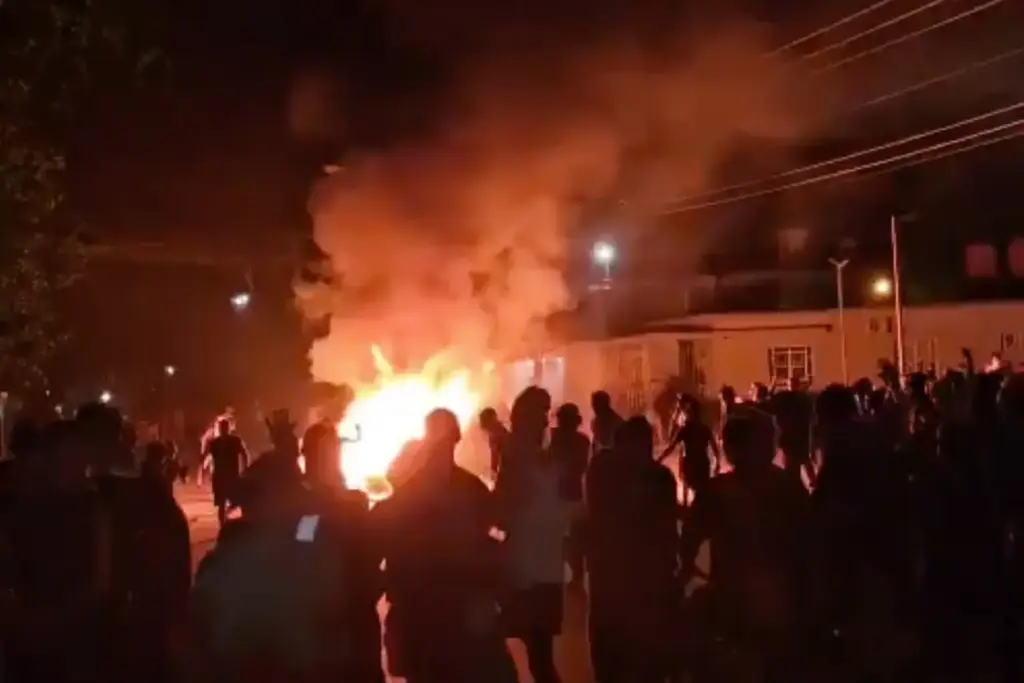
The Communist Party's building in Morón, Cuba, was attacked overnight by anti-government protesters. (@rancanoglenda7 / X)

HAVANA — Cuba is facing one of its most serious internal crises in decades as a worsening energy shortage, economic decline, and rising public frustration combine to test the resilience of the island’s communist government.

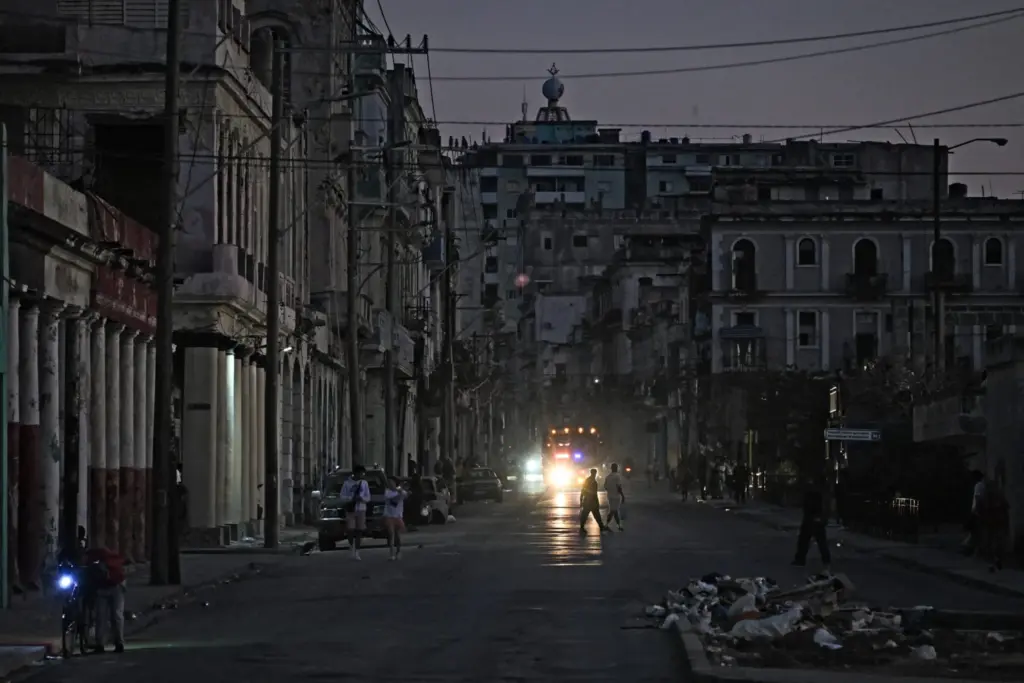
Rolling blackouts, some lasting more than a dozen hours per day in parts of the country, have become routine as Cuba struggles with fuel shortages and aging power infrastructure. The outages have disrupted transportation, food distribution, and access to essential services, amplifying an already severe economic crisis.

Cuba faces growing instability as energy crisis and protests mount
Rolling blackouts regularly affect the island for dozens of hours. (Ramon Espanosa/AP)

In recent days, the situation has spilled into public unrest. Residents in the central Cuban city of Morón protested prolonged power outages and shortages, with demonstrators vandalizing a local Communist Party office, an unusually direct confrontation with government authority in a country where dissent is tightly controlled. Cuban authorities later confirmed arrests following the incident.

Separately, students at the University of Havana staged a rare protest over power and internet disruptions earlier this month, highlighting how frustrations are spreading beyond working-class neighborhoods to include younger and more politically active segments of society.

Fuel shortages driving the crisis

At the center of the crisis is Cuba’s worsening fuel shortage. The island relies heavily on imported oil to run its power plants and transportation systems, and those supplies have become increasingly constrained.

Officials in Havana say the shortage stems from tightening U.S. sanctions and disruptions to oil deliveries from Venezuela, which has historically supplied Cuba with heavily subsidized fuel. The lack of fuel has forced authorities to ration electricity and suspend some industrial activity.

President Miguel Díaz-Canel acknowledged the severity of the situation in recent remarks, saying the government is exploring diplomatic avenues to ease pressure and stabilize fuel imports. Reuters reported that Cuba has held talks with the United States as the economic situation worsens.

Growing geopolitical tension

The crisis also carries broader geopolitical implications.

Cuba has sought diplomatic and economic support from Russia and China as it attempts to navigate sanctions pressure and energy shortages. Chinese officials recently expressed support for Cuba amid what Beijing described as “external interference,” while Russia has similarly criticized U.S. pressure on the island.

Analysts say neither country appears likely to fully rescue Cuba’s struggling economy, but both have incentives to maintain political ties with Havana and limit U.S. influence in the Caribbean.

The island’s location, roughly 90 miles from Florida, gives it outsized strategic importance in regional geopolitics. During the Cold War, Cuba served as a major Soviet ally and intelligence outpost in the Western Hemisphere, most notably during the 1962 Cuban Missile Crisis.

Today, the strategic concerns are different but still significant, including migration pressures, regional instability, and the potential expansion of foreign intelligence or economic influence in the region.

Unrest remains limited at this time

Despite the rising tensions, large-scale nationwide protests have not yet materialized. Cuba’s security apparatus remains highly capable of suppressing dissent, and past demonstrations have often been followed by arrests and surveillance.

Still, the frequency of recent protests and the increasingly confrontational tone of some demonstrations suggest growing strain inside the country.

Many observers note parallels with the July 2021 protests, the largest anti-government demonstrations on the island in decades, which were sparked by similar frustrations over shortages and blackouts.

Cuba faces growing instability as energy crisis and protests mount
Cubans demonstrate in rare protests in Havana on July 11, 2021. 
Yamil Lage/AFP/Getty Images

For now, the Cuban government appears focused on managing the crisis through a combination of rationing, diplomatic outreach, and internal security measures. Whether that strategy can stabilize the country in the months ahead remains uncertain.

What happens next may depend largely on one critical factor: energy.

If fuel deliveries resume and electricity outages ease, tensions could stabilize. But if shortages worsen, or if the power grid suffers another major failure, then analysts warn the island could see broader unrest.

For a government already facing its most severe economic stress in decades, the margin for error is narrowing.

US deploys second carrier strike group

USS Gerald R Ford (CVN-78)

As military intervention with Iran looms, Washington has indicated that the deployment of the USS Gerald R. Ford will take place, leaving the Caribbean and heading to an area situated around the Middle East. This comes a month after Ford’s role in Operation Absolute Resolve, which led to the capture of then-sitting Venezuelan president, Nicolás Maduro.
The USS Gerald R. Ford, the largest and most advanced currently afloat, will also supposedly be followed by its escort ships, allowing for a greater strike package if Washington ever decided to act against Iran.

This further deployment comes after continued air assets have been recorded entering military bases around the Middle East for the last couple weeks. So far, a Chinese satellite has confirmed air defence being positioned at a base in Jordan, likely to protect against missile volleys from Iran. This is a continued threat seen by both the United States and Israel.


Alongside this brand-new deployment, USS Abraham Lincoln which is believed to be in the Arabian Sea, has also been deployed in the region. Last week the Lincoln shot down an Iranian Shaded 139 which was actively surveilling the ship.

Us deploys second carrier strike group

Diego Garcia, as seen above, has had limited but noticeable movements of airframes

The Ford’s deployment away from the Caribbean theatre also extends its current operational time frame to at least April in accordance with reports from the New York Times, making it an unusual extension for an American carrier. This adds up to its current operational period being extended close to a year if the current projected time frame materialises.

This large military presence has added pressure onto Tehran to follow through with the negotiations laid out by the United States, which follows red lines such as limited ballistic weaponry, end of the nuclear program and removal of funding and assistance with their terrorist proxies across the region.

With already one set of talks having been carried through, there’s been limited hope of a  successful path to diplomacy, with certain agreements on the issues above not being resolved as of now.

On Wednesday, Israeli Prime Minister Benjamin Netanyahu met with President Trump and discussed issues surrounding Gaza and Iran, with Reuters also confirming that Israel announced their position in the “Board of Peace” group during this meeting. This is one of the five meetings held with Trump since his inauguration in late January 2025.

Israeli media also claimed this meeting was in effort to lay out conditions they wanted, including a harsher approach to negotiations with Tehran. 

U.S. Strikes Land Target in Venezuela

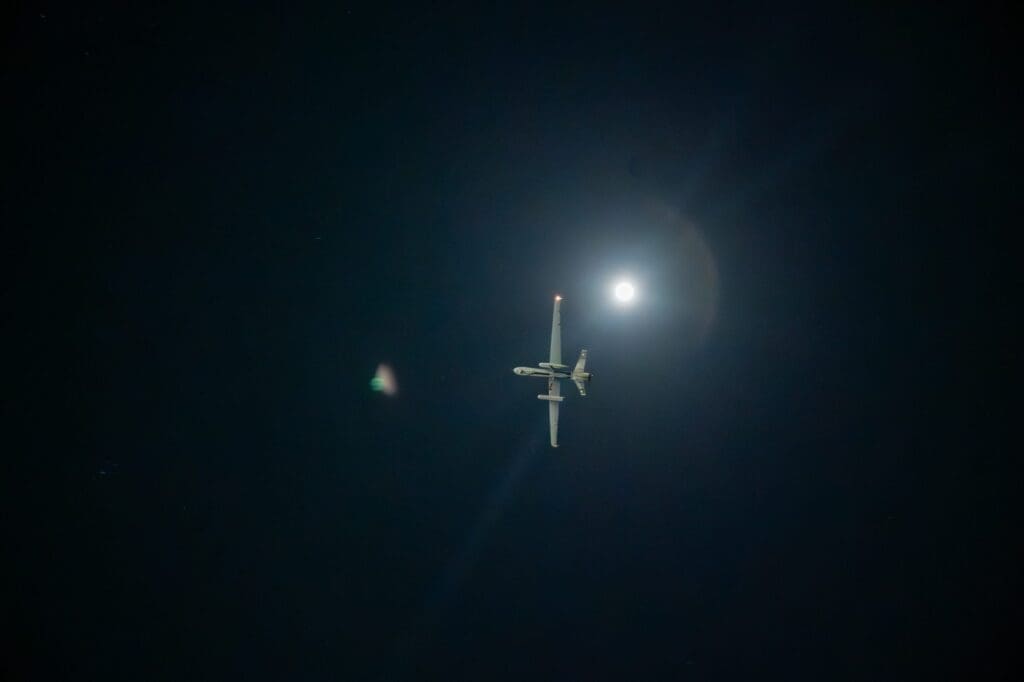
USAF MQ-9 Reaper UAV, demonstrative

President Donald Trump said on Monday that the United States struck a Venezuelan “dock area” he described as linked to drug-running boats, claiming a “major explosion” at a site where traffickers “load the boats up with drugs,” according to the BBC.
While Trump declined to identify who carried out the attack, telling reporters, “I don’t want to say that” when asked about the CIA, the BBC reported there has been no official confirmation from Caracas and no strike footage has been released the way the Pentagon has publicized prior maritime interdiction strikes.

U.S. officials familiar with the operation, however, told CNN the CIA conducted a drone strike earlier this month on a remote port/dock facility on Venezuela’s coast, which U.S. intelligence assessed was being used by the Venezuelan gang Tren de Aragua to store narcotics and move them onto boats for onward shipment. The network reported no one was present at the time of the strike and no casualties resulted.

The New York Times separately reported that the strike occurred last week and described it as the first known U.S. operation inside Venezuela during the Trump administration’s pressure campaign, targeting a dock believed to be involved in staging narcotics for loading onto boats. The Times said Trump had mentioned the incident twice in recent days, first in a radio interview and again on Monday. His first mention can be listened to below.

Key operational details remain contested. CNN reported that sources described U.S. Special Operations Forces as providing intelligence support, but a U.S. Special Operations Command spokesperson denied any support “to include intel support.” The CIA declined to comment to CNN, while the Pentagon referred questions to the White House, which has not provided a detailed public account at the time of publication.

The reported land strike comes as Washington intensifies a wider campaign that has combined counter-narcotics justification with escalating pressure on Venezuelan President Nicolás Maduro. U.S. strikes on suspected drug-smuggling boats in the Caribbean and eastern Pacific have been occurring since September. It appears the operation has now expanded from maritime strikes, to tanker seizures, to clandestine land strikes.

A new boat strike occurred yesterday, bringing the total number to 30 (31 if you count the dock), with the U.S. reporting 106 total individuals killed in those strikes.

Bella 1 Still On the Run

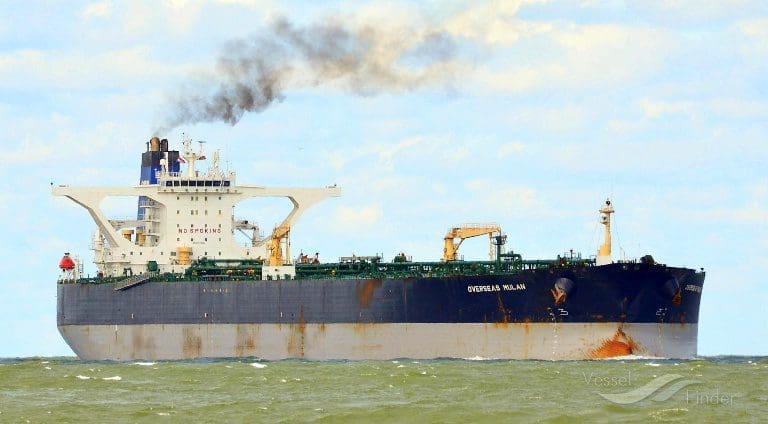
A profile image of tanker Bella-1

UPDATE (1431 EST 12/31/25): Bella 1 is still on the run. CNN reports this morning that the White House believes Bella 1 no longer intends to make port in Venezuela, and might choose to give up the chase for the sanctioned vessel with ties to Iran after almost two weeks, despite being unclear about the cargo, or why the crew chose to flee. USN/USCG assets remain on standby, should the order come to seize the vessel by force.


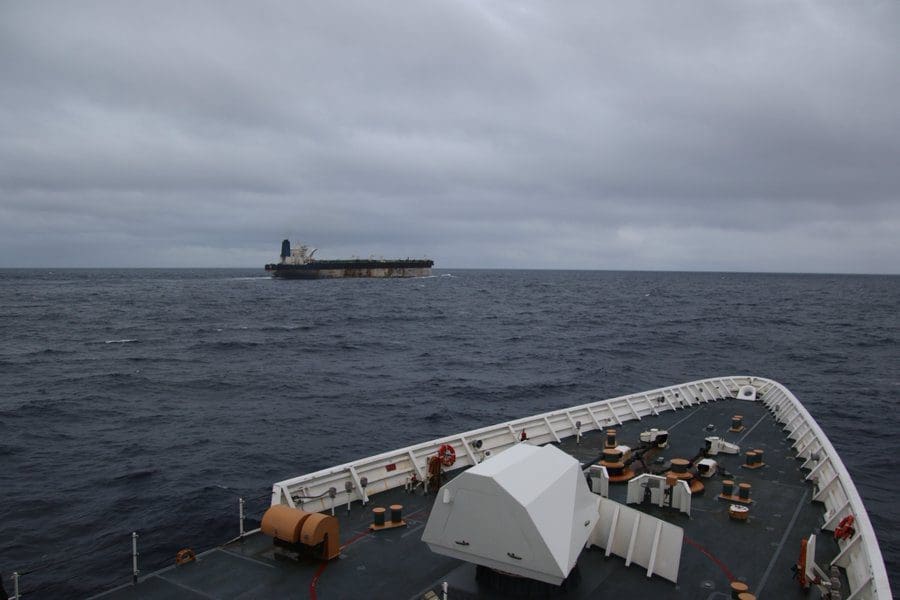
Original Article: According to The NewYork Times, the U.S.-sanctioned oil tanker Bella 1 remains on the run in the Atlantic after refusing to comply with a U.S. Coast Guard interception attempt on Dec. 21 in the Caribbean Sea. U.S. officials told the newspaper the vessel was moving toward Venezuela to take on oil when the Coast Guard moved to stop it, but the ship continued underway and has been pursued since.

The tanker’s track has since shifted. U.S. officials briefed on the operation said Bella 1 recently altered course northwest, steering away from the Mediterranean, potentially towards waters near Greenland or Iceland. The officials don’t believe the ship to be carrying cargo. During the escape, the crew reportedly painted a Russian flag on the side of the vessel and is now claiming Russian status—an apparent attempt to complicate any boarding or seizure effort.

Given a rough heading NNE and a constant speed of 10kts, members of Faytuks Network’s all-volunteer OSINT team put Bella 1’s position potentially somewhere near the Azores, heading north for the Norwegian Sea and perhaps a final destination of Murmansk, Russia. Another posited destination is Iran, in which case she could potentially head for the Strait of Gibraltar.

Bella 1 still on the run

Federal officials have obtained a seizure warrant tied to Bella 1’s prior involvement in transporting Iranian oil, saying the ship is associated with a broader “ghost fleet” used to move oil for sanctioned regimes. Officials indicate that additional tanker seizures tied to Venezuela’s oil trade are planned as the U.S. expands efforts to curtail illicit oil revenue streams supporting the Maduro regime in Caracas.