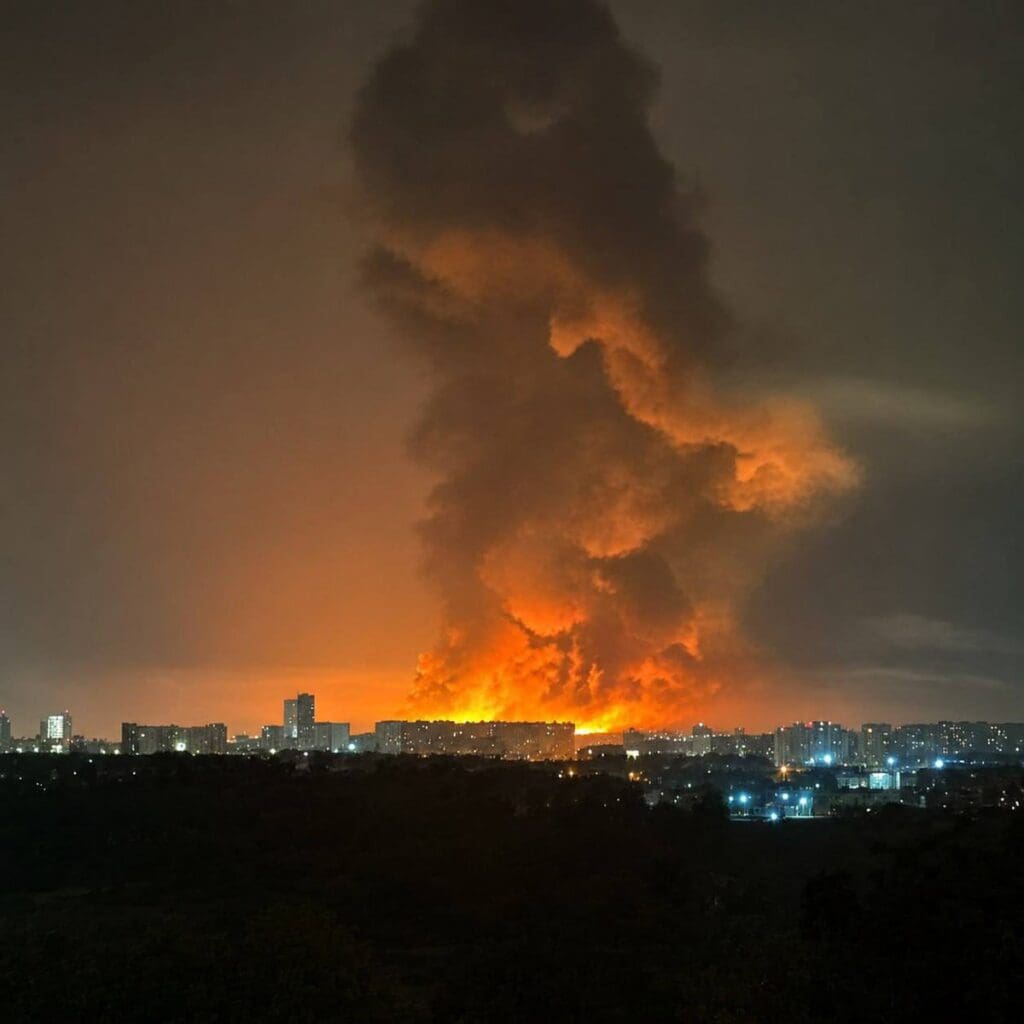
Four and a half years in, Russia and Ukraine are fighting a different war than the one most people stopped following. The front has almost frozen. The fighting that matters has moved to the sky, to Russia’s refineries — and to an American missile shortage caused by a different war entirely.
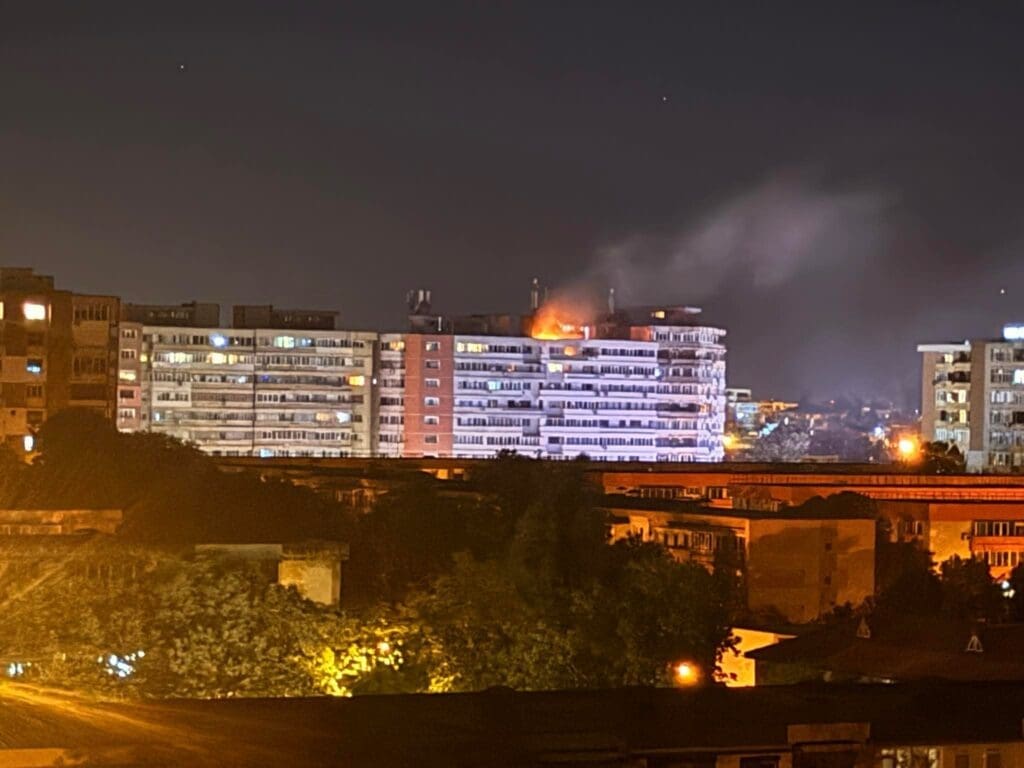
On the night of August 4th, Russia fired 24 ballistic missiles and four Zircon/Oniks Cruise Missiles at Kyiv and the surrounding region, along with 115 drones. Ukraine intercepted none of the 28. Seventeen people were killed and 44 injured — eight of them waiting for a delayed commuter train at a station outside the city. President Volodymyr Zelensky’s explanation was unusually blunt for a wartime leader: this was not a failure of Ukrainian air defense crews, nor was it a Russian tactical breakthrough. Ukraine has simply run out of interceptors.
That single fact explains more about the current state of this war than any map. And the reason Ukraine ran out has almost nothing to do with Ukraine.
The Front line has nearly stopped
For most of 2022 and 2023 this was a war about territory. Every day a new city would change hands, and colors on the map would shift. That story has largely ended. The Institute for the Study of War assessed that Russian forces advanced across 37.85 square kilometres in all of July 2026 — an area smaller than Manhattan. In July 2025, the figure was 455.74 km². Russia’s rate of advance has collapsed to roughly a twelfth of a year ago, and its offensive launched in mid-March has produced no operationally significant gain.
Russia holds roughly a fifth of Ukraine — an area it has expanded by only 12% since 2022. The price of that near-stasis is extraordinary. The Center for Strategic and International Studies estimates cumulative Russian casualties at about 1.4 million, including up to 450,000 killed, against Ukrainian losses of 525,000–625,000 with 125,000–150,000 killed. The exchange ratio has moved to roughly eight to one in Ukraine’s favour in the first half of 2026, from two or three to one for most of the war — a shift CSIS attributes largely to drones.
One exception: the Donbas “fortress belt” — Kostiantynivka, Druzhkivka, Kramatorsk and Sloviansk, Ukraine’s main defensive line in the east. Russia is grinding into Kostiantynivka with small infiltration groups behind glide-bomb strikes heavy enough to reduce the city to rubble. Despite heavy fighting and claims of control by both sides, analysts assess it as contested rather than captured.
Why Ukraine cannot defend its cities
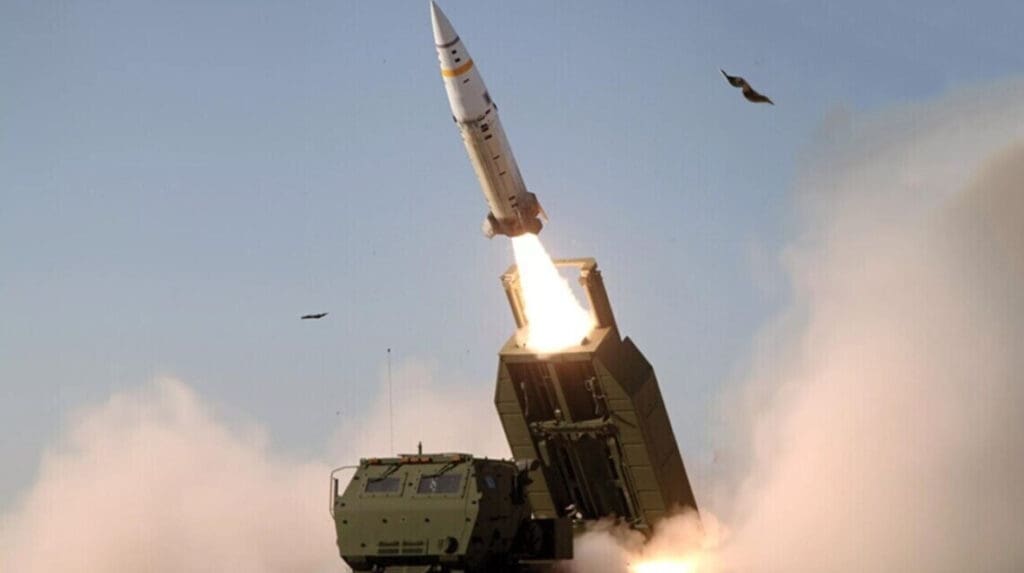
While the frontline holds at a standstill, Ukraine’s cities are under constant bombardment. The US-made Patriot is Ukraine’s only system capable of reliably intercepting ballistic missiles. It is now in short supply. On February 28th 2026, the United States and Israel launched coordinated strikes on Iran that killed Supreme Leader Ali Khamenei and began a war that has run, with interruptions, ever since. CSIS estimates that roughly 65% of the American Patriot interceptor inventory was consumed in the Iran campaign, leaving fewer than 900 stockpiled. Additionally, CNN reported on August 4th that nearly 80% of the interceptors for America’s other missile-defense system, the THAAD, are now gone. Ukraine has requested the THAAD system, but has not received it. The US Army has awarded Lockheed Martin a contract worth up to $58.6 billion to rebuild the Patriot stockpile, but those dollars will take years to turn into missiles.
The consequences for Kyiv have already begun. Zelensky says anti-ballistic deliveries have fallen threefold compared with 2025, and that Ukraine needs at least 300 additional interceptors to get through the winter. Russia, meanwhile, builds somewhere between 75 and 120 ballistic missiles a month according to Zelensky, with additional missiles coming from North Korean stock.
A partial solution — licensing Ukraine to build Patriot interceptors itself — appeared to have been agreed to at the recent NATO summit in Ankara. But Trump seems to have gone back on that pledge, noting on 31 July, that it is “a hard thing to give away, that kind of technology.” Analysts tracking the negotiations note a further catch that has drawn little attention: the licence under discussion could cover the PAC-2 GEM-T interceptor, designed for aircraft and cruise missiles, not the PAC-3 that actually engages ballistic threats.
Europe quietly gave Ukraine what Washington would not
The Patriot fight has absorbed attention and obscured a more consequential development. On July 13th, at a Coalition of the Willing meeting in Paris, France and Italy granted Ukraine a licence to build Aster 30 missile interceptors domestically — bundled with 16 Rafale fighters and a SCALP cruise missile licence, with production intended to begin before the end of 2026. The Aster 30 B1 NT variant is capable of engaging ballistic missiles. Ukraine has separately ordered eight SAMP/T NG air defense systems capable of launching Aster 30 interceptors. Ukraine will become the first combat operator of the type. The July declaration firms up an order of four, financed through the EU’s Ukraine Support Loan, with two current-generation SAMP/T batteries loaned by France until the new ones arrive. Even if the Aster system proves to be a solution in the longer term, it is simply not ready yet.
No technology currently stops a missile from slamming into a Ukrainian apartment building or power station this winter. Prototype systems and a production line starting in December are not a winter air-defense plan. The only short term solution would be deliveries of additional Patriot interceptors, but that is unlikely to come from the US due to aforementioned supply constraints.
Ukraine’s answer: burn the Russian economy instead
Unable to defend its skies, Ukraine has spent the summer attacking what Russia cannot easily replace: oil refineries. The results have proven significant in Russian economic statistics.
Russian crude processing fell to about 3.6 million barrels a day in July, the lowest since 2002, with the Financial Times assessing that Ukrainian strikes have disabled more than 30% of actual refining capacity — the worst fuel crisis since the Soviet collapse. Those percentages are contested: damaged units are often repaired faster than strike tallies imply. Not contested, however, are the fuel queues across western Russia, and that Russia has turned to importing gasoline from Morocco.
A second campaign targets civilian logistics: According to geolocations by Faytuks Network, Ukraine has struck 21 Wildberries warehouses — Russia’s largest e-commerce retailer — in three weeks, destroying over a million square metres of floor space. Ukrainian officials say they are attacking Wildberries warehouses because Russian soldiers often buy nonlethal equipment such as tactical vests, boots, and socks, from the company.

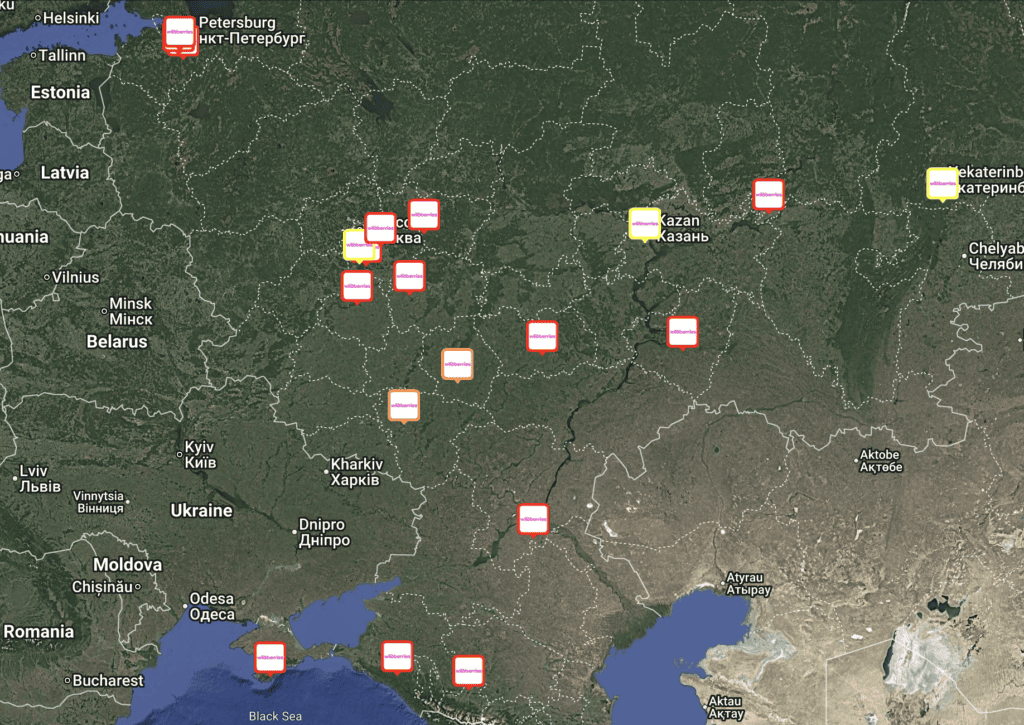
Russia answered in kind. Ukrainian officials reported the main targets of the August 4th strike were warehouses belonging to civilian businesses such as shopping network Epicenter, online retailer Rozteka, and postal provider Nova Poshta. The logistics war now runs in both directions.
Even prior to intensified strikes, Russia’s wider economy was already under strain: oil and gas revenues fell roughly 45% year over-year in Q1 2026, GDP contracted for the first time in three years, and Moscow has cut its own growth forecast to 0.4%.
Both sides face recruitment crises
Russia’s constraint is money and, increasingly, men: it is now losing soldiers faster than it signs them up, with CSIS putting casualties above 30,000 a month against recruitment near 27,000. An unresolved argument over a new mobilization may be settled after September’s elections.
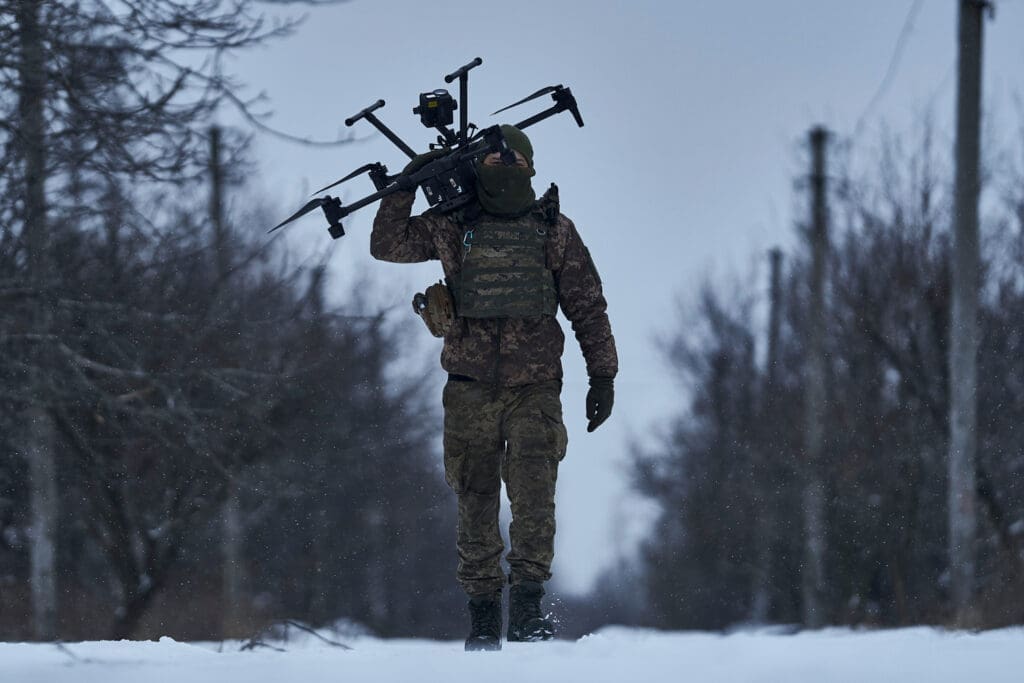
Ukraine’s recruitment situation is no easier. Despite lower casualties, Ukraine currently faces a significant personnel shortage, with frontline units often sitting at 30% of established strength, and desertion cases running into the hundreds of thousands. This has led the Ukrainian Ministry of Defense to announce a broadening of recruitment of foreign nationals. On June 12th, the MoD announced a new goal to have foreigners fill 30-50% of all positions in assault and infantry units, compared to 5-10% at present. This target appears unlikely to be achieved, according to OSW Senior Fellow Andrzej Wilk, “as it would require maintaining between 60,000 – 100,000 foreign recruits in service on a permanent basis.” It is therefore unlikely the growing shortage of personnel in the Ukrainian military will be resolved in the near term.
The Politics
On July 15th, Zelensky dismissed his popular reformist defense minister, Mykhailo Fedorov. Fedorov had held the defense portfolio for six months and had spent them pushing drone and cyber reform. Protests followed in a dozen cities and have run more than three weeks in the largest domestic challenge of the war. On July 21st, with protests turning against him, Commander-in Chief Oleksandr Syrskyi was replaced by Major General Mykhailo Drapatyi, who long-serving military commanders have described as an effective leader.
Washington, on the other hand, is pulling in two directions. The Trump administration is withholding appropriated military aid and the Pentagon is stepping back from leading the Ukraine Security Assistance Group. Congress went the other way: August 8th, the Senate formally passed a sweeping Russia and Iran sanctions package bearing the late senator Lindsey Graham’s name by 86 votes to 11. The bill would allow tariffs of up to 100% on the five largest importers of Russian crude and gas. It now goes to the House, which is in recess until September.
With Trump focused on Iran and neither Russia nor Ukraine open to major concessions, it seems diplomacy is close to dead. A Lavrov–Rubio meeting in Manila on July 23rd, their first in-person talks since September 2025, lasted roughly 50 minutes with no clear progress being made.
Other players
The summer’s most significant escalation is North Korean. Ukrainian military intelligence told Reuters that a DPRK missile unit of about 90 personnel is deploying to Voronezh under the 112th Missile Brigade with up to 120 ballistic missiles and six launchers, 40 missiles already delivered (though Reuters could not verify the claim independently). The missiles are already in use: on July 30th, a KN-23 ballistic missile destroyed a house in Radushne near Kryvyi Rih, killing six people, three of them children. Zelensky says Russia also wants 30,000 more North Korean troops. That makes Pyongyang something closer to a co-belligerent than a simple supplier.
Europe is being drawn in as well. On August 5th, a drone carrying an explosive device was found beside a Ukrainian An-124 cargo jet at Leipzig/Halle airport in Germany; its detonator had failed. An American official told CNN that US intelligence assessed the drone belonged to Russian intelligence services and carried military explosives. This lines up with recent US and NATO assessments that Putin may choose to escalate against NATO if he is unable to secure an off-ramp to the war.
What’s next?
As winter fast approaches, Ukraine’s Strategic Communications Center reports that Russia is planning to launch a large-scale strike campaign against civilian energy infrastructure in Kyiv in the coming weeks. Last winter, Ukraine’s power generating capacity dropped to roughly 60% of its prewar capacity due to Russian strikes, bringing rolling blackouts amidst -20°C temperatures. It is unclear how many energy facilities Ukraine has been able to repair since then. The war’s civilian toll is already at record levels and still climbing: the UN documented 1,396 civilians killed and 7,978 wounded in the first half of 2026 alone, 37% up on the same period last year, and July was the deadliest month since April 2022. More than 16,400 civilian deaths have been verified since the full-scale invasion began. Nearly six million Ukrainians remain refugees abroad and 3.7 million are displaced at home.
The front line may not move far before spring. The real question is which breaks first — Ukraine’s ability to keep its cities habitable amidst ballistic bombardment of apartment buildings and substations, or Russia’s ability to keep citizens onboard with a war that’s actively damaging their quality of life.