
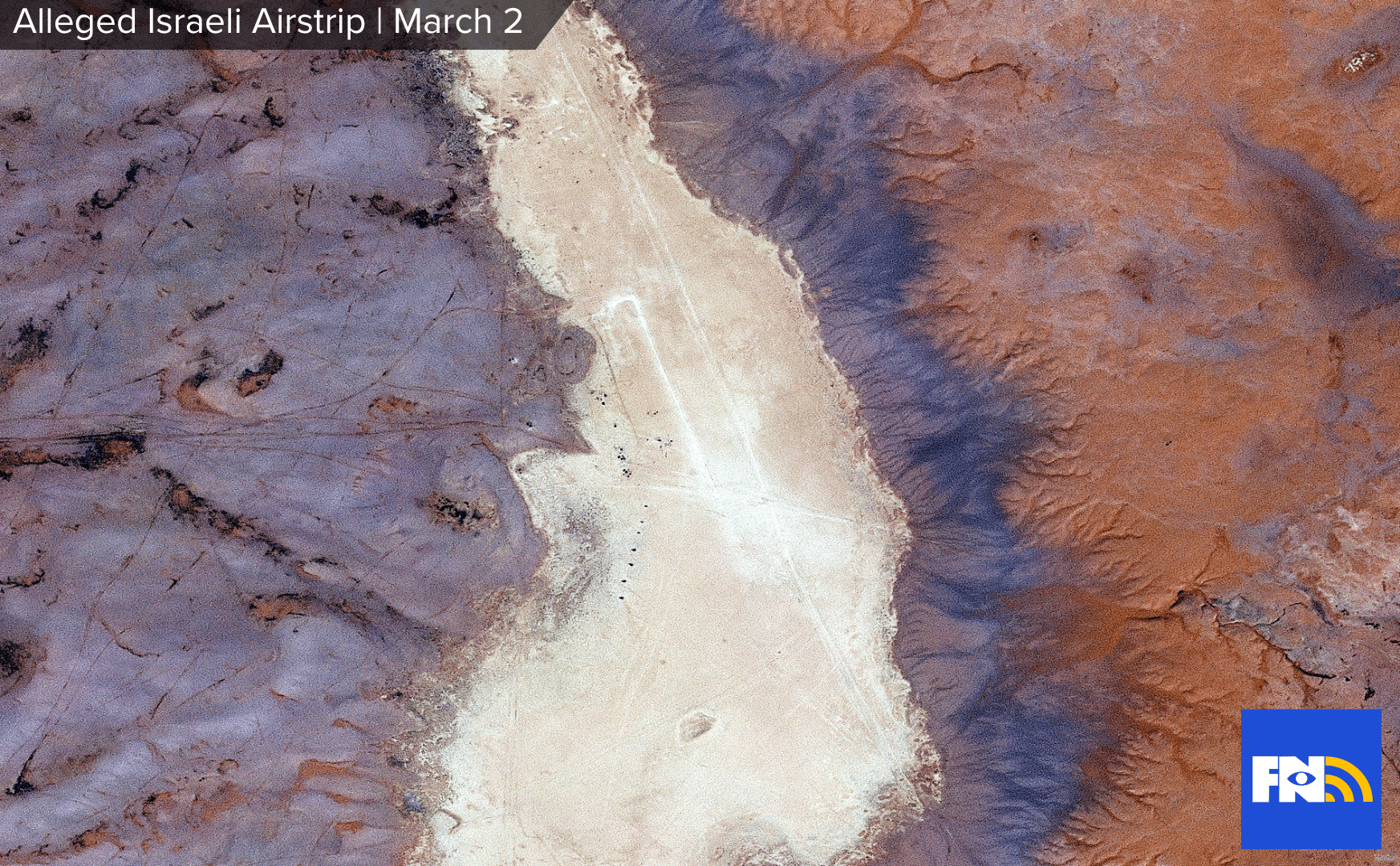
Israeli forces appear to have built a makeshift airstrip on a dried-out lakebed in Iraq’s western desert on the night of March 1 into March 2, according to satellite imagery and other media reviewed by Faytuks Network intelligence and geolocation analysts.
The site, near al-Nukhayb in Anbar province, appears to have served as a temporary forward arming and refueling point for operations against Iran. By March 2, the dry lakebed near al-Nukhayb in Iraq’s Anbar province had been transformed.
Airstrip Opens
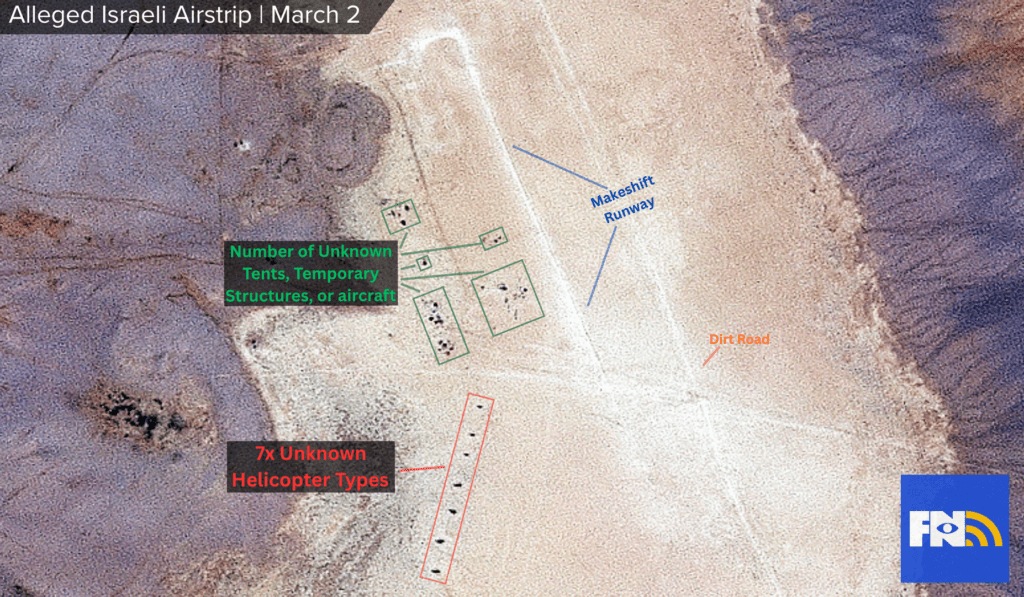
Satellite imagery and other material reviewed by Faytuks Network analysts show that a makeshift runway had been cut or marked across the lakebed overnight, turning what had appeared to be open desert into a temporary airstrip. Aircraft were visible at the site that morning, alongside what appeared to be temporary structures, support equipment or additional aircraft near the western edge of the operating area.
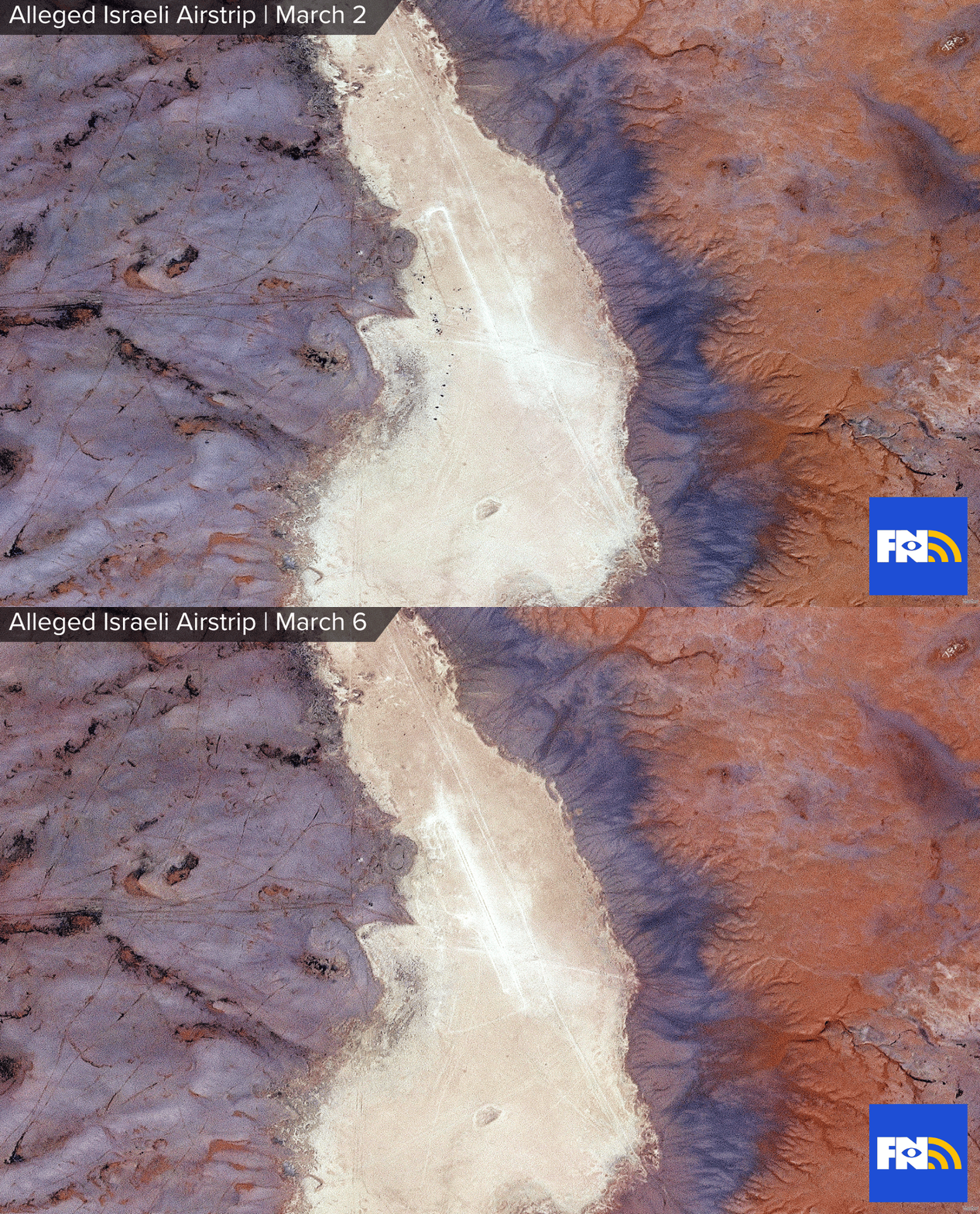
The site appears to have served as a temporary forward arming and refueling point for Israeli operations against Iran. Its location offered clear operational value: a remote desert lakebed, close enough to Iran to reduce flight distances and limit reliance on U.S. refueling aircraft, but isolated enough to be difficult for Iraqi authorities to monitor in real time.
The March 2 imagery shows several small objects clustered near the aircraft operating area. The resolution does not allow each object to be identified with certainty, but their placement suggests they were part of the temporary site. They may have been tents, light shelters, support vehicles, equipment or additional aircraft.
Seven objects consistent with helicopter airframes were visible south of the support cluster. A dirt road also appeared to run toward the airstrip, indicating recent ground access into an area that, one day earlier, had shown no obvious signs of military activity.
Aircraft Arrive
The pace of activity increased quickly. On March 5, a large formation of aircraft entered the base, according to footage reviewed by the Network.
On March 6, two more Chinook helicopters were seen entering the site. By then, the temporary structures visible in earlier imagery were no longer present.
Clashes with the Iraqis
Local officials said Iraqi forces had been sent to investigate reports of foreign military activity in the Najaf-Karbala desert. Zuhair al-Fatlawi, a member of parliament from Karbala province, said a force believed at the time to be American had entered the area by helicopter under air cover and deployed about 40 kilometers from al-Nukhayb.
Al-Fatlawi said the Iraqi reconnaissance force came under gunfire and aerial bombardment during the mission, killing one fighter, wounding two others and damaging a vehicle. Another lawmaker, Mohammed Jassim al-Khafaji, said about 30 Iraqi army Humvees from the Karbala Operations Command had been sent to assess the area before they were struck.
U.S. Central Command later denied carrying out an airdrop operation in Najaf province.
The site remained active after the March 6 incident. On March 14, another group of aircraft was spotted near the base at night, according to video shared with Faytuks Network.
By March 20, the base appeared to have been destroyed by rainfall, satellite imagery shows.
The timeline points to a short-lived but significant Israeli presence inside Iraq. In less than 24 hours, a dry lakebed was turned into an airstrip. Within days, aircraft were moving through the site in formation. Within three weeks, the base had effectively disappeared.
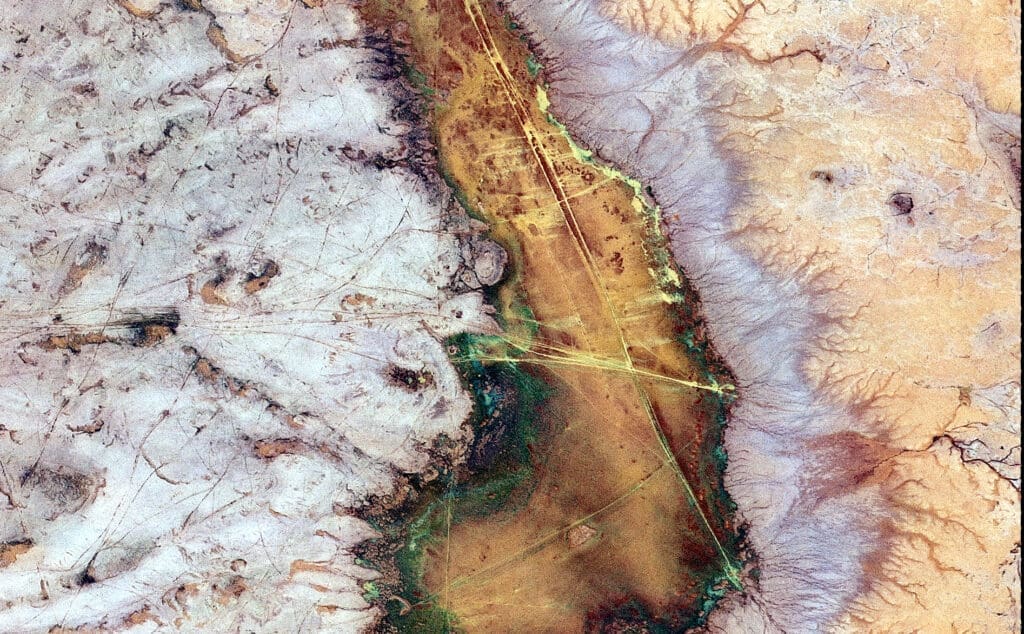
For Israel, the base suggests a wider force projection network than was visible from public reporting at the time. A forward arming and refueling point in Iraq would have allowed aircraft to stage closer to Iran, extend operational reach and preserve flexibility during sustained air operations.
For Baghdad, the implications are more serious. The apparent use of Iraqi territory by a foreign military force raises questions about sovereignty, airspace control and the government’s ability to monitor remote desert corridors. Al-Nukhayb lies in Anbar province, near the Karbala-Najaf desert corridor, where distance, terrain and overlapping security authority make real-time oversight difficult.
The force makeup, exact site composition and total number of sorties through the site remain unclear. But the imagery and video reviewed by Faytuks Network show a temporary airstrip that appeared almost overnight, supported aircraft for several days and then vanished after heavy rain.

No comment yet, add your voice below!