Syria targets ‘Hezbollah’ terror cell in security operation

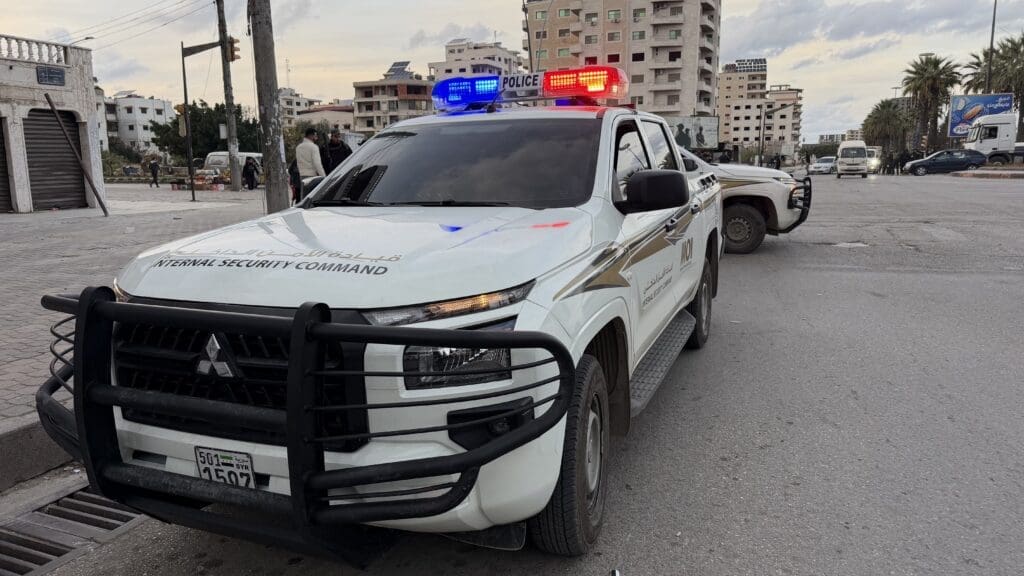
On Tuesday, Syria’s Ministry of Interior (MoI), working in coordination with the country’s General Intelligence Service, announced that security forces had uncovered a major Hezbollah-affiliated terror cell and thwarted an alleged plot aimed at destabilizing Syria.
In a statement, the Syrian Ministry of Interior (MoI) revealed the operation was pre-emptive in anticipation of an imminent series of planned assassinations targeting high ranking government officials. Security forces seized RPG rockets, automatic guns, explosive materials, and instruction manuals. The ministry further claimed the cell received ‘intensive specialized training’ in Lebanon before crossing over into Syria.

Hezbollah were quick to deny involvement, accusing Damascus of trying to incite tensions between the two parties, stressing they have no operations nor presence in Syria, finishing the statement by wishing safety and security for Syrians. Hezbollah has maintained having no presence in Syria since their post-2024 withdrawal.

This follows the foiling of a range of ISIS and Assadist cells over the last few months, including a Hezbollah sleeper cell on April 11 targeting a Syrian Rabbi, and another on April 19 which intended to provoke Israel by launching rockets from the southern Syrian region of Quneitra.

Extortion and Factionalism in Syria: April in Hijri’s Suwayda

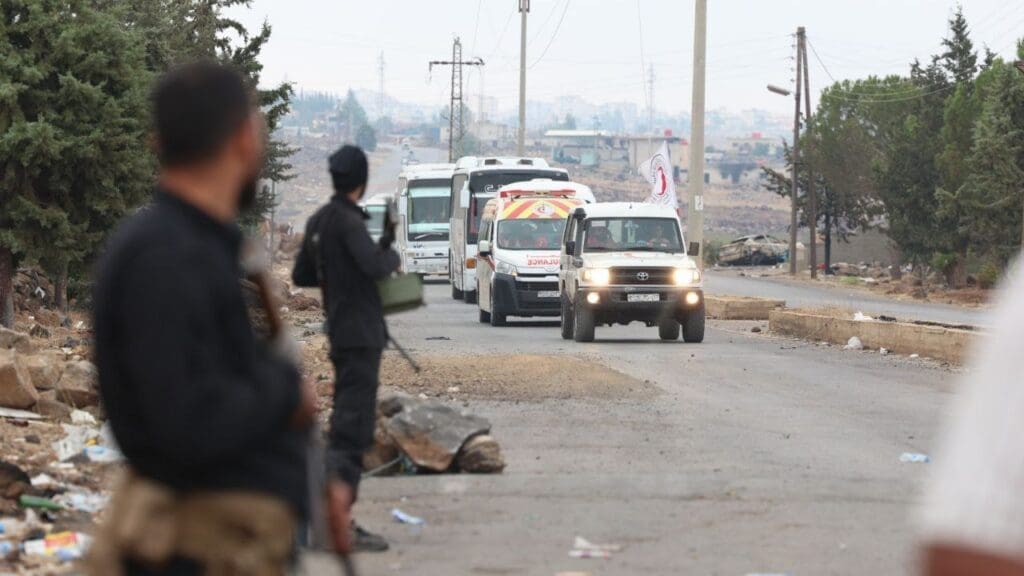
Bedouin families leaving the city of Suwayda.

Suwayda’s fragile security order is under mounting pressure as Damascus exploits administrative leverage, armed factions deepen internal fractures and Jordanian strikes expose the governorate’s growing narcotics crisis. The attacks on National Guard-linked commanders raise new questions over Hikmat al-Hijri’s ability to maintain control while resisting Damascus and containing violence from within.
Continue reading

Survival as Victory: Inside the Ideology That Makes Iran Impossible to Deter

In the early hours of February 28, 2026, the United States and Israel launched the largest combined air campaign in the Middle East since the 2003 invasion of Iraq. Forty days later, Iran declared victory. This is an attempt to explain why — and why that declaration is not simply propaganda.
Operation Epic Fury, as Washington named it, struck over 900 targets in its first twelve hours alone. B-2 stealth bombers, Tomahawk cruise missiles, and Israeli F-35s hit nuclear facilities at Fordow and Natanz, IRGC command centers, missile storage sites, and the leadership compound of Supreme Leader Ali Khamenei in Tehran. Khamenei was killed in the strike, along with members of his family. By the time a ceasefire was brokered 38 days later, over 5,000 targets had been hit, the country’s conventional military capacity had been gutted, and more than three million Iranians had been displaced.

And yet, on April 9, the new Supreme Leader Mojtaba Khamenei declared victory. He opened his address with a Quranic verse: “Indeed, We have granted you a clear victory.” He called the war “the third holy imposed defense” and described Iran’s endurance as “undoubtedly a divine blessing” delivered through “the blood of our martyred leader.” Vice President Mohammad-Reza Aref framed the outcome as “not merely a military victory, but a turning point in changing strategic equations.” The regime was battered, its former Supreme Leader was dead, its founder’s son was communicating through handwritten notes to avoid assassination. It called this a triumph.

To most Western observers, these declarations look delusional — the bluster of a regime in denial. But this reading misses something fundamental. Iran’s leadership is not ignoring reality. It is interpreting reality through a theological and historical framework that genuinely redefines what victory means. Understanding that framework is not optional for anyone trying to make sense of this conflict. It is the whole ballgame.

The Wound That Never Closed: Iran’s History of Righteous Suffering

The story begins, in a meaningful sense, on August 19, 1953, when the CIA and British intelligence overthrew Iran’s democratically elected Prime Minister, Mohammad Mossadegh, after he nationalized the Anglo-Iranian Oil Company. The coup reinstalled the Shah and ushered in 25 years of authoritarian rule backed by American money and a CIA-trained secret police. Mossadegh spent the rest of his life under house arrest. The United States did not formally acknowledge its role until 2013.

The suspicion this planted in Iranian political consciousness never faded. It became bedrock. When students stormed the American embassy in 1979, they did so explicitly because they believed it would be used, as it had been in 1953, as a staging ground for another coup. Ayatollah Khomeini would later justify his uncompromising stance by invoking this history directly. The message was consistent: the great powers had always conspired against Iran, and only iron resolve could survive their interference.

Then came the war that forged everything. On September 22, 1980, Saddam Hussein invaded Iran, targeting the oil-rich province of Khuzestan. What followed was eight years of industrialized slaughter that killed, by most scholarly estimates, between 500,000 and 750,000 Iranians. Iraq used chemical weapons — mustard gas, tabun, and sarin — on Iranian troops and civilians, the first verified combat use of nerve agents in modern warfare. Western governments not only knew about this; they actively supported Iraq with intelligence, money, and equipment. The UN Security Council refused, across seven wartime resolutions, to name Iraq as the aggressor.

Iran’s regime called this the “Imposed War” and the “Sacred Defense” (Defa-e Moqaddas), and it built an entire national mythology around it. The Basij, a volunteer militia, mobilized men and boys as young as thirteen for frontline service. Soldiers wore slogans giving them “special permission to enter Heaven.” Military operations were named Karbala-4, Karbala-5, Karbala-6. The dead were not called casualties. They were called martyrs. Their names were inscribed on mosques, schools, and street signs. The landscape of Iran was reorganized around the geography of sacrifice.

When the war finally ended in 1988, Khomeini accepted the UN ceasefire with words that still echo through Iranian politics: “Taking this decision is more deadly than drinking from a poisoned chalice.” And then the critical thing happened: the Islamic Republic survived. It did not collapse, reform, or moderate. As Steven Simon analyzed in War on the Rocks, the regime “nursed its wounds, rebuilt its Revolutionary Guard, and spent the next three and a half decades constructing the very proxy network and missile arsenal that the United States and Israel are now trying to destroy.”

The lesson the regime drew was theological as much as strategic: survival under pressure is proof of divine favor. The world conspired against the Islamic Republic with invasion, chemical weapons, and sanctions. The Republic endured. That endurance became the evidence.

The Grandson Who Chose Death: The Story at the Heart of Everything

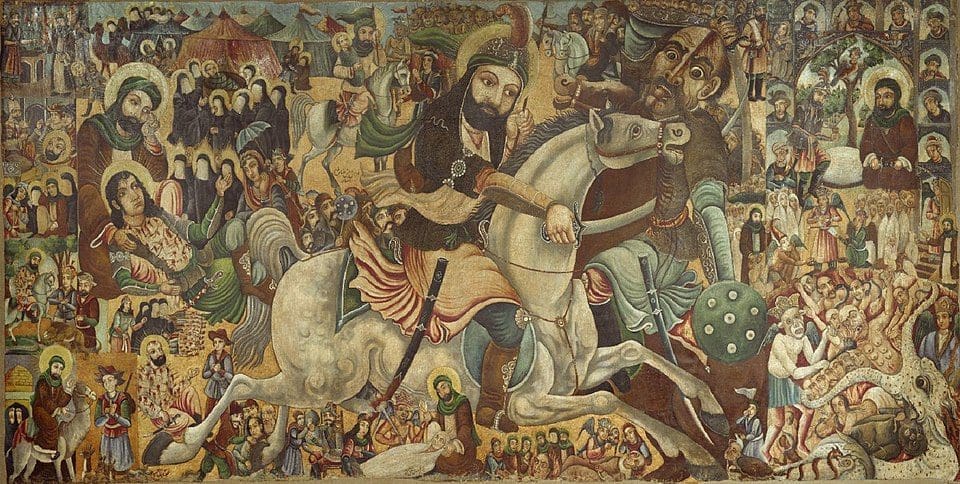
To understand why Iran’s leaders think this way, you have to understand one story. It is not a modern story. It happened in 680 CE, in the desert plains of Karbala, in what is now Iraq, and it is the emotional and spiritual core of everything.

Hussein ibn Ali was the grandson of the Prophet Muhammad. When the Umayyad caliph Yazid assumed power, Hussein refused to pledge allegiance to a ruler he considered illegitimate and tyrannical. He set out from Mecca with his family and roughly 72 companions. But Yazid’s forces intercepted the caravan before it could reach its destination. At Karbala, Hussein’s small band was surrounded by an army of thousands. The Umayyad troops cut off their access to water. For days, Hussein’s followers, including women and children, suffered under the desert sun. On the tenth day of the month of Muharram, the day now called Ashura, his companions fell one by one. His sons and nephews were killed. Finally, Hussein himself was slain and beheaded. The survivors were paraded as prisoners to Damascus.

Karbala was the event that created Shia Islam as a distinct religious tradition. Hussein’s choice — righteous death over submission to tyranny — became the paradigm through which Shia Muslims interpret history, politics, and the meaning of suffering. Every year during the first ten days of Muharram, Shia communities worldwide reenact the events in public processions, passion plays called ta’ziyeh, and rituals of mourning that have no precise equivalent in Western Christianity except perhaps the Stations of the Cross. As scholar Vali Nasr, author of The Shia Revival, has described, the attachment to the narrative of Karbala runs so deep it shapes how Shia communities understand justice, power, and the nature of history itself.

What Khomeini did in 1979 was take this ancient narrative of mourning and turn it into a call to action. Traditional Shia theology had counseled quietism: mourn Hussein, wait for divine justice, do not rebel against the powers of this world. Khomeini reversed this with a single political stroke. He called the Shah “the Yazid of our time” and told Iranians that waiting was itself complicity with injustice. The revolutionary slogan that swept Iran captured it perfectly: “Every land is Karbala, every month is Muharram, every day is Ashura.”

In that single sentence, Karbala stopped being a historical event and became a permanent condition — an eternal present that every generation of Iranians is asked to inhabit.

Dying Is Not Losing: The Theology of Martyrdom as Political Doctrine

In Twelver Shia Islam, the dominant branch practiced in Iran, there are twelve divinely appointed Imams descended from the Prophet Muhammad. The twelfth, Muhammad al-Mahdi, went into a state of “occultation” — divine hiding — in 874 CE. Believers hold that the Mahdi is still alive, sustained by God, and will return at the end of times to establish perfect justice. The present age is, in this theology, an age of patient endurance while awaiting his return.

Khomeini built his political system on this theological gap. His doctrine of Velayat-e Faqih — the Guardianship of the Islamic Jurist — holds that in the Mahdi’s absence, a senior cleric should govern the state as a kind of deputy, maintaining divine order until the Imam returns. This idea broke sharply from centuries of Shia tradition, in which senior clergy had generally steered away from direct political rule. But Khomeini enshrined it in Iran’s constitution after the revolution, fusing religious authority with state power in a way that gave the Islamic Republic a claim to legitimacy no other modern government possesses: its leader governs on behalf of the Hidden Imam himself.

This system produces a very specific understanding of martyrdom. In Shia theology, the Arabic word shahid means “witness.” To die for the cause is not to lose. It is to bear the ultimate witness to truth. The Quran promises martyrs a direct path to paradise: “Think not of those who are slain in God’s way as dead. Nay, they live, finding their sustenance in the Presence of their Lord.” This is not metaphorical decoration applied to recruitment posters. It is doctrinal conviction that fundamentally changes the cost-benefit calculus of conflict. Death in righteous struggle is victory in its truest form. The Islamic Republic institutionalized this conviction with systematic thoroughness: the Foundation of Martyrs and Veterans Affairs provides monthly stipends, housing subsidies, and priority university admissions to martyrs’ families. Streets are named after the fallen. Murals of dead soldiers cover buildings in every city. Estimates suggest that up to ten percent of children’s textbook content features themes of death and sacrifice.

When unmarried soldiers died during the Iran-Iraq War, wedding tables were set above their graves — a tradition linked to a companion of Hussein killed before his wedding at Karbala. Having a martyr in the family confers social status, even social mobility. The message is consistent and total: to give your life for the Islamic Republic is the noblest thing a person can do.

The Iran-Iraq War was the crucible that forged this doctrine from theory into lived national experience. As a December 2025 analysis in Small Wars Journal traced in detail, after Iran recaptured the city of Khorramshahr in 1982 at the cost of 30,000 casualties, the regime internalized a lesson that would define its strategic culture for decades: “Losses no longer signaled failure; they became proof of righteousness and resistance.” This was not spin. It was a genuine restructuring of what the word “victory” means.

How Theology Becomes Strategy: The Resistance Axis and Forward Defense

This worldview does not stay in the mosque. It walks directly into the war room.

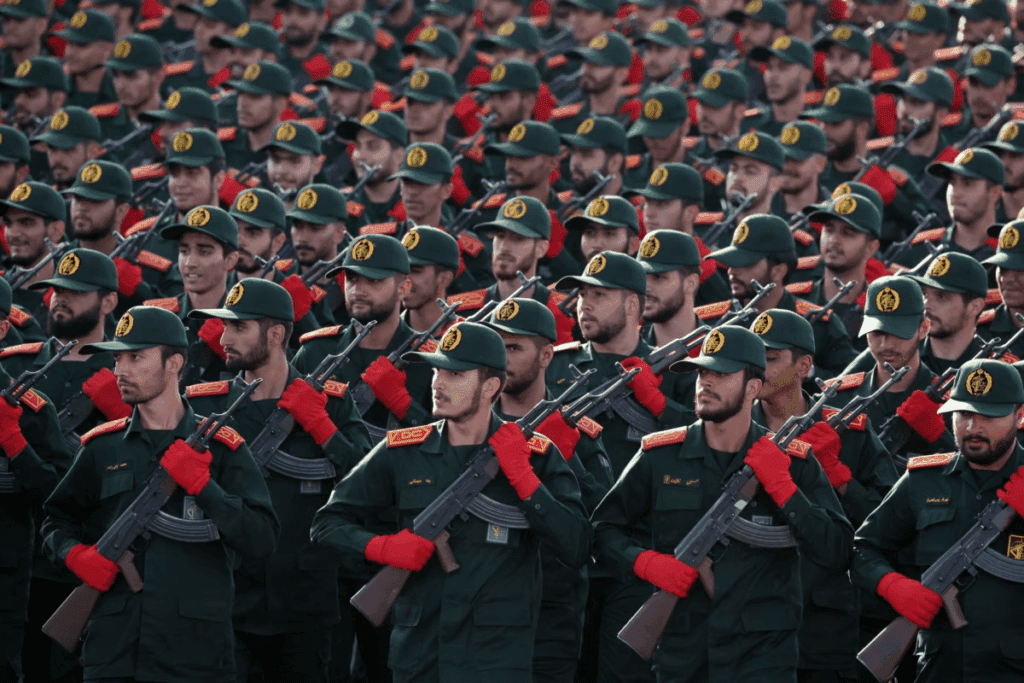
Iran’s Resistance Axis — the network of allied armed groups stretching from Hezbollah in Lebanon to the Houthi movement in Yemen to Shia militias across Iraq — is not merely a strategic alliance of convenience. It is, as scholar Afshon Ostovar documents in Vanguard of the Imam, an extension of the revolutionary mission. The IRGC is constitutionally defined not as a conventional military but as an “ideological army” tasked with safeguarding and exporting the revolution. Its Quds Force built proxy forces designed as client armies in Iran’s image, bound together by the Karbala narrative: the righteous few standing against unjust power, willing to absorb punishment, treating endurance as proof of moral superiority.

Iran’s forward defense doctrine flows from the same source. The operational logic is straightforward: fight enemies as far from Iran’s borders as possible, through proxies if necessary, so that any eventual battlefield — Lebanon, Syria, Gaza, Yemen, Iraq — is never Iranian soil. But this is also justified to domestic audiences in the language of Karbala: we must confront injustice wherever it manifests, or we are complicit in it. As Chatham House analyzed in March 2026, this forward defense ultimately became “a strategic boomerang” — the same proxy network that Iran built as a defensive buffer gave the United States and Israel the justification and the targeting map for the 2026 campaign.

But the deepest strategic implication is the regime’s definition of victory itself. The framework is disarmingly simple: if the Islamic Republic still stands, then God’s will has been served, and the enemy has failed. Territory, infrastructure, even military capacity are secondary. Survival is the metric. And when that survival is achieved at great human cost, the cost does not undermine the argument — it reinforces it. The suffering proves the righteousness. The righteousness justifies the suffering.

The regime reinforces this logic with a Quranic concept called istidraj, which analysts at Georgetown University’s Institute for the Study of Diplomacy describe as “divine luring” — the idea that an adversary’s apparent victories are divine tests that will ultimately lead to the aggressor’s downfall. The enemy’s strength is itself evidence of coming judgment. When combined with sabr, the Quranic concept of patient endurance that appears over 90 times in the text, a picture emerges of a strategic culture built to outlast rather than outfight. Patience is not weakness. It is sacred discipline.

The major RAND Corporation study of Iranian strategic culture captured the paradox well: “Ideology and bravado frequently mask a preference for opportunism and realpolitik.” Iran’s leadership is not suicidal. It negotiates, maneuvers, and sometimes retreats. Khamenei himself coined the term “heroic flexibility” to justify the 2015 nuclear deal. But the regime operates within boundaries set by a theological system that treats compromise as tactical and endurance as sacred.

The Third Imposed Defense: How Iran Is Framing 2026

When Operation Epic Fury began, the regime did exactly what its theology predicted it would do. It absorbed the blow and immediately mapped it onto the Karbala narrative.

Mojtaba Khamenei, speaking on the fortieth day of mourning for his father, drew explicit parallels to the enduring spirit of Ashura. Vice President Aref invoked “Husseini Iran” — a direct reference to Hussein’s martyrdom at Karbala. The regime labeled the conflict the “third holy imposed defense,” placing it in direct lineage with the Iran-Iraq War. Across the Resistance Axis, Iranian-backed militias in Iraq and Yemen called it the “new Battle of Karbala.” Senior ayatollahs issued a fatwa calling vengeance against America “the religious duty of all Muslims.”

The killing of Khamenei himself, far from demoralizing the regime, gave it the most potent raw material its theology could ask for: a supreme martyr. State media designated his death as shahadat. Forty days of national mourning were declared. His son proclaimed that “every member of the nation who is martyred by the enemy becomes an independent case for revenge.” As The Conversation noted in its analysis of Khamenei’s death, this plays directly into Shiite Islam’s reverence for martyrs — though notably not for all Iranians, many of whom received the news with something far closer to relief than grief.

Even the ceasefire itself was claimed as victory. Press TV declared Iran had achieved a “historic victory” and that the United States had been “forced to accept Iran’s proposal.” These claims were, by any independent assessment, substantially overstated. Small Wars Journal’s analysis of the coercive architecture of the campaign placed the outcome firmly in Washington’s favor militarily. But the regime’s domestic audience was not evaluating the claims by the standards of Western fact-checking. It was hearing them through the Karbala filter: we suffered, we survived, therefore we prevailed.

Al Jazeera’s analysis of the conflict identified the central irony: “In a secular strategic imagination, violence weakens by destroying capacity. In a political-theological imagination, violence can strengthen by confirming sacred purpose.” By striking Iran hard enough to wound it but not hard enough to collapse it, the United States and Israel may have, paradoxically, handed the regime the narrative of Karbala reborn.

The Problem Western Policymakers Cannot Solve

The strategic implication of all this is not that Iran is invincible. It plainly is not. Its military was devastated, its infrastructure damaged, millions of its citizens displaced. The regime faces ongoing internal opposition, economic collapse, and a shattered proxy network. It is weaker by any material measure than it was on February 27, 2026.

But material measures are not the only ones that matter. As Time magazine observed in March 2026, the Islamic Republic is “ideological” in a way that distinguishes it from ordinary authoritarian states. A kleptocracy can be bought off. A secular dictatorship can be deterred by the credible threat of destruction. But a system that has theologically encoded suffering as proof of righteousness — that venerates a seventh-century grandson of the Prophet who chose annihilation over submission — does not respond to pressure the way Western deterrence theory assumes it should. Pressure does not weaken the narrative. It feeds it.

The Georgetown analysts put it plainly: “Iran is not irrational. It is rational according to different logic.” This does not mean diplomacy is pointless. Iran has shown, repeatedly, that it can negotiate when the costs of confrontation become unbearable. Khomeini’s “poisoned chalice” in 1988 proved that. The 2015 nuclear deal proved it again. The regime’s theology makes room for tactical retreat. “Heroic flexibility” is a real doctrine. But any strategy premised on the idea that sufficient force will compel Iran to capitulate or abandon its self-understanding is operating on assumptions the Islamic Republic does not share.

And this is the challenge that outlasts any single military campaign. As analysts writing on Iran’s Mahdist ideology and the 2026 conflict have argued, the eschatological framework means that the regime can genuinely interpret every catastrophe as a step toward ultimate vindication. The Mahdi is coming. The present suffering is the proof. The enemy’s power today is the precursor to the enemy’s judgment tomorrow.

You cannot bomb a country into abandoning a 1,300-year-old story about the meaning of suffering. And as long as the Islamic Republic can point to its own survival — however damaged, however diminished — it will stand in front of its people and say what it has always said, in the language of Karbala: we are Hussein. They are Yazid. We are still here. The story always ends the same way.


Key Sources and Further Reading: Iran’s Memory of War, Foreign AffairsFrom Khorramshahr to Hezbollah, Small Wars JournalIranian Strategic Culture, RAND CorporationIran’s Forward Defence, Chatham HouseOperation Epic Fury, CSISIran’s Strategic Decision-Making, Georgetown ISDWar and Eschatology: Iran’s Mahdist Ideology, Hungarian Conservative • Vali Nasr, The Shia Revival (W. W. Norton, 2006) • Afshon Ostovar, Vanguard of the Imam (Oxford University Press, 2016)

Iran played the West at its own game; and won for 40 years

Iran’s revolutionary government didn’t just defy the West for four decades. It used the West’s own rulebook against it, and for a long time, it worked.
There is a version of the Iran story that gets told as a drama of rogue states versus the civilized order: Iran defying the world, the world pushing back, the cycle repeating. That version is comfortable because it implies the international community was doing its best against a difficult adversary. The less comfortable version, the one the evidence actually supports, is that Iran played the system brilliantly, exploiting every procedural tool the liberal international order offered, and bought itself roughly four decades of strategic time in the process.

The nuclear program that today sits weeks away from weapons-grade breakout was built largely in the gaps between negotiating rounds. The proxy empire that armed Hezbollah, funded Hamas, trained the Houthis, and reached deep into Iraq was expanded most aggressively during the periods of greatest diplomatic engagement. None of this happened by accident. It was a strategy, and it was executed by people who understood Western institutions from the inside out, because many of them had studied and worked in the West themselves.

The men who learned the West’s rules, then turned them around

The Islamic Republic’s founding generation wasn’t made up of clerics who stumbled into international diplomacy. Its first foreign policy apparatus was stocked, deliberately, with Iranians who had spent years inside American and European universities: people who understood how international law worked, how UN procedures could be used, and what Western governments needed to see in order to justify not acting.

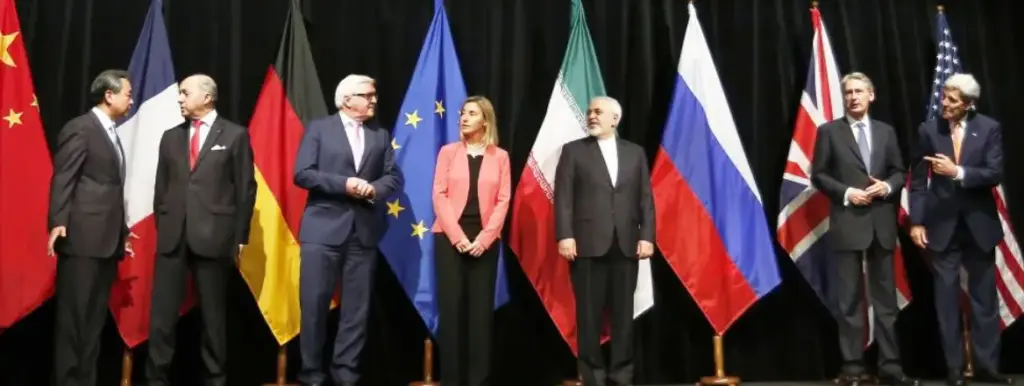
Mohammad Javad Zarif, the man who would lead Iran’s nuclear negotiations for two decades and become the face of the 2015 nuclear deal, earned his bachelor’s degree at San Francisco State, then his master’s and PhD in International Law and Policy at the University of Denver in 1984 and 1988. He had lived in the United States for roughly 30 years. He had chaired the UN General Assembly’s Legal Committee and presided over the UN Disarmament Commission, the body that coordinates the global nonproliferation regime. He knew exactly how the machinery worked. More to the point, he knew where the gears jammed.

He wasn’t alone. Mostafa Chamran earned a PhD in plasma physics from UC Berkeley, then worked at Bell Laboratories and NASA’s Jet Propulsion Laboratory before returning to become Iran’s first defense minister. Ebrahim Yazdi held a PhD in biochemistry from Baylor College of Medicine, served as a cancer researcher in Houston, then returned to become foreign minister. Sadegh Ghotbzadeh had studied at Georgetown’s Walsh School of Foreign Service and served as Khomeini’s English-language translator during his Paris exile. Abolhassan Banisadr, Iran’s first post-revolution president, studied economics and finance at the Sorbonne, where he later taught.

Khomeini used these figures strategically in the early years as a “democratic façade,” presenting moderate, Western-educated faces to international media while the theocratic structure consolidated behind them. Most were eventually purged, exiled, or executed once that function was no longer needed. But the institutional knowledge they represented didn’t disappear. It migrated into a second generation, and nowhere more consequentially than in Zarif, whose career from 1982 to 2021 was essentially a master class in exploiting the language and mechanisms of international law against the countries that created it.

The legal weaponry: from the ICJ to the NPT

Before getting into the nuclear program specifically, it’s worth understanding the legal infrastructure Iran built around itself, because that infrastructure was not defensive. It was offensive.

The International Court of Justice (ICJ), which functions as the United Nations’ supreme court for disputes between countries, became a recurring stage for Iranian grievance theater. Iran filed or participated in at least six major cases anchored primarily in the 1955 Treaty of Amity with the United States. The irony was thick: this was the same treaty Iran had declared void during the 1979 hostage crisis, but later resurrected as a legal vehicle the moment it became useful. The Oil Platforms case dragged through the court for eleven years (1992 to 2003). A 2018 case over JCPOA-related sanctions won Iran provisional measures ordering the U.S. to lift restrictions on humanitarian goods. A 2016 case over $1.8 billion in seized assets resulted in a 2023 ICJ ruling that the U.S. had violated four treaty obligations. None of these cases ultimately changed Iran’s behavior in any meaningful way. But they accomplished something more valuable: they kept Iran positioned as a victim of Western aggression in international forums, complicated the moral case for pressure, and consumed diplomatic bandwidth for years at a stretch.

The Nuclear Non-Proliferation Treaty (NPT), the international agreement designed to prevent the spread of nuclear weapons and signed by nearly every country on earth, provided a different kind of cover. Iran ratified it in 1970 as an original signatory and signed its safeguards agreement with the IAEA in 1974. The IAEA (International Atomic Energy Agency) is essentially the UN’s nuclear watchdog, responsible for verifying through inspections and monitoring that countries are not secretly building weapons. For the next three decades, Tehran cited Article IV of the NPT, which guarantees the “inalienable right” to peaceful nuclear energy, as legal justification for an enrichment program that had no plausible civilian rationale at the scale Iran was pursuing. NPT membership meant Iran could always frame Western attempts to restrict its enrichment as treaty violations, putting adversaries perpetually on the defensive in any legal or diplomatic forum.

The pattern was identical across every institution Iran engaged: join, invoke rights, generate procedural timelines that outlast political attention, use favorable rulings as legitimacy tools, ignore unfavorable ones. When the ICJ ordered Iran to release American hostages in 1980, Tehran simply didn’t comply. When the ICJ ruled in Iran’s favor decades later, Tehran publicized it globally.

Eighteen years hidden underground

The nuclear concealment operation ran for nearly two decades before anyone on the outside caught up. Iran hid a centrifuge enrichment program for 18 years and a laser enrichment program for 12 years, not from a determined inspection regime, but in plain sight of one that lacked the political will to push hard enough.

The secret wasn’t broken by inspectors. It was broken by Iranian dissidents. On August 14, 2002, the National Council of Resistance of Iran held a press conference in Washington publicly revealing secret uranium enrichment facilities at Natanz and a heavy water production facility near Arak. When IAEA inspectors visited Natanz in February 2003, they found 160 centrifuges ready for operation with 1,000 more under construction, built eight meters underground beneath 7.6 meters of reinforced concrete, explicitly designed to survive aerial bombardment. Environmental samples came back positive for particles of both low-enriched and highly enriched uranium. Iran’s explanation, that contamination had come from its supplier, strained credulity even at the time.

The Fordow facility, buried 80 meters deep inside a mountain near Qom on a former IRGC missile base, was secretly constructed beginning around 2006. Iran disclosed it to the IAEA in September 2009, but only after learning that American, British, and French intelligence had already detected it. President Obama revealed it publicly four days later. By 2023, the IAEA detected uranium enriched to 83.7% at Fordow, just below the 90% weapons-grade threshold. Iran called it an “unintended fluctuation.”

At Parchin, a vast military complex spread across 40 square kilometers, the IAEA documented evidence of high-explosive experiments with an inert depleted uranium core, the kind of tests associated with designing a nuclear implosion weapon. When the agency requested access in 2012, satellite imagery showed buildings being demolished, earth displaced, and fresh asphalt laid over suspected test sites. Environmental sampling in 2015 found chemically man-made particles of natural uranium, contradicting Iran’s claim the building had been used for conventional chemical storage.

The IAEA formally found Iran in noncompliance with its safeguards agreement in September 2005 (GOV/2005/77). It would not issue a second noncompliance finding for another 20 years, until June 2025, during which interval Iran mastered enrichment at every level relevant to weapons production.

“We were the ones to complete it” — Iran’s negotiators in their own words

The most damning account of Iran’s negotiating strategy doesn’t come from Western intelligence assessments. It comes from Iran’s own chief nuclear negotiator, on Iranian state television.

Hassan Rouhani, who ran Iran’s nuclear negotiations from 2003 to 2005 before later becoming president, gave a remarkably candid interview before the 2013 presidential election. He called it “a lie” that everything had been suspended under his watch during the EU-3 talks. The EU-3 was the joint European negotiating group of Britain, France, and Germany, which engaged Iran in a two-year diplomatic process from 2003 to 2005. Rouhani went further, saying: “We halted the nuclear program? We were the ones to complete it!” He boasted that centrifuge numbers had reached 3,000 by the winter of 2004, during the supposed suspension period.

In an earlier 2005 speech, he was even more direct about the mechanics. While negotiations were ongoing in Tehran, Iranian engineers were simultaneously installing equipment at the Isfahan uranium conversion facility, the critical step that converts yellowcake uranium into the gas that feeds enrichment centrifuges. He described the negotiations as creating “a calm environment” that allowed the work to proceed uninterrupted.

The timeline confirms every word of it. Iran signed the Tehran Declaration in October 2003, agreeing to suspend enrichment and cooperate with inspectors, moves that prevented referral to the UN Security Council. The Paris Agreement in November 2004 formalized the suspension, but Iran characterized it as “voluntary” and “non-legally binding.” By August 2005, Iran unilaterally resumed uranium conversion at Isfahan. The negotiations had prevented Security Council referral for more than two years, during which Iran mastered the key technical steps it needed. When the IAEA finally referred Iran to the Security Council in February 2006, the technological fait accompli was already established. A Lawrence Livermore National Laboratory analysis concluded bluntly that while Iran violated successive agreements, the talks created “an appearance of Iranian cooperation that lessened the U.S. case for military action.”

The JCPOA: compliance on paper, expansion everywhere else

The 2015 nuclear deal, formally known as the Joint Comprehensive Plan of Action (JCPOA), was the culmination of years of Iranian diplomatic strategy, and it delivered real concessions in both directions. Iran’s enriched uranium stockpile was cut by 97%, from roughly 10,000 kilograms down to 300. The number of operating centrifuges was reduced from about 19,000 to 5,060. Breakout time was extended from an estimated two to three months to at least twelve. In exchange, Iran received access to frozen assets and the lifting of most international sanctions, along with daily IAEA inspector access to declared sites.

But the deal’s architecture contained features Iran was well positioned to exploit. Sunset clauses would lift centrifuge limits by 2026, enrichment caps by 2031, and all monitoring of uranium ore processing by 2041. The ballistic missile program, the delivery vehicle for any future warhead, was excluded from the agreement entirely. The dispute resolution mechanism for requesting access to suspicious sites allowed up to 24 days of delay before any inspection could be compelled. Iran’s leadership consistently declared military sites categorically off-limits. As of August 2017, the IAEA had not visited a single Iranian military site since Implementation Day.

Technical boundary-pushing during the JCPOA period was documented repeatedly. Iran exceeded its heavy water cap (a type of water used in certain reactor designs that can produce weapons-grade plutonium as a byproduct) twice. Centrifuge numbers at times exceeded agreed limits. The Arak reactor core, supposedly neutralized by filling key pipelines with cement, was later admitted by Iran’s own atomic energy chief to be “easily reactivatable.” German intelligence reported Iran attempted more than 100 times in 2015 and 2016 to procure illicit nuclear and missile technology while the deal was in force.

Where the money actually went

The most consequential dimension of the JCPOA period wasn’t nuclear. It was financial.

Iran’s annual funding to Hezbollah, the Lebanese militant group and political organization that functions as Iran’s most capable and longest-standing regional proxy, rose from an estimated $100 to $200 million before the deal to roughly $700 million per year by 2018, per U.S. Treasury estimates. That represented approximately 70% of Hezbollah’s total annual budget. Hezbollah’s secretary-general Hassan Nasrallah didn’t hide it: he said publicly that Hezbollah’s budget, salaries, weapons, and rockets, came entirely from the Islamic Republic, and that as long as Iran had money, Hezbollah had money.

The Iranian oil export revenue numbers explain the mechanics directly. After JCPOA implementation, exports climbed to 2.5 to 2.8 million barrels per day, and oil earnings peaked at roughly $50.8 billion in 2018. Congressional testimony documented that military spending soared in direct proportion. The IRGC (Islamic Revolutionary Guard Corps) is Iran’s ideologically driven parallel military force, distinct from the regular army, that controls the proxy network and operates its own economic empire inside Iran. Its share of Iran’s defense spending grew from 27% in 2013 to 37.3% by 2023.

Beyond Hezbollah, the money flowed widely. Iranian funding to Hamas, the Gaza-based militant group that has governed the territory since 2007, reached an estimated $70 to $100 million annually. Afghan and Pakistani Shia militias were built from dozens of fighters into full military formations. Iran deployed over 100,000 Shia fighters to Syria to save the Assad regime, at an estimated cost of $6 to $15 billion per year. Houthi capabilities in Yemen expanded dramatically, with Iranian arms shipments documented through repeated naval interdictions. One IRGC deputy commander eventually acknowledged Iran had spent nearly $20 billion cumulatively on regional proxy activities. Every dollar of sanctions relief that flowed into Tehran moved downstream through the Quds Force, the IRGC’s external operations branch responsible for managing proxy relationships abroad, to its partners within months.

What happened when the U.S. stopped playing along

The Trump administration’s approach to Iran represented a structural break from every previous administration in one specific respect: it refused to engage the delay mechanism. Where previous governments, Republican and Democrat alike, had treated the nuclear file as separable from missiles and proxies, and accepted constrained enrichment as a realistic diplomatic achievement, the Trump team demanded comprehensive behavioral change across all fronts simultaneously and imposed maximum economic pressure without waiting for negotiations to conclude.

On May 8, 2018, Trump withdrew from the JCPOA, citing sunset clauses, the exclusion of the missile program, insufficient inspection access, and the use of sanctions relief to fund terrorism. Sanctions were reimposed in two tranches in August and November 2018, and by April 2019, all remaining oil import waivers had been revoked. The administration ultimately imposed more than 1,500 sanctions designations on Iranian individuals and entities. In April 2019, the IRGC was designated a Foreign Terrorist Organization, the first time any component of a foreign government received that designation, meaning any material support to the IRGC became a criminal matter under U.S. law, not merely a sanctions violation.

The economic impact was severe and measurable. Iranian oil exports collapsed from roughly 2.7 million barrels per day to as low as 400,000 to 500,000 by late 2019. Oil revenue fell from $50.8 billion in 2018 to $6 billion in 2020, an 88% decline. GDP contracted five to six percent annually in 2018 and 2019. The rial lost approximately 80% of its value on the parallel market. Iran cut its military budget by nearly 25% in 2019.

The downstream effects on proxy funding were visible and documented in real time. In March 2019, Nasrallah made an unprecedented public appeal for donations, acknowledging financial difficulties were “a result of this financial war.” Hezbollah fighters received only half their normal salaries. Roughly 1,000 offices were shuttered across Lebanon. Donation boxes appeared in Beirut neighborhoods, something previously unthinkable for an organization that had always projected financial strength. In Iraq, Quds Force commander Esmail Ghaani reportedly arrived at militia meetings carrying silver rings instead of cash, a widely noted distress signal that made the rounds among analysts covering the region.

The key structural distinction was that the maximum pressure campaign didn’t give Iran a diplomatic off-ramp that could be used to generate delay. Secretary of State Pompeo’s 12 demands, issued in a May 2018 speech, required Iran to permanently abandon enrichment, grant unqualified IAEA access to all sites including military ones, end all support to regional proxy groups, withdraw from Syria, and cease ballistic missile development. These demands were not a negotiating opening position. They were framed as prerequisites, and the administration was not offering another round of talks that could be used to buy time.

The Soleimani strike: removing the architect

The January 3, 2020 killing of Qasem Soleimani near Baghdad International Airport was the most consequential single U.S. action against Iran’s regional network in decades. Soleimani had commanded the IRGC-Quds Force for over twenty years and was widely considered the second most powerful figure in Iran after Supreme Leader Khamenei. He didn’t just manage the proxies. He built them. He personally maintained relationships with Nasrallah in Beirut, with militia commanders in Baghdad, with Houthi leadership in Sana’a, and with Hamas and Islamic Jihad in Gaza. His operations in Iraq since 2003 were linked to the deaths of more than 600 American personnel. He coordinated the September 2019 drone and cruise missile strike on Saudi Aramco facilities that temporarily knocked out half of Saudi Arabia’s oil production capacity.

His successor, Esmail Ghaani, inherited the title but not the relationships or the operational instincts that had made Soleimani irreplaceable. West Point’s Combating Terrorism Center assessed the killing as “a significant loss of capability and experience” while cautioning that the damage was not permanent. The proxy network had been embedded and institutionalized over decades, retaining operational autonomy independent of central direction. The multi-front Iranian proxy campaign that followed October 7, 2023, with Hezbollah attacking Israel’s north, Houthis blocking Red Sea shipping, and Iraqi militias targeting U.S. bases, demonstrated that the architecture survived its architect.

The strategy worked until the institutions it relied on were bypassed

Iran’s four-decade strategy rested on a single insight that its Western-educated diplomats understood better than most: multilateral institutions move slowly, and the procedural requirements of international law create time that a determined actor can turn into strategic advantage. Rouhani didn’t just happen to stall during the EU-3 talks. The IAEA didn’t just happen to spend years seeking access to Parchin while Iran cleaned it up. These were predictable outcomes of a system Iran had studied carefully and knew how to navigate.

The record, taken whole, is unambiguous on its own terms. The chief nuclear negotiator boasted on state television that talks were used to complete nuclear infrastructure. Hezbollah’s budget tripled during the JCPOA’s sanctions relief period. The IAEA documented 18 years of concealed enrichment. Every major diplomatic engagement period coincided with proxy expansion. Measured purely by the question of time bought, the strategy delivered.

The Trump administration’s maximum pressure campaign demonstrated that the strategy had a structural vulnerability: it depended entirely on Western willingness to keep engaging. When Washington withdrew from the JCPOA, designated the IRGC as a terrorist organization, and killed Soleimani, it bypassed the institutional delay mechanisms Iran had spent decades learning to exploit. The economic damage was real. The 88% oil revenue collapse, the Hezbollah austerity, and the Hamas budget cuts were all documented in real time. But the approach also carried its own cost: without the JCPOA’s monitoring architecture, Iran’s nuclear breakout time collapsed from over twelve months to approximately one week by 2023, and its enriched uranium stockpile grew to levels sufficient for more than a dozen weapons.

The deeper lesson may be that Iran didn’t so much “win” as expose a gap in the international order, one where procedural legitimacy and actual compliance are easy to conflate, and where a state actor willing to treat institutional membership as camouflage rather than commitment can exploit that gap indefinitely. Iran’s Western-educated diplomats understood that gap from experience. They spent four decades driving through it.


Key Sources

Built for Smuggling: How Iran’s Revolutionary Guard (IRGC) Runs a Global Drug Cartel

Iran’s Islamic Revolutionary Guard Corps operates one of the world’s largest state-backed drug trafficking enterprises, generating billions of dollars annually through opium, heroin, cocaine, and Captagon networks that span from Afghanistan to Latin America. U.S. Treasury designations, DEA investigations, and UN data collectively paint a picture of an organization that has weaponized the narcotics trade to fund proxy wars, evade sanctions, and project power across four continents — all while executing hundreds of its own citizens each year for low-level drug offenses.
The DEA’s landmark Project Cassandra investigation traced the conspiracy to the innermost circle of Hezbollah and its state sponsors in Iran, estimating that the IRGC-Hezbollah narcotics nexus collects roughly $1 billion per year from drug trafficking alone (Politico/Snopes). This is not rogue activity by individual officers. The systemic nature of the involvement — sanctioned generals, state-controlled ports, military-grade logistics — points to institutional complicity at the highest levels.


A Military Organization Built for Smuggling

The IRGC’s drug trafficking apparatus runs through its extraterritorial arm, the Quds Force (IRGC-QF), which commands a network of specialized units and regional proxy forces. The organizational structure provides both operational capacity and plausible deniability.

At the center sits the Ansar Corps, the Quds Force sub-unit responsible for Afghanistan and Iran’s eastern border. Below it, Brigadier General Gholamreza Baghbani ran the Quds Force office in Zahedan, near the Afghan-Pakistan border. In March 2012, Treasury designated Baghbani as a Specially Designated Narcotics Trafficker under the Foreign Narcotics Kingpin Designation Act — the first Iranian official ever designated under that statute. According to FDD’s analysis, Baghbani allowed Afghan narcotics traffickers to smuggle opiates through Iran in return for assistance moving weapons to the Taliban (Long War Journal; Atrocities Tracker; AEI).

Other units serve dual purposes. Unit 190 oversees covert smuggling of weapons, equipment, and funds using Iranian airlines — Mahan Air and Qeshm Air — on ostensibly civilian flights, infrastructure that overlaps with narcotics transport (Iran Primer/USIP). Unit 840 handles special operations including assassinations, frequently using drug traffickers as operatives. Branch 4000 of IRGC Intelligence has exploited drug-smuggling routes for weapons trafficking to Jordan and the West Bank, according to the Alma Research Center.

The IRGC’s proxy system extends this reach globally. Hezbollah serves as the primary operational partner. Iraqi Shia militias — Asaib Ahl al-Haq, Kataib Hezbollah, and Harakat al-Nujaba — control border areas critical for smuggling between Iraq, Syria, and Iran. The Houthis in Yemen reportedly receive IRGC-supplied equipment for building Captagon factories. Syria’s 4th Armored Division, under Maher al-Assad, partnered directly with the IRGC and Hezbollah in industrializing the Captagon trade (HSToday).

State infrastructure completes the picture. Tidewater Middle East Co., an IRGC-owned port operator designated by Treasury in June 2011, manages seven Iranian ports including the Shahid Rajaee container terminal at Bandar Abbas — Iran’s main container port.


Four Trafficking Corridors Generating Billions

1. The Afghan Opium Corridor

Iran sits on the world’s busiest drug smuggling corridor: the UN estimates 10 tons of narcotics enter Iran daily from Afghanistan. Raw opium crosses Iran’s eastern border through Sistan-Baluchestan province, where IRGC-controlled laboratories process it into heroin. From there, drugs move westward along the Balkan Route — through Iraq and Turkey into Bulgaria, Romania, Italy, and Western Europe. The route’s annual market value reaches approximately $20 billion, according to the UNODC. In 2017, Italian authorities identified a Baghbani-directed network of nine Iraqis affiliated with the Popular Mobilization Forces smuggling drugs through Iraq and Turkey to Italy (Al Arabiya; Iran News Wire).

2. The Latin American Cocaine Pipeline

The Latin American cocaine pipeline operates primarily through Hezbollah as the IRGC’s proxy. Cocaine flows from Colombia through Venezuela — which serves as the critical transit hub — to the Caribbean, Europe, and the United States. The most notorious operator was Ayman Joumaa, a Lebanese-Colombian drug kingpin designated by Treasury in January 2011, whose network laundered an estimated $200 million per month (Wikipedia; Washington Institute).

The Venezuelan regime under Nicolás Maduro became deeply enmeshed: in March 2020, the DOJ announced narcoterrorism indictments against Maduro himself. Former Venezuelan Vice President Tareck El Aissami was designated under the Kingpin Act in February 2017 (Congressional Research Service). The Atlantic Council documented how Iran-backed networks prop up the Venezuelan regime. RAND Corporation reported on Hezbollah’s expanding network across Latin America.

3. The Syrian Captagon Trade

Under the Assad regime, Syria produced approximately 80% of the world’s Captagon, a synthetic amphetamine. The global Captagon industry reached roughly $10 billion annually, with the Assad family earning an estimated $2.4 billion per year (RUSI; Wikipedia). Production was managed by Maher al-Assad’s 4th Armored Division in coordination with Hezbollah and the IRGC. Most exports transited through IRGC-controlled Latakia port. In July 2020, Italian police seized 84 million Captagon tablets worth over €1 billion at Salerno port, shipped from Latakia (Anadolu Agency).

The U.S. Treasury sanctioned Syrian regime and Lebanese actors involved in illicit drug production, and later targeted Hezbollah’s finance network and Syrian Captagon trafficking directly. Following Assad’s fall in December 2024, the trade has fragmented but not disappeared: the West Point Combating Terrorism Center reported in 2025 that production dispersed to smaller mobile labs in eastern Syria, with new sites emerging in Sudan, Sierra Leone, Yemen, and Libya (Stimson Center; Foreign Policy).

4. Maritime Routes Through the Persian Gulf

Maritime routes through the Persian Gulf and Indian Ocean carry Afghan-origin heroin via dhow from Iran’s Makran Coast into East Africa, South and Southeast Asia, and the Arabian Peninsula. In May 2023 alone, two fishing vessels departing Iran’s Chabahar port were interdicted carrying $30 million and $80 million worth of heroin and crystal meth respectively (Diyaruna).


The Financial Scale: Billions in Drug Revenue

Quantifying the IRGC’s total drug trafficking revenue precisely is impossible given its clandestine nature, but multiple credible sources converge on a range of billions annually.

Iran’s own Interior Minister stated that the IRGC earns $3 billion per year from narcotics sales inside Iran alone, according to reporting cited by the Iran News Wire. Die Welt, citing WikiLeaks cables, reported the IRGC’s income from drug trafficking to Europe amounts to several billion euros (IFMAT). A leaked U.S. Embassy cable from Baku characterized Iran’s government as the biggest drug trafficker in the world.

These figures exist alongside the IRGC’s broader economic empire. The organization’s overall economic empire generates an estimated $30–50 billion in annual turnover (Ainvest; Janes). Drug revenue represents a significant supplementary income stream that becomes especially critical under sanctions pressure.

The Captagon trade alone dwarfed Syria’s legitimate economy — Treasury designated Khaldoun Hamieh in 2024 for controlling Captagon labs in Sayyida Zainab in an area largely under the control of the IRGC and Hezbollah. Hamieh had donated nearly $1 million to Hezbollah from drug proceeds (JISS).


A Network of Global Partners

The IRGC does not operate in isolation. It has cultivated a web of partnerships with state actors, terrorist organizations, and transnational criminal enterprises.

Hezbollah is the indispensable partner. Iran provides approximately $700–800 million annually to Hezbollah via the IRGC Quds Force, but illicit activities — principally drug trafficking — generate an estimated 30% of Hezbollah’s operating budget (FDD; Wikipedia). The DEA identified Hezbollah’s operational arm as the Business Affairs Component (BAC), originally founded by the late terrorist mastermind Imad Mughniyeh (DEA).

Following the 2024 Israel-Hezbollah war and intensified sanctions, Matthew Levitt of the Washington Institute testified to the U.S. Senate that Iran is reportedly unable to foot the bill for Hezbollah’s reconstruction efforts, driving the organization to lean harder into drug trafficking. A November 2025 Treasury designation revealed the IRGC-QF had transferred over $1 billion to Hezbollah since January 2025 alone.

The Venezuelan connection has become a tier-one security concern. Reports indicate nearly 11,000 Hezbollah-linked operatives entered Venezuela between 2010 and 2019, and 400 Hezbollah field commanders were ordered to evacuate to Latin America (Free Beacon; Senate Drug Caucus testimony).

Mexican cartels have also intersected with IRGC operations. In the 2011 Arbabsiar plot, the Quds Force attempted to recruit Los Zetas to assassinate the Saudi ambassador in Washington for $1.5 million — demonstrating direct IRGC-cartel engagement (Politicon; War on the Rocks).

West African networks serve as critical transit nodes, with Hezbollah leveraging the Lebanese Shia diaspora across the region. Cocaine from South America flows through Guinea-Bissau, Ghana, Nigeria, and Benin before reaching Europe (Risk Intelligence).

The IRGC has also increasingly partnered with European criminal organizations. A March 2025 FDD/Long War Journal analysis documented Iran’s partnerships with Sweden’s Foxtrot Network, the Dutch Mocro-Mafia, the Irish Kinahan cartel, German Hells Angels chapters, and Eastern European syndicates. UK MI5 Director-General Ken McCallum stated in October 2024 that Iranian state actors make extensive use of criminals as proxies (ICCT; Atlantic Council; AIJAC).


Drug Profits Funding Proxy Wars and Assassination Plots

The line between IRGC drug trafficking and terrorism is not merely theoretical — it is documented in court records, Treasury designations, and criminal convictions.

Drug proceeds directly fund the IRGC’s proxy warfare infrastructure. The DEA’s Project Cassandra found that Hezbollah’s BAC used proceeds to purchase weapons for its activities in Syria (Project Cassandra). Jordan has responded with military force: Jordanian forces killed 27 drug smugglers in a single January 2022 incident, and the Royal Air Force conducted airstrikes against drug trafficking infrastructure in Syria (Washington Institute).

The IRGC has systematically used drug trafficking networks to carry out assassinations on foreign soil. Naji Sharifi Zindashti, described as Iran’s leading drug lord, runs a criminal network that traffics over 20% of drugs distributed across Iran while simultaneously performing kidnappings and murders of dissidents abroad for Iran’s intelligence services (Iran International; Center for Security Policy). In the Masih Alinejad case, two members of an Eastern European organized crime group were convicted in March 2025 of being hired by the IRGC to murder the Iranian-American journalist (FDD). France’s DGSI intelligence agency stated plainly that Iranian services now more systematically prefer to use people from criminal circles (ICCT).

Perhaps the starkest human cost falls on Iran’s own citizens. At least 503 people were executed for drug-related offenses in Iran in 2024 — approximately 20 times the number in 2020 (Iran Human Rights). These executions disproportionately target marginalized ethnic minorities: members of Iran’s Baluchi minority account for roughly 20% of recorded executions despite being only 5% of the population (Amnesty International). The IRGC simultaneously shoots and kills kolbars (Kurdish border porters) and sokhtbars (Baluchi fuel porters) — impoverished minority members forced into porterage by deliberate economic underdevelopment. Between March 2023 and March 2024, 444 kolbars were killed or injured (Iran International; Brookings; Center for Human Rights in Iran).


Laundering Billions Through a Global Shadow Financial System

The IRGC’s money laundering infrastructure is as sophisticated as its trafficking operations, employing shell companies, informal banking networks, real estate, gold, and increasingly cryptocurrency.

The Lebanese Canadian Bank (LCB) case exposed the architecture. Designated by FinCEN in February 2011 as a primary money laundering concern, LCB — once Lebanon’s eighth-largest bank — served as the main gateway for laundering drug proceeds. Funds were wired from Lebanon to purchase used cars from roughly 300 U.S. dealerships, cars were shipped to West Africa for resale, and cash from car sales plus drug proceeds flowed back to Hezbollah through controlled channels. Joumaa’s network alone laundered as much as $200 million monthly. The DOJ filed a $483 million forfeiture claim — the largest counterterrorist civil financial action in DOJ history — ultimately resulting in $102 million in asset forfeiture and LCB’s liquidation (Investigative Project on Terrorism; ProPublica).

Hawala networks remain the IRGC’s fastest and most adaptable mechanism for moving funds, allowing transfer of large sums across Iraq, Syria, Lebanon, and Yemen in under 24 hours with minimal documentation. The Wall Street Journal reported in 2025 that the IRGC smuggled over $1 billion to Hezbollah through Dubai since January 2025 using exchange shops, private companies, and couriers (Jerusalem Post/WSJ; IranSTO).

Gold has become a critical store of value. The Reza Zarrab case revealed how an Iranian-Turkish businessman laundered billions through Turkey’s state-owned Halkbank, disguised as gold and food trade. Turkey’s gold exports to Iran surged from $55 million in 2011 to $6.5 billion in 2012 — almost entirely laundered funds (Wisconsin Project on Nuclear Arms Control).

Cryptocurrency has emerged as an increasingly important channel. Iran’s crypto ecosystem reached $8–11 billion in 2025, with up to 50% linked to the IRGC according to Chainalysis. In Q4 2025, IRGC-linked addresses moved more than $3 billion to support militia networks and procure dual-use equipment. In January 2026, OFAC sanctioned UK-registered front companies linked to sanctioned financier Babak Zanjani for processing approximately $1 billion in IRGC-associated transactions, predominantly in USDT on the TRON blockchain (The National; GNET; ACAMS). A Fortune investigation in March 2026 found $1.7 billion in total flows to Iran-linked wallets through Binance accounts.

OFAC sanctioned nearly 50 entities and individuals constituting a sprawling shadow banking network in September 2024 (Treasury; TRM Labs). Front companies have been identified in the UAE, Hong Kong, Turkey, China, Lebanon, Oman, Cyprus, India, and Russia.


Project Cassandra and the Investigative Record

The most significant investigation into the IRGC-Hezbollah drug trafficking nexus was Project Cassandra, a DEA-led initiative launched in 2008 from a top-secret facility in Chantilly, Virginia. Over nearly a decade, the investigation encompassed approximately 20 sub-operations and involved 30 U.S. and foreign security agencies (Wikipedia; Grokipedia).

Sub-operations included Operation Cedar — a 2016 joint action with French, German, Italian, and Belgian authorities that arrested 15 Hezbollah operatives and seized €500,000 in cash and luxury watches worth roughly $9 million (Project Cedar; Middle East Forum; DEA).

The investigation became politically explosive when Josh Meyer published his investigation in Politico in December 2017 alleging that the Obama administration systematically undermined Project Cassandra to protect the Iran nuclear deal. According to participants interviewed by Meyer, the Justice Department declined criminal charges, Treasury delayed sanctions, and the State Department rejected requests to lure high-value targets to countries where they could be arrested. Katherine Bauer, a former Obama Treasury official, testified before Congress that Hezbollah-related investigations were tamped down for fear of jeopardizing the nuclear deal. Key architect David Asher stated the investigation was drained almost to the last drop by the end of the Obama administration. Former Obama officials denied deliberately blocking actions (NPR; Newsweek).

In response, Attorney General Jeff Sessions ordered a review and the DOJ established the Hezbollah Financing and Narcoterrorism Team (HFNT) in January 2018. In October 2025, the Senate Caucus on International Narcotics Control held a hearing specifically on Hezbollah’s Latin American Drug Trafficking Operations (Washington Institute/Levitt testimony).


Conclusion: A Narco-State Hiding in Plain Sight

The evidence compiled across Treasury designations, DEA investigations, DOJ indictments, UN reports, and investigative journalism establishes that the IRGC operates not as an occasional participant in drug trafficking but as a systematic, state-backed narcotics enterprise with global reach. The Quds Force provides command and control. Hezbollah serves as the primary operational proxy. State infrastructure — ports, airlines, diplomatic cover, military logistics — provides the backbone. And billions in proceeds cycle through an increasingly sophisticated laundering apparatus spanning hawala networks, shell companies, gold markets, and cryptocurrency exchanges.

What distinguishes the IRGC from traditional drug cartels is the dual-use nature of virtually every element: the same smuggling routes carry both drugs and weapons, the same financial networks fund both trafficking and terrorism, and the same criminal proxies carry out both narcotics operations and assassination plots. Jordan now conducts airstrikes against drug trafficking infrastructure on its border. European law enforcement reports an uptick in Hezbollah drug activity following the 2024 war. And Iran continues executing hundreds of impoverished drug offenders annually — overwhelmingly ethnic minorities — while its elite military organization profits from the trade at industrial scale.

The fall of the Assad regime in December 2024 disrupted the Captagon trade but did not end it; production has merely dispersed to Lebanon, Yemen, Sudan, and West Africa (UN News; NCRI; The New Arab). As sanctions tighten and proxy wars drain resources, the IRGC’s incentive to expand narcotics operations only grows.

Middle East war spreads: multiple countries targeted by Iran

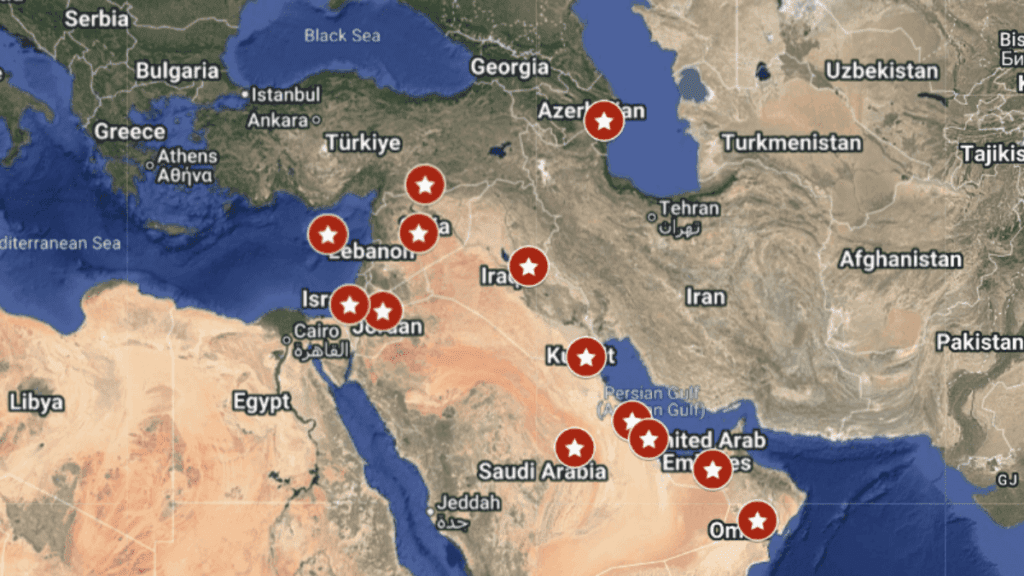
countries affected by iran

As the war in the Middle East continues to spread, in the last 24 hours, drones and missiles have targeted both Türkiye and Azerbaijan, with 3 drones originating from Iran hitting locations within the Nakhchivan Autonomous Republic, injuring two according to reports from officials.
Middle east war spreads: multiple countries targeted by iran
Nakhchivan International airport was targeted by Iranian drones

Azerbaijan in their official statement clarified their “right to take appropriate actions”, with them also summoning the Iranian ambassador in result of the strikes.

In a continued escalatory manner, Iran and its proxies have targeted multiple countries, including European regions. RAF Akrotiri in Cyprus, an oversea British military base came into direct contact from Iranian drones, with one impacting the base causing minor damage and no injuries or fatalities.

This new development in the Caucasus region comes less than 24 hours ago that Türkiye reported an Iranian missile being fired towards their territory, with the outcome of it being shot down by air defense.

Missiles and drones continue to fall in other regions too, with Saudi Arabia also confirming 3 cruise missiles being intercepted in al-Kharj, with other Gulf States continuing their operations in downing projectiles.

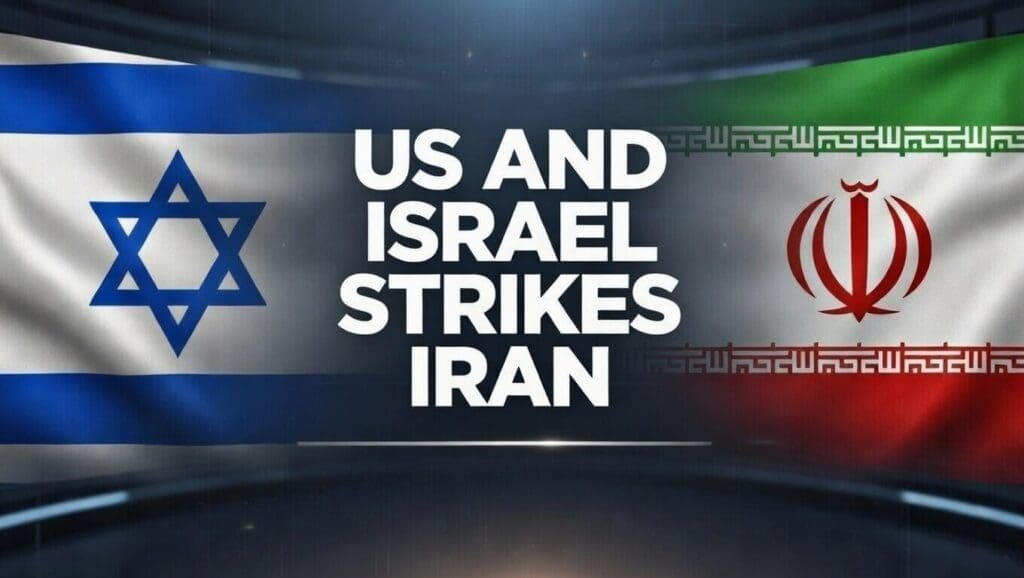
The continued attacks by Tehran comes as United States and Israeli forces continue to hit targets throughout Iran, with military installations and governmental locations coming under attacks since last Saturday.

Continued live coverage of breaking news updates about the current conflict can be found on our live feed

United States positions military assets for a potential strike against Iran

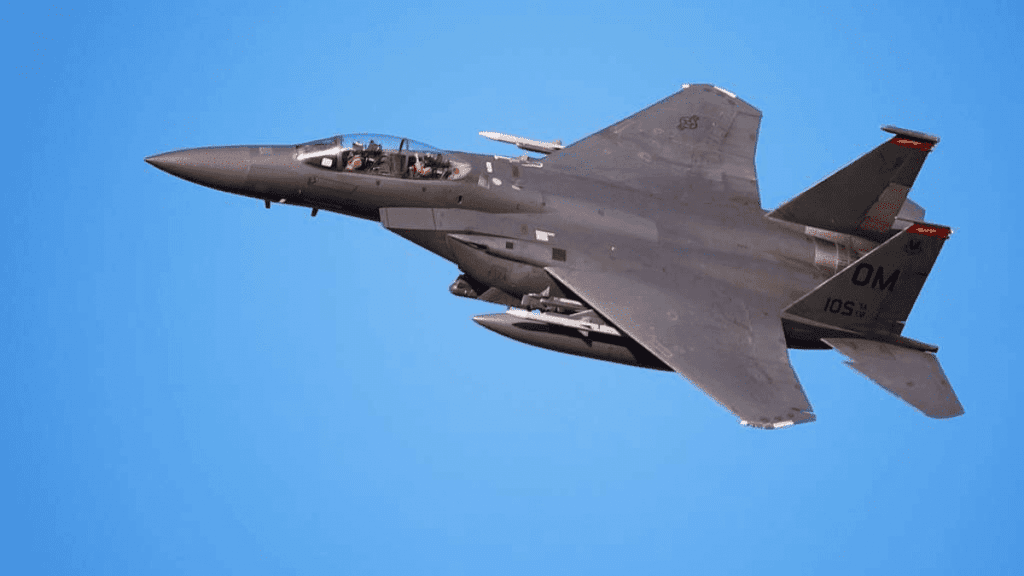
F15e in the air

Significant movement of tankers, jets and further cargo has taken place, entering the Middle East region as the United States prepares for a campaign against the Iranian regime.

In the last 72 hours, the influx of tankers and jets has significantly increased, with F35s, F22s, F15s, F16s, AWACS (Airborne Early Warning System) and other critical platforms being recorded entering the area. In addition to these, air-to-air refuelers such as the KC-135 and KC-46, are flying into bases throughout the area, suggesting the fact a more drawn-out conflict could be a part of possible options for Washington against Tehran.

Trump earlier today onboard Air Force One stated that a decision will be made within a 10-15 day window, although analysts have mention the potential for military action to commence in the next few days.

a deadline of 10-15 days has been established for any iran-US deal according to trump

Sources telling Axios state that action could begin within days, with it more than likely being a continued campaign lasting for weeks. Although further reports have also brought the fact that Donald Trump may prefer a more initial approach to military force, enough to bring them to the negotiation table.

As we continue to view large scale aerial movements from Washington, not seen since 2003, Iranian military assets have also taken part in live fire training within and around the Hormuz Strait. The threat of Iran halting global shipping through this critical waterway is still present, with it being a viable action in which Iran could potentially conduct in the event of offensive actions by Israel or the United States.

Tuesday last week, the second round of negotiations took place in Geneva, Switzerland. These talks were aimed at Tehran’s nuclear, ballistic programs alongside their support for proxy groups around the region. As of now, no concrete concessions have been given by either side, with both talks ending without any further progress.

Iran’s Foreign Minister, Abbas Araghci stated that “good progress” has been made, with Iran setting the framework for future talks. Despite the positivity from the Iranian diplomatic team, Washington says only “modest” compromises had been given surrounding the nuclear program, the main point of contention in the current talks. JD Vance also mentioned that talks went well “in some ways”. It is unclear what direction which may be taken in the future if diplomatic talks were to continue.

Currently, the United States has positioned over 126 land-based fighter aircraft alongside two carrier strike groups. Alongside this, Israel will likely participate in an attack with United State forces, with the IDF ready for a “large and multi-front” conflict, one which may involve Iran and its proxy forces.

Centcom says U.S. and partner raids in Syria removed nearly 25 ISIS operatives after the major Dec. 19 strike

U.S. Central Command says U.S. and partner forces killed or captured nearly 25 ISIS operatives in Syria in the days after a large-scale Dec. 19 strike, describing the activity as part of a sustained effort to disrupt the group’s networks and prevent it from rebuilding.

In a statement released from Tampa, Florida, Centcom said follow-on operations ran from Dec. 20 to Dec. 29 and included 11 missions across Syria. The command said at least seven ISIS members were killed and the remaining operatives were captured. Centcom also reported that the missions led to the elimination of four ISIS weapons caches.

The announcement follows what Centcom described as Operation Hawkeye Strike, launched on Dec. 19. Centcom said U.S. and Jordanian forces struck more than 70 targets using more than 100 precision munitions, with aircraft, attack helicopters and artillery involved. The command said the strikes destroyed ISIS infrastructure and weapons sites across central Syria.

“We will not relent,” Centcom commander Adm. Brad Cooper said in the statement. He added that the United States remains “steadfast in commitment” to working with regional partners to “root out the ISIS threat posed to U.S. and regional security.”

Centcom framed the activity as part of a broader counter-ISIS campaign over the past year. The command said U.S. and partner operations in Syria over the last 12 months resulted in more than 300 terrorists being detained and over 20 killed. It also said ISIS “inspired” at least 11 plots or attacks against targets in the United States in 2025, without providing additional details in the statement.

“Continuing to hunt down terrorist operatives, eliminate ISIS networks, and work with partners to prevent an ISIS resurgence makes America, the region, and the world safer,” Cooper said.

ISIS no longer controls territory in Syria and Iraq the way it did at its peak, but U.S. officials have repeatedly warned that cells and facilitators can still generate attacks, exploit instability, and regenerate if pressure eases. Centcom did not identify the individuals killed or captured, nor did it specify precise locations for the raids and weapons caches beyond saying the missions were conducted across Syria.

The figures and operational claims come directly from Centcom and were not independently verified in the statement. Still, the update signals the command intends to pair large strike packages with rapid follow-on raids designed to seize personnel and dismantle weapons stockpiles, aiming to keep ISIS remnants fragmented and on the defensive.