Russia Frees Former U.S. Marine Robert Gilman

LIVEIran-Israel Missile Exchange Shattered Regional Ceasefire
- Israel’s June 7 strike in Beirut triggered renewed Iranian missile fire, Israeli retaliation inside Iran and a Houthi launch, rapidly unraveling a fragile regional ceasefire.
- By Faytuks Newsroom
- • June 7 2026
- •
- 1 minute
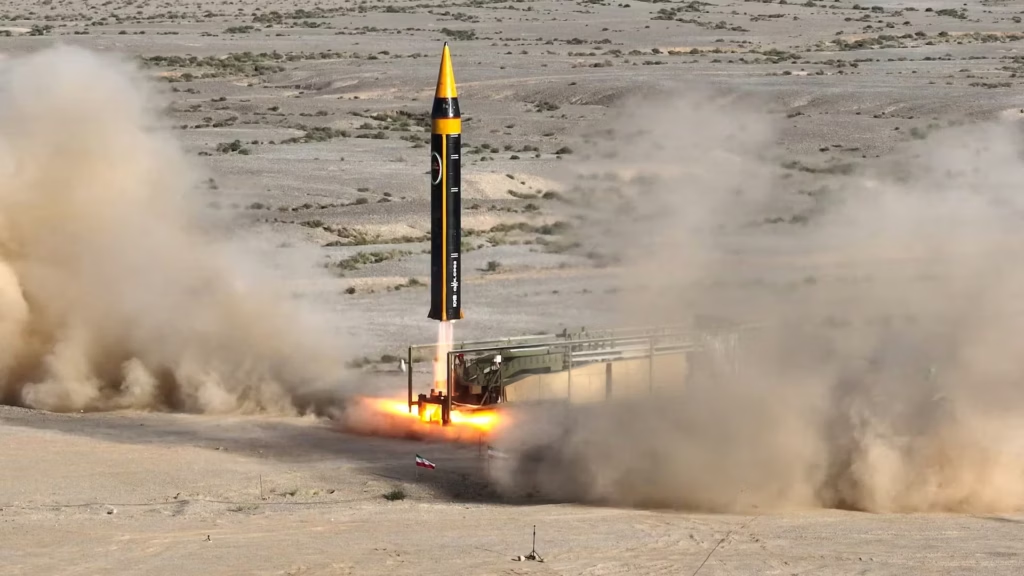
- A new surface-to-surface 4th generation Khorramshahr ballistic missile called Khaibar with a range of 2,000 km is launched at an undisclosed location in Iran, in this picture obtained on May 25, 2023. Iran's Ministry of Defence/WANA via Reuters.
LIVEIran-Israel Missile Exchange Shattered Regional Ceasefire
- Israel’s June 7 strike in Beirut triggered renewed Iranian missile fire, Israeli retaliation inside Iran and a Houthi launch, rapidly unraveling a fragile regional ceasefire.
- By Faytuks Newsroom
- • June 7 2026
- •
- 1 minute
- A new surface-to-surface 4th generation Khorramshahr ballistic missile called Khaibar with a range of 2,000 km is launched at an undisclosed location in Iran, in this picture obtained on May 25, 2023. Iran's Ministry of Defence/WANA via Reuters.
What began as another Israeli operation against Hezbollah in Lebanon on June 7 quickly expanded into a renewed regional exchange involving Iran, Israel and Yemen’s Houthis. Israel carried out an airstrike against a Hezbollah position in Beirut as tensions surrounding the existing ceasefire remained elevated. Iran subsequently responded with multiple salvos of ballistic missiles toward Israel, marking a renewed direct confrontation after a period of reduced hostilities. Faytuks Network’s live coverage tracked repeated Israeli early-warning alerts as incoming launches were identified and air-defense systems activated across the country.
The exchange widened through the evening. Israeli authorities reported additional Iranian missile launches toward Israeli territory, while interceptions were observed over several areas. Hezbollah also launched rockets as fighting intensified along the northern front. Separately, the Houthis fired a missile from Yemen toward Israel, which was intercepted before reaching its target. The combined launches briefly created another multi-front air-defense event, with Israeli systems responding to threats originating from Iran, Lebanon and Yemen during the same period. At the time, the extent of damage or casualties from the Iranian and Hezbollah salvos remained unclear.
Israel responded with a new series of strikes inside Iran. The Israeli military confirmed that its aircraft attacked military targets across western and central Iran, while explosions were subsequently reported around Kermanshah and Najafabad. An Israeli official also confirmed that a petrochemical facility had been targeted, indicating that the retaliatory operation extended beyond purely battlefield infrastructure. As those strikes continued, additional Iranian launches were detected, generating another round of early-warning notifications in Israel and extending the exchange beyond the initial retaliation.
The June 7 escalation demonstrated how quickly the existing ceasefire framework could break down when fighting involving Iran’s regional partners crossed into direct state-on-state retaliation. Although the immediate sequence began around Israeli operations against Hezbollah in Lebanon, Iran’s decision to launch ballistic missiles directly at Israel transformed the episode into a broader confrontation. The events also underscored the interconnected nature of the regional conflict: activity in Lebanon triggered Iranian retaliation, Israeli strikes followed inside Iran, and the Houthis simultaneously added another launch axis from Yemen. The exchange became one of the clearest signs that the ceasefire had failed to resolve the underlying military confrontation between Israel, Iran and Tehran-aligned groups.
This story has since been updated after the original publish date.
Support Faytuks Network
Faytuks Network is built by volunteers and powered by its community. Contributions help cover the hosting, security and infrastructure costs that keep the site running. Plus, exclusive Discord and X benefits!
ContributeShare this Story
From Faytuks Network
Major General Fawzi al-Mansouri, head of the military intelligence department for the eastern Libyan National Army, was killed after an IED exploded in his car outside his home in Benghazi. The explosion underscores Libya's security challenges and division despite a 2020
Ukraine's campaign targeting Wildberries warehouses across Russia continues, with a Wildberries warehouse in Voronezh set ablaze after a reported drone strike.
Voronezh wildberries hub is on fire
More Stories
from the Faytuks Newsroom.
More Stories
from the Faytuks Newsroom.
From Faytuks Network
Major General Fawzi al-Mansouri, head of the military intelligence department for the eastern Libyan National Army, was killed after an IED exploded in his car outside his home in Benghazi. The explosion underscores Libya's security challenges and division despite a 2020
Ukraine's campaign targeting Wildberries warehouses across Russia continues, with a Wildberries warehouse in Voronezh set ablaze after a reported drone strike.
Voronezh wildberries hub is on fire
Support Faytuks Network
Faytuks Network is built by volunteers and powered by its community. Contributions help cover the hosting, security and infrastructure costs that keep the site running. Plus, exclusive Discord and X benefits!
Contribute