Italy’s PM Meloni suspends defense agreement with Israel

Italy is halting renewal of its defense pact with Israel as diplomatic tensions rise and domestic political pressure grows.
Continue reading




Italy is halting renewal of its defense pact with Israel as diplomatic tensions rise and domestic political pressure grows.
Continue reading
HAVANA — Cuba is facing one of its most serious internal crises in decades as a worsening energy shortage, economic decline, and rising public frustration combine to test the resilience of the island’s communist government.
Rolling blackouts, some lasting more than a dozen hours per day in parts of the country, have become routine as Cuba struggles with fuel shortages and aging power infrastructure. The outages have disrupted transportation, food distribution, and access to essential services, amplifying an already severe economic crisis.

In recent days, the situation has spilled into public unrest. Residents in the central Cuban city of Morón protested prolonged power outages and shortages, with demonstrators vandalizing a local Communist Party office, an unusually direct confrontation with government authority in a country where dissent is tightly controlled. Cuban authorities later confirmed arrests following the incident.
Separately, students at the University of Havana staged a rare protest over power and internet disruptions earlier this month, highlighting how frustrations are spreading beyond working-class neighborhoods to include younger and more politically active segments of society.
At the center of the crisis is Cuba’s worsening fuel shortage. The island relies heavily on imported oil to run its power plants and transportation systems, and those supplies have become increasingly constrained.
Officials in Havana say the shortage stems from tightening U.S. sanctions and disruptions to oil deliveries from Venezuela, which has historically supplied Cuba with heavily subsidized fuel. The lack of fuel has forced authorities to ration electricity and suspend some industrial activity.
President Miguel Díaz-Canel acknowledged the severity of the situation in recent remarks, saying the government is exploring diplomatic avenues to ease pressure and stabilize fuel imports. Reuters reported that Cuba has held talks with the United States as the economic situation worsens.
The crisis also carries broader geopolitical implications.
Cuba has sought diplomatic and economic support from Russia and China as it attempts to navigate sanctions pressure and energy shortages. Chinese officials recently expressed support for Cuba amid what Beijing described as “external interference,” while Russia has similarly criticized U.S. pressure on the island.
Analysts say neither country appears likely to fully rescue Cuba’s struggling economy, but both have incentives to maintain political ties with Havana and limit U.S. influence in the Caribbean.
The island’s location, roughly 90 miles from Florida, gives it outsized strategic importance in regional geopolitics. During the Cold War, Cuba served as a major Soviet ally and intelligence outpost in the Western Hemisphere, most notably during the 1962 Cuban Missile Crisis.
Today, the strategic concerns are different but still significant, including migration pressures, regional instability, and the potential expansion of foreign intelligence or economic influence in the region.
Despite the rising tensions, large-scale nationwide protests have not yet materialized. Cuba’s security apparatus remains highly capable of suppressing dissent, and past demonstrations have often been followed by arrests and surveillance.
Still, the frequency of recent protests and the increasingly confrontational tone of some demonstrations suggest growing strain inside the country.
Many observers note parallels with the July 2021 protests, the largest anti-government demonstrations on the island in decades, which were sparked by similar frustrations over shortages and blackouts.
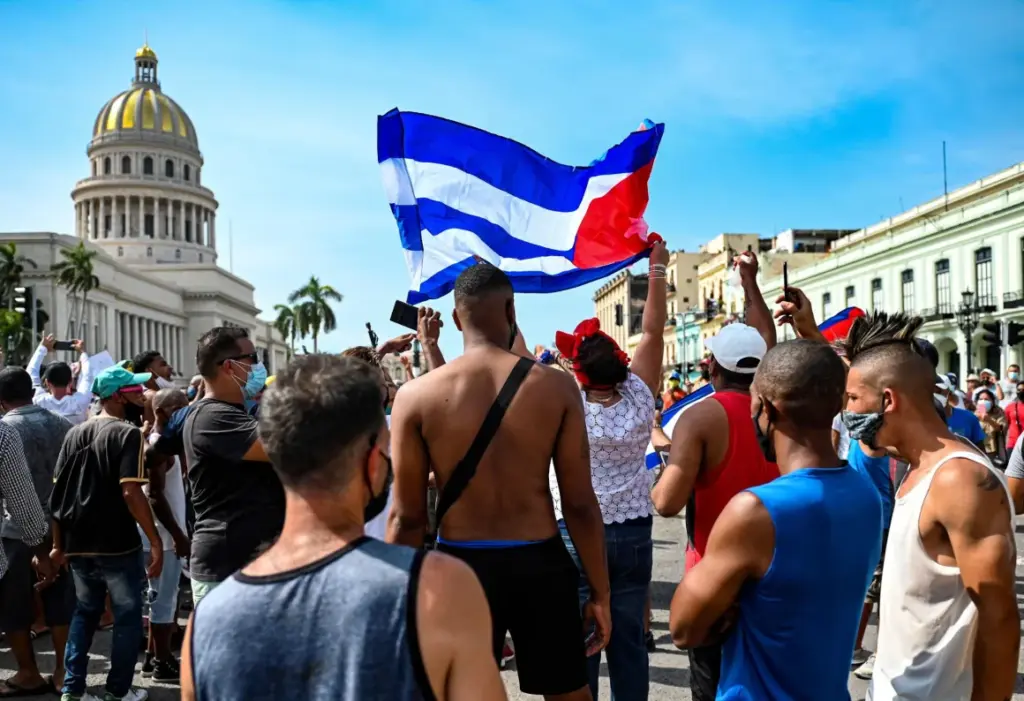
For now, the Cuban government appears focused on managing the crisis through a combination of rationing, diplomatic outreach, and internal security measures. Whether that strategy can stabilize the country in the months ahead remains uncertain.
What happens next may depend largely on one critical factor: energy.
If fuel deliveries resume and electricity outages ease, tensions could stabilize. But if shortages worsen, or if the power grid suffers another major failure, then analysts warn the island could see broader unrest.
For a government already facing its most severe economic stress in decades, the margin for error is narrowing.

Iran’s Assembly of Experts has named Mojtaba Khamenei, the 56-year-old son of the assassinated Ayatollah Ali Khamenei, as the Islamic Republic’s third Supreme Leader. The announcement, broadcasted on state television early Monday local time, marks the first hereditary transfer of power since the 1979 revolution and comes as the country reels from the devastating US-Israeli military campaign, resulting in the death of his father.
Mojtaba Khamenei, a low profile cleric with deep ties to the Islamic Revolutionary Guard Corps (IRGC), now holds ultimate authority over Iran’s military, judiciary, media, and foreign policy at the most perilous moment in the nation’s 47-year history.
Timeline of Succession
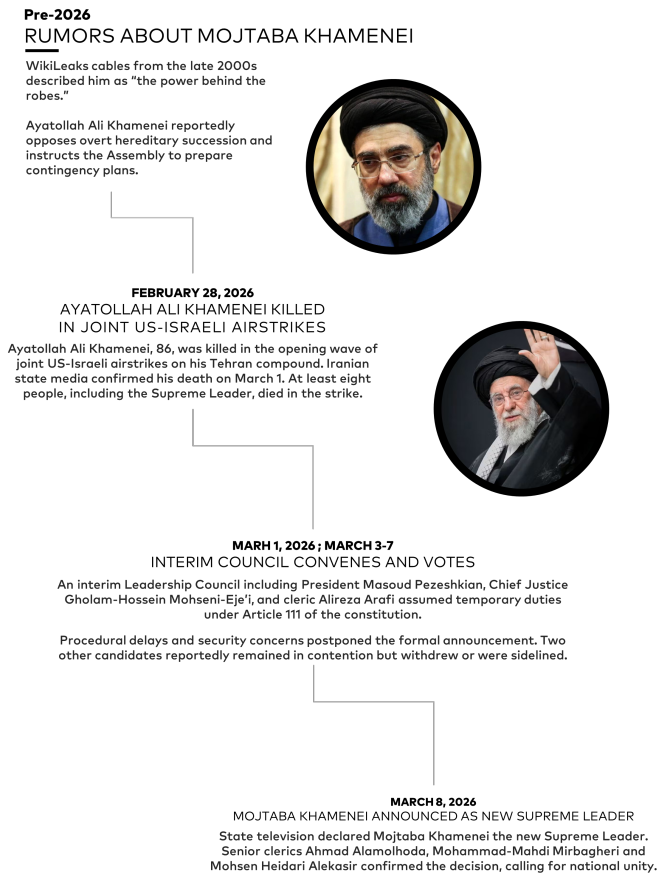
Born on September 8, 1969, in Mashhad, Mojtaba is the second of Ali Khamenei’s six children. He briefly served in the Iran-Iraq War as a teenager, then pursued seminary studies in Qom from age 30 (unusually late for a cleric). He holds mid-ranking clerical credentials and has never held elected office or given a public speech. Despite his reclusive image, He wields significant backdoor influence. He is accused of orchestrating IRGC and Basij interference in the 2005 and 2009 presidential elections and of suppressing the Green Movement.
Reports indicate he lost mother and wife in addition to his father in the recent US-Israeli strikes.
The decision is historic and deeply controversial. The Islamic Republic has always rejected hereditary rule, emphasizing clerical merit over bloodlines. Mojtaba’s selection pushed by the IRGC represents the first father to son transfer of supreme power and cements hardliner dominance at a time when reformist voices have been sidelined. It seems like the appointment of Mojtaba is the establishment of a puppet as the figurehead to ensure their control and power in the regime. It also looks like the plot to ensure policy continuity for the regime, uncompromising opposition to the West, support for regional proxies and tight control over the nuclear program. However, it risks eroding legitimacy among a war affected population already facing economic collapse and civilian casualties from the protests.
Mojtaba Khamenei assumes power as a marked man in the middle of the Islamic Republic’s greatest existential crisis. Israel has explicitly threatened his life alongside Trump’s comments suggesting Washington will not accept him without concessions. His leadership remains untested; he has never managed public crises or addressed the nation. Mojtaba’s personal tragedy, his father, mother, his sister and wife may harden his stance against compromise. Yet the war’s devastation, severed oil revenues and international isolation pose enormous challenges. Whether he can unify a fractured elite, rally a grieving public and navigate potential further assassinations will define not only his fate but the survival of the Islamic Republic itself.
A senior cleric told state media,: “The nation must rally behind the new leader to preserve our dignity and independence.” In the streets of Tehran, however, the mood remains one of shock, defiance and uncertainty as explosions continue to echo across the region.

As the war in the Middle East continues to spread, in the last 24 hours, drones and missiles have targeted both Türkiye and Azerbaijan, with 3 drones originating from Iran hitting locations within the Nakhchivan Autonomous Republic, injuring two according to reports from officials.
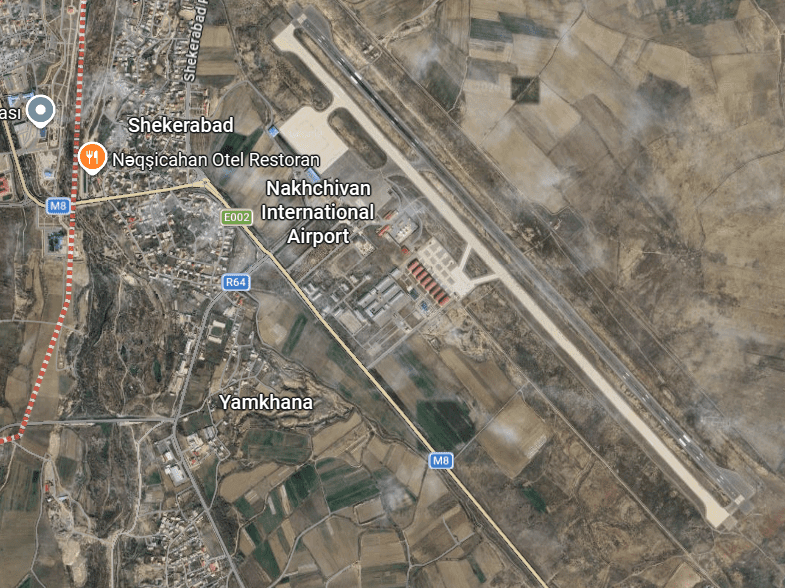
Azerbaijan in their official statement clarified their “right to take appropriate actions”, with them also summoning the Iranian ambassador in result of the strikes.
In a continued escalatory manner, Iran and its proxies have targeted multiple countries, including European regions. RAF Akrotiri in Cyprus, an oversea British military base came into direct contact from Iranian drones, with one impacting the base causing minor damage and no injuries or fatalities.
This new development in the Caucasus region comes less than 24 hours ago that Türkiye reported an Iranian missile being fired towards their territory, with the outcome of it being shot down by air defense.
Missiles and drones continue to fall in other regions too, with Saudi Arabia also confirming 3 cruise missiles being intercepted in al-Kharj, with other Gulf States continuing their operations in downing projectiles.
The continued attacks by Tehran comes as United States and Israeli forces continue to hit targets throughout Iran, with military installations and governmental locations coming under attacks since last Saturday.
Continued live coverage of breaking news updates about the current conflict can be found on our live feed


Japan and Germany have issued urgent travel advisories. Meanwhile, Polish Prime Minister Donald Tusk urged all citizens to leave immediately, warning that ‘in a few hours, there may be no more possibility to evacuate Poles from Iran.
Continue reading
In the wake of a deep economic crisis, Iran has been caught up in a spiral of ruthless crackdowns spearheaded by the nation’s security apparatus. The move comes amidst accusations of foreign involvement, labelling the anti-government protests as an orchestrated effort to spark unrest within the borders of the country. Consequently, the streets of Iran have shaken with unprecedented state violence designed to silence opposing voices, claiming the lives of thousands in the process.
Although there have been several instances of economic crises in Iran following the Iranian Revolution in 1979, the latest crisis marks a tipping point, resulting from many factors including reimposed sanctions by the U.S., high volatility in the market, and the Islamic Revolutionary Guard Corps (IRGC) rooting itself deeply within the institutions fueling the economy — prompting a major severance from Iran’s mercantile sphere, the Bazaaris.
On December 28, 2025, the Grand Bazaar of Tehran faded into silence, with shopkeepers going on strike in an act of protest against deteriorating economic indicators and the factors that led to them. Albeit limited initially to the vicinity of the Grand Bazaar, the strike gained momentum rapidly, evolving into nationwide strikes that eventually led to protests defying the authority of the Iranian government—a crisis in which the collapse of Iran’s rial played a significant role.
“If If I die and my death leads to positive change, I’m okay with that.”
– Sourena Golgoun’s last message, ITV.
With protests erupting nationwide, the Iranian government has answered demands with lethal force. Relying on its domestic security apparatus, the Basij, to suppress dissent, the state also enforced a total internet blackout, effectively severing the country’s lifeline from the outside world.
As protests intensified in both scope and magnitude, they became the focus of several human rights groups, raising concerns about rights violations as the government’s response to the protestors grew harsher. Among monitoring organizations, the Human Rights Activists News Agency (HRANA) has confirmed 7,015 deaths since the protests began, with an additional 11,744 cases yet to be verified. Meanwhile, The Times reported that more than 16,500 people have lost their lives, in addition to 330,000 wounded. Although the true death toll remains unverified, Iran’s Foreign Minister Abbas Araghchi stated in an interview that only 3,117 people have died during the protests, directly disputing the claims of on-the-ground sources and human rights groups.
The treatment of protestors held in custody is also a point of concern, with a strict lid imposed on the nation’s detention centers and prisons, leaving the conditions in which detainees are being held mostly unknown. However, according to Iran International, reports allege that protestors in custody have been injected with ‘unspecified’ substances, a practice linked to several suspicious deaths. While some detainees have been released or, like Erfan Soltani, released on bail, many others remain imprisoned, awaiting a fair trial.
In spite of recent human rights violations and systematic oppression at home, the protests continue to resonate abroad, with many Iranians and supporters taking to the streets in a show of solidarity. Iran’s Crown Prince Reza Pahlavi’s call for a ‘Global Day of Action’ on February 14th was honored by millions, as major cities around the world witnessed massive crowds answering the call.

Follow along for the latest updates on the protests in Iran.
Over the past year, Iranian regime forces have allegedly killed several thousand protesters and civilians. We’ll continue posting the latest developments from inside Iran as they emerge.

Red: protests before 01/01/2026 Orange: protests starting on 01/01/2026
Continue reading