U.S., Iran Agree to Two-Week Ceasefire

Iranian flag amidst rubble and destruction

THE MIDDLE EAST, Apr. 7 – The United States and Iran agreed to a two-week ceasefire, offering a pause and potential off-ramp in the fast-growing regional war that had threatened to further disrupt global energy markets. The agreement, announced by President Donald Trump, was brokered by Pakistani mediators and is tied to Iran’s commitment to reopen the Strait of Hormuz to commercial shipping.

The truce emerged only hours before Mr. Trump’s deadline for potential strikes against Iranian infrastructure, including power plants and bridges. Mr. Trump said the U.S. would suspend offensive operations for two weeks, describing the ceasefire terms as a workable basis for broader negotiations. Iranian officials, however, framed the deal more cautiously, signaling that Tehran views the pause as conditional and temporary rather than as a final solution. Reuters reported that Iran had demanded a full halt to U.S. strikes, guarantees against future attacks, compensation for war damages, and recognition of Iran’s right to enrich uranium as conditions for any lasting peace.

The Strait of Hormuz is central to the current deal. The waterway handles a significant share of the world’s maritime oil traffic, and its disruption had spiked the price of crude oil and intensified fears of a wider economic crisis. News of the ceasefire sent oil prices lower and lifted financial markets, reflecting investor hopes that the agreement could prevent any further crisis.

Still, the ceasefire’s feasibility is far from certain. The Associated Press and Reuters both reported that military activity and missile alerts continued in parts of the region and in Israel even after the announcement, underscoring the difficulty of translating high-level diplomatic understanding into an immediate halt on the ground. Israel, according to multiple reports, has also been folded into the arrangement, though fighting linked to Hezbollah and other regional fronts has not fully stopped.

For now, the agreement is offering a narrow off-ramp rather than a lasting peace. The two-week pause may create space for negotiations in Islamabad and further back-channel diplomacy, but the gap between Washington’s call for a temporary halt and the opening of the Strait, and Tehran’s demand for permanent guarantees, remains substantial. Whether this is the start of a broader settlement or just a brief interruption in the conflict will likely depend on what happens next in both the Strait of Hormuz and the negotiations in Islamabad.

Check out more coverage of the Iran Hot Spot. To join the discussion and analysis of the Iran conflict and all breaking news, join us on the Faytuks Network Discord and follow us on X!

Middle East war spreads: multiple countries targeted by Iran

countries affected by iran

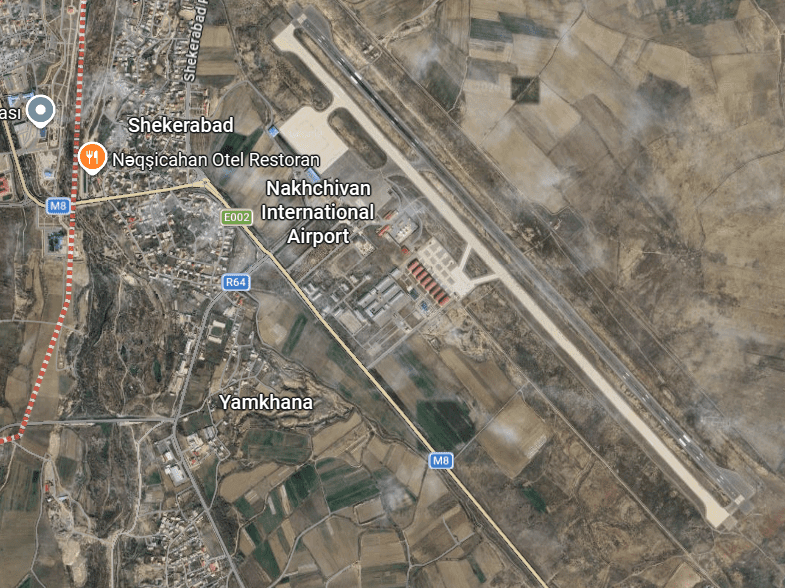
As the war in the Middle East continues to spread, in the last 24 hours, drones and missiles have targeted both Türkiye and Azerbaijan, with 3 drones originating from Iran hitting locations within the Nakhchivan Autonomous Republic, injuring two according to reports from officials.

Middle east war spreads: multiple countries targeted by iran
Nakhchivan International airport was targeted by Iranian drones

Azerbaijan in their official statement clarified their “right to take appropriate actions”, with them also summoning the Iranian ambassador in result of the strikes.

In a continued escalatory manner, Iran and its proxies have targeted multiple countries, including European regions. RAF Akrotiri in Cyprus, an oversea British military base came into direct contact from Iranian drones, with one impacting the base causing minor damage and no injuries or fatalities.

This new development in the Caucasus region comes less than 24 hours ago that Türkiye reported an Iranian missile being fired towards their territory, with the outcome of it being shot down by air defense.

Missiles and drones continue to fall in other regions too, with Saudi Arabia also confirming 3 cruise missiles being intercepted in al-Kharj, with other Gulf States continuing their operations in downing projectiles.

The continued attacks by Tehran comes as United States and Israeli forces continue to hit targets throughout Iran, with military installations and governmental locations coming under attacks since last Saturday.

Continued live coverage of breaking news updates about the current conflict can be found on our live feed

United States positions military assets for a potential strike against Iran

F15e in the air

Significant movement of tankers, jets and further cargo has taken place, entering the Middle East region as the United States prepares for a campaign against the Iranian regime.

In the last 72 hours, the influx of tankers and jets has significantly increased, with F35s, F22s, F15s, F16s, AWACS (Airborne Early Warning System) and other critical platforms being recorded entering the area. In addition to these, air-to-air refuelers such as the KC-135 and KC-46, are flying into bases throughout the area, suggesting the fact a more drawn-out conflict could be a part of possible options for Washington against Tehran.

Trump earlier today onboard Air Force One stated that a decision will be made within a 10-15 day window, although analysts have mention the potential for military action to commence in the next few days.

a deadline of 10-15 days has been established for any iran-US deal according to trump

Sources telling Axios state that action could begin within days, with it more than likely being a continued campaign lasting for weeks. Although further reports have also brought the fact that Donald Trump may prefer a more initial approach to military force, enough to bring them to the negotiation table.

As we continue to view large scale aerial movements from Washington, not seen since 2003, Iranian military assets have also taken part in live fire training within and around the Hormuz Strait. The threat of Iran halting global shipping through this critical waterway is still present, with it being a viable action in which Iran could potentially conduct in the event of offensive actions by Israel or the United States.

Tuesday last week, the second round of negotiations took place in Geneva, Switzerland. These talks were aimed at Tehran’s nuclear, ballistic programs alongside their support for proxy groups around the region. As of now, no concrete concessions have been given by either side, with both talks ending without any further progress.

Iran’s Foreign Minister, Abbas Araghci stated that “good progress” has been made, with Iran setting the framework for future talks. Despite the positivity from the Iranian diplomatic team, Washington says only “modest” compromises had been given surrounding the nuclear program, the main point of contention in the current talks. JD Vance also mentioned that talks went well “in some ways”. It is unclear what direction which may be taken in the future if diplomatic talks were to continue.

Currently, the United States has positioned over 126 land-based fighter aircraft alongside two carrier strike groups. Alongside this, Israel will likely participate in an attack with United State forces, with the IDF ready for a “large and multi-front” conflict, one which may involve Iran and its proxy forces.

Iran’s options for retaliation: bluff or not

Iranian Fateh-110 missile being fired - Iranian state media

As conflict continues to loom between Iran and the United States, Tehran is facing an increasingly acute military situation. Iran posses a large and comprehensive missile and drone force capable of reaching all United States military bases in the region in addition to Israel. As seen in the 12-day war, Tehran has the largest arsenal of ballistic missiles in the region. This ability was demonstrated with multiple strikes through the period of conflict in June 2025 leaving 32 Israeli civilians dead according to the Times of Israel.

Iran features thousands of SRBM (short range ballistic missiles) and MRBM (Medium range ballistic missiles), some capable of 2,000km in range, easily having the capacity to deliver large payloads across Israel and the surrounding region. The Khorramshahr and Emad missiles both feature this range, with the Emad having a potential 500 meter accuracy according to CSIS. Although not extremely accurate, the amount available to their disposal makes any volley a highly dangerous event.

In the event of war, Tehran would want to maintain a sizable missile force to prop up their own escalation ladder. This allows them to include multiple threats in the later parts of a conflict which could pose as a deterrence for Washington to continue. In doing so, Iran would want to keep their road-mobile launch vehicles in a safe area away from incoming Israeli/US offensive actions. In the 12-day-war, Tehran’s ability to perform large scale strikes on Israeli was greatly damaged by the fact they lost multiple launch vehicles, causing their missile volleys to dwindle

Despite the extensive missile forces Iran has present, this isn’t the only option to their advantage. Iran has affiliation with multiple terrorist-proxy forces dispersed throughout the region. Although most have been battered in the recent conflicts since October 7th, 2023, most still maintain a visible threat. One such example is the Houthis in Yemen, which have continued to demonstrate their capabilities, potentially harming Washington’s interests in the region.

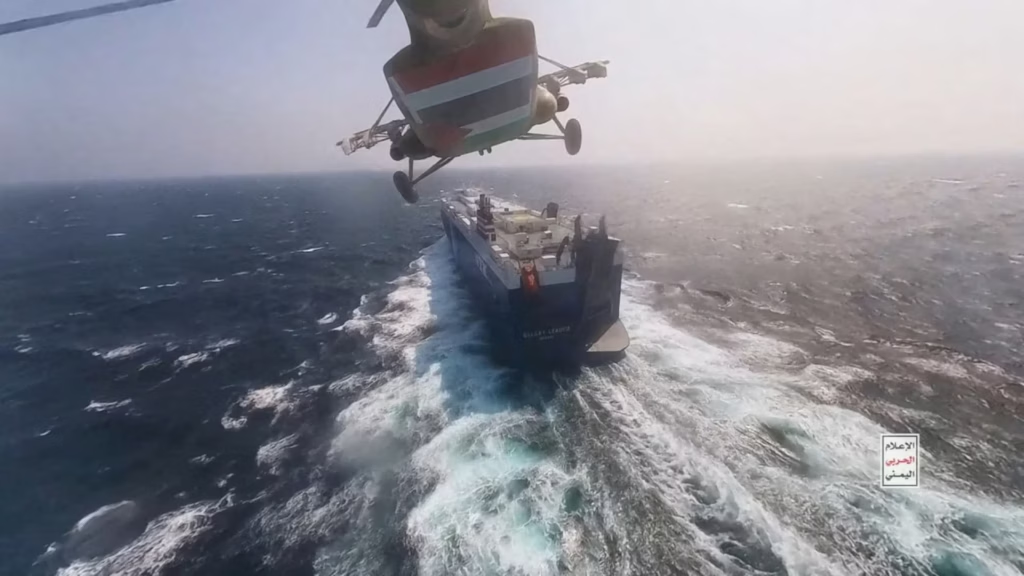
Houthis targeting shipping in the red sea
Houthis targeting commercial shipping in the red sea

This is a dominant strategy for Iran, although it depends on the willingness and capabilities Yemen still features since the continuous strikes which have since occurred after their continued campaign on global shipping from multiple other countries.

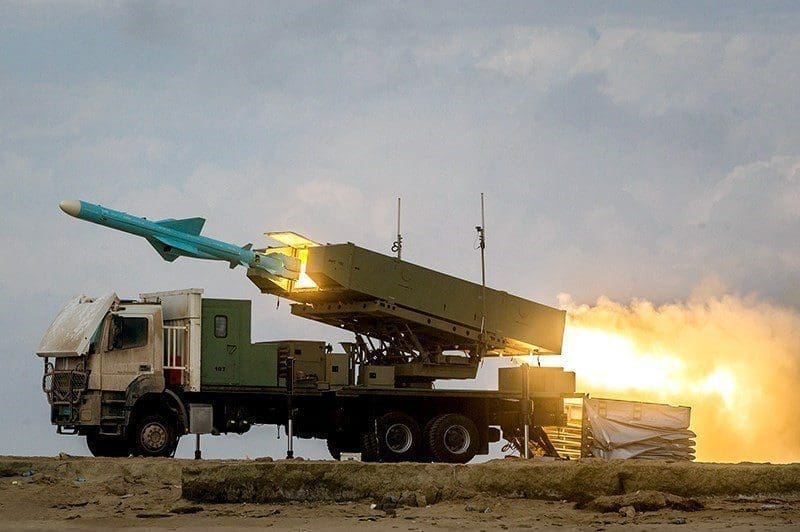
Alongside this, another choke point Iran has against their adversaries is the Strait of Hormuz. Iran has a well-developed anti-shipping missile capability. The Noor is an example of this, with a range of 120km and potential speed near 0.9 Mach (1100 KM/h or 690 MP/h). This would be a more risky option for Iran, with potential greater consequences if such operation was to materialize. Risking further damage to the regime may be something they seek to avoid, especially if initial strikes are successful in regards to decapitation of IRGC (Islamic Revolutionary Guard Corp) forces or other senior members of government.

Iran’s options for retaliation: bluff or not
Noor, an anti-shipping missiles developed by Iran which could be used in the event of conflict

Another option for Tehran is a campaign against oil facilities across the region. This would inflict the greatest damage to the region, although likely leading forces from the Gulf States being brought into the conflict, widening the strike package against Iran. This situation is undesirable for Tehran as it would bring a wider threat to the IRGC. Despite this, targeting these specific facilities would offer a more substantial effect to the region.

In any large scale conflict, Tehran would seek an option which provides the greatest deterrence whilst also offering a potential chance for an off-ramp. The extensive missile forces present alongside the political situation within the country makes it difficult to view potential operations Iran could conduct.

In regards to the United States and Israel, both have begun preparation including deploying an extensive array of air defense including Patriot and THAAD systems, in order to protect against damage to their forces or civilian population centers.

Bella 1 Still On the Run

A profile image of tanker Bella-1

UPDATE (1431 EST 12/31/25): Bella 1 is still on the run. CNN reports this morning that the White House believes Bella 1 no longer intends to make port in Venezuela, and might choose to give up the chase for the sanctioned vessel with ties to Iran after almost two weeks, despite being unclear about the cargo, or why the crew chose to flee. USN/USCG assets remain on standby, should the order come to seize the vessel by force.


Original Article: According to The NewYork Times, the U.S.-sanctioned oil tanker Bella 1 remains on the run in the Atlantic after refusing to comply with a U.S. Coast Guard interception attempt on Dec. 21 in the Caribbean Sea. U.S. officials told the newspaper the vessel was moving toward Venezuela to take on oil when the Coast Guard moved to stop it, but the ship continued underway and has been pursued since.

The tanker’s track has since shifted. U.S. officials briefed on the operation said Bella 1 recently altered course northwest, steering away from the Mediterranean, potentially towards waters near Greenland or Iceland. The officials don’t believe the ship to be carrying cargo. During the escape, the crew reportedly painted a Russian flag on the side of the vessel and is now claiming Russian status—an apparent attempt to complicate any boarding or seizure effort.

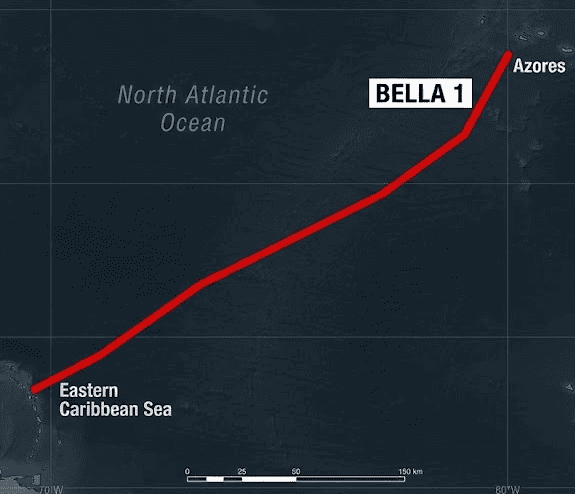
Given a rough heading NNE and a constant speed of 10kts, members of Faytuks Network’s all-volunteer OSINT team put Bella 1’s position potentially somewhere near the Azores, heading north for the Norwegian Sea and perhaps a final destination of Murmansk, Russia. Another posited destination is Iran, in which case she could potentially head for the Strait of Gibraltar.

Bella 1 still on the run

Federal officials have obtained a seizure warrant tied to Bella 1’s prior involvement in transporting Iranian oil, saying the ship is associated with a broader “ghost fleet” used to move oil for sanctioned regimes. Officials indicate that additional tanker seizures tied to Venezuela’s oil trade are planned as the U.S. expands efforts to curtail illicit oil revenue streams supporting the Maduro regime in Caracas.