Cuba Faces Growing Instability as Energy Crisis and Protests Mount

The Communist Party's building in Morón, Cuba, was attacked overnight by anti-government protesters. (@rancanoglenda7 / X)

HAVANA — Cuba is facing one of its most serious internal crises in decades as a worsening energy shortage, economic decline, and rising public frustration combine to test the resilience of the island’s communist government.

Rolling blackouts, some lasting more than a dozen hours per day in parts of the country, have become routine as Cuba struggles with fuel shortages and aging power infrastructure. The outages have disrupted transportation, food distribution, and access to essential services, amplifying an already severe economic crisis.

Cuba faces growing instability as energy crisis and protests mount
Rolling blackouts regularly affect the island for dozens of hours. (Ramon Espanosa/AP)

In recent days, the situation has spilled into public unrest. Residents in the central Cuban city of Morón protested prolonged power outages and shortages, with demonstrators vandalizing a local Communist Party office, an unusually direct confrontation with government authority in a country where dissent is tightly controlled. Cuban authorities later confirmed arrests following the incident.

Separately, students at the University of Havana staged a rare protest over power and internet disruptions earlier this month, highlighting how frustrations are spreading beyond working-class neighborhoods to include younger and more politically active segments of society.

Fuel shortages driving the crisis

At the center of the crisis is Cuba’s worsening fuel shortage. The island relies heavily on imported oil to run its power plants and transportation systems, and those supplies have become increasingly constrained.

Officials in Havana say the shortage stems from tightening U.S. sanctions and disruptions to oil deliveries from Venezuela, which has historically supplied Cuba with heavily subsidized fuel. The lack of fuel has forced authorities to ration electricity and suspend some industrial activity.

President Miguel DĆ­az-Canel acknowledged the severity of the situation in recent remarks, saying the government is exploring diplomatic avenues to ease pressure and stabilize fuel imports. Reuters reported that Cuba has held talks with the United States as the economic situation worsens.

Growing geopolitical tension

The crisis also carries broader geopolitical implications.

Cuba has sought diplomatic and economic support from Russia and China as it attempts to navigate sanctions pressure and energy shortages. Chinese officials recently expressed support for Cuba amid what Beijing described as ā€œexternal interference,ā€ while Russia has similarly criticized U.S. pressure on the island.

Analysts say neither country appears likely to fully rescue Cuba’s struggling economy, but both have incentives to maintain political ties with Havana and limit U.S. influence in the Caribbean.

The island’s location, roughly 90 miles from Florida, gives it outsized strategic importance in regional geopolitics. During the Cold War, Cuba served as a major Soviet ally and intelligence outpost in the Western Hemisphere, most notably during the 1962 Cuban Missile Crisis.

Today, the strategic concerns are different but still significant, including migration pressures, regional instability, and the potential expansion of foreign intelligence or economic influence in the region.

Unrest remains limited at this time

Despite the rising tensions, large-scale nationwide protests have not yet materialized. Cuba’s security apparatus remains highly capable of suppressing dissent, and past demonstrations have often been followed by arrests and surveillance.

Still, the frequency of recent protests and the increasingly confrontational tone of some demonstrations suggest growing strain inside the country.

Many observers note parallels with the July 2021 protests, the largest anti-government demonstrations on the island in decades, which were sparked by similar frustrations over shortages and blackouts.

Cuba faces growing instability as energy crisis and protests mount
Cubans demonstrate in rare protests in Havana on July 11, 2021. 
Yamil Lage/AFP/Getty Images

For now, the Cuban government appears focused on managing the crisis through a combination of rationing, diplomatic outreach, and internal security measures. Whether that strategy can stabilize the country in the months ahead remains uncertain.

What happens next may depend largely on one critical factor: energy.

If fuel deliveries resume and electricity outages ease, tensions could stabilize. But if shortages worsen, or if the power grid suffers another major failure, then analysts warn the island could see broader unrest.

For a government already facing its most severe economic stress in decades, the margin for error is narrowing.

Where exactly are Iranian Su-35s?

Amid rising tensions between Tehran and Washington, and months after reports first emerged of a multi-billion dollar deal between Iran and Russia for advanced Sukhoi Su-35 fighter jets, the anticipated warplanes have yet to appear on Iranian airbases, fueling uncertainty over the deal’s status and its implications.

Leaked Russian defense documents suggested Tehran had agreed to purchase up to 48 Su-35s in a contract worth roughly €7 billion, a move seen as part of a broader military partnership with Moscow. Despite these reports, and acknowledgments from Iranian commanders that Su-35s had been purchased, independent imagery and military observers have not verified the delivery of assembled Su-35 jets operating in Iran.

Were the Su-35s Diverted?

Some speculation suggests aircraft originally meant for Iran have been diverted elsewhere. However, this appears to be unsupported by the known documents. According to leaked documents obtained through United24, the delivery window for the initial 18 aircraft is after the end of 2025 and within 2028, meaning that contract-wise the delivery window has only just started. That said, despite being a strategic partner to Iran, Russia does not appear to have expedited delivery of the jets in the face of looming war, especially as deliveries for Algeria appear to be taking priority over Iran. Others note that pilots and technicians have trained on the type in Russia without any confirmed operational deployment in Iran. Preparations also appear to be underway at Iranian airbases to deploy and house the new jets.

Washington has significantly increased its military presence in the Middle East, deploying dozens of advanced fighter jets and aircraft carriers within reach of Iranian airspace, a show of force linked to long-running disputes over Tehran’s nuclear program and regional activities. Satellite imagery this week revealed a major surge in U.S. air power in neighboring Jordan and Saudi Arabia, increasing the stakes of the standoff.

In response to the buildup, Russia has publicly urged restraint while conducting joint naval exercises with Iran in the Gulf of Oman, underscoring Moscow’s strategic disposition: supportive of Tehran, yet cautious about direct confrontation with the United States. The broader U.S.–Iran confrontation has also included temporary closures of Iranian airspace and heightened alert status, reflecting fears in Tehran of possible American military action amid stalled nuclear negotiations.

For Iran, acquiring Su-35s would represent a significant upgrade to its aging air force, which has struggled to replace older aircraft and was seen as powerless during last year’s war with Israel. But for now, the aircraft remain conspicuously absent, and their potential deployment remains unclear as the situation has become one of the most volatile geopolitical flashpoints.

India’s desperation to power : New Rafale deal but little too late?

Rafael Fighter

India moves yet closer to another milestone military acquisition as an Acceptance of Necessity has been issued by India’s Ministry of Defence through the Defence Acquisition Council. The procurement of 114 multi-role fighter aircraft (MRFA) has now been approved. This represents one of the largest fighter jet acquisition programs by a foreign customer in recent history.

Although ambiguity has been maintained by the Indian Air Force regarding the final selection of aircrafts by official statements, the press release issued by PIB Delhi on 12 February 2026 specifically mentioned Rafale as the multirole fighter aircraft approved in principle.

Objective of MRFA program

The primary objective of the MRFA program is to enhance India’s ability to conduct dominance operations across the full spectrum of modern conflict and to improve deterrence through long-range offensive strike capability. According to Economictimes,Out of the 114 aircraft, approximately 96 are planned to be manufactured in India, while 18 will be imported from France in flying away condition. Out of which 24 are to be the F5 standard, with the remaining 90 aircrafts are to be produced in F4 standard, both offering upgrade pathways in the near future.

The roots of this tender trace back to 2018, following the originalĀ  Medium Multi-role Combat aircraft( MMRCA ) program launched in 2007 for 126 aircraft. The current MRFA process formally restarted in April 2019 with the issuance of an RFI. As a result, nearly eight years have elapsed to reach this stage, during which the IAF’s squadron strength has declined to about 29 against a sanctioned strength of 42.

Latribune reports also suggest that additional aircraft for the Indian Navy may be embedded in this order either five extra jets added to the existing naval requirement or as many as 31 additional aircraft, potentially bringing the total fleet to around 145.

Growing problems

Even the sanctioned strength of 42 squadrons is now considered inadequate. Several legacy fleets including six Jaguar squadrons, three MiG-29 squadrons, and three Mirage 2000 squadrons are expected to retire in the coming years. This highlights a persistent structural weakness in India’s air power planning: long-term dependence on foreign OEMs, coupled with delays in indigenous programs.

During the upcoming visit of French President Emmanuel Macron, an MoU is expected to be signed. However, this will not constitute a final contract. Following AON, several procedural steps remain: issuance of a formal Request for Proposal, submission of commercial and technical bids, negotiations on pricing, delivery schedules, offsets, and localisation, conversion into a contractual framework, and final approval by the Cabinet Committee on Security. Indigenisation remains the central sticking point.

Too late or a real power move?

The answer lies somewhere in between. This is best described as a desperate but necessary catchup move.

The acquisition of additional Rafale aircraft, including the Rafale-M naval variant, represents a meaningful enhancement of near-term combat capability rather than a symbolic gesture. While delayed modernization is evident, the operational impact will be immediate. The move simultaneously addresses declining squadron strength and signals deterrence to regional rivals as China and Pakistan continue to modernize.

Deliveries are expected to begin around 2028 for the naval variant and 2029–2030 for the Air Force timelines that coincide with the Indian Tejas Mk2 program, raising concerns that domestic development may be affected. This overlap has fueled domestic criticism as the government’s theme of self-sufficiency seems more of an imported assembly than actual R&D to fill Make In India Quota. India previously procured 36 Rafales as an emergency measure to plug capability gaps. That purchase was driven by delays in indigenous programs and shrinking squadron numbers. The present acquisition expands both land-based and carrier-borne strike capability amid rapid Chinese military expansion along the LAC, accelerated modernization of Pakistan’s Air Force, and intensifying competition in the Indo-Pacific.

Operationally, Rafales offer high readiness, advanced sensors, long-range precision strike, and proven electronic warfare. Their integration into existing infrastructure improves availability as fleet size grows.

Two and a Half Front Reality

India increasingly faces a potential two and half front scenario involving China, Pakistan, and regional instability to the east. Additional Rafales enhance flexibility by enabling simultaneous force allocation across multiple fronts, faster redeployment, and deeper standoff strikes without heavy forward basing. However, the deeper issue remains structural fighting across two and a half fronts, which stresses fleet size, ISR coverage, logistics, and industrial endurance. Rafale improves short term flexibility, but only expanded production scale, integrated sensor networks, and supply chain sovereignty determine whether India can sustain pressure across all three directions.

Geopolitical Dimension

The expanded Rafale purchase reflects closer strategic alignment with France, valued for its willingness to supply advanced systems with fewer political conditions and greater technology transfer flexibility. This fits India’s multi vector foreign policy, positioning France as a ā€œcapability partnerā€ and having no strings attached relationship to avoid constraints on capability and usage.

The move also reduces dependence on the United States, amid engine delays and uncertainty over future deals, and mitigates exposure to geopolitical volatility such as sanctions risks associated with Russian platforms.

ā€œToo Lateā€ Critics’ Perspectives

Defense critics argue the Rafale expansion merely reacts to a 15 year old force structure deficit and fails to meaningfully counter China’s systemic military growth. From ThePrint, Ajay Ahlawat, a retired IAF fighter pilot, points out that while India struggled with procurement delays and lack of indigenous platform production, China inducted fifth-generation fighters, expanded Tibetan airbases, built dense ISR networks, and refined joint kill chains. Pakistan, meanwhile, has improved operational experience and integrated newer platforms.The core limitations are structural: Effects on domestic programs,Sustainability,Fill rate vs depletion rate,quantity and quality differences,capability. China has the upper hand in every one of these areas while India lags behind even with acquired rafale imports.

According to TheWire,This whole MMRCA to MRFA process is a vastly expensive return to the starting block that merited scrutiny rather than hysterical celebration with lost oportunity for domestic industry and technology accquisition with lack of clarity and transparency from ministry of defense side.

Thus, Rafale serves mainly as a bridging solution while India develops indigenous platforms such as Tejas Mk2 and AMCA. The real danger is strategic complacency, relying on imports to solve short term crises while domestic timelines slip.

Conclusion

The Rafale expansion is too late for long term force planning, but not too late for near term deterrence.It significantly strengthens India’s immediate combat posture and raises the cost of limited conflict. However, it does not alter the fundamental asymmetry with China, rooted in scale, sensor integration, and industrial depth.

Ultimately, Rafale buys India time.

What matters now is whether that time is used to build production capacity, integrated ISR networks, and strategic autonomy or merely to prepare for the next emergency procurement.In that sense, this is not a true power move.
It is a catch up move.

Bella 1 Still On the Run

A profile image of tanker Bella-1

UPDATE (1431 EST 12/31/25): Bella 1 is still on the run. CNN reports this morning that the White House believes Bella 1 no longer intends to make port in Venezuela, and might choose to give up the chase for the sanctioned vessel with ties to Iran after almost two weeks, despite being unclear about the cargo, or why the crew chose to flee. USN/USCG assets remain on standby, should the order come to seize the vessel by force.


Original Article: According to The NewYork Times, the U.S.-sanctioned oil tanker Bella 1 remains on the run in the Atlantic after refusing to comply with a U.S. Coast Guard interception attempt on Dec. 21 in the Caribbean Sea. U.S. officials told the newspaper the vessel was moving toward Venezuela to take on oil when the Coast Guard moved to stop it, but the ship continued underway and has been pursued since.

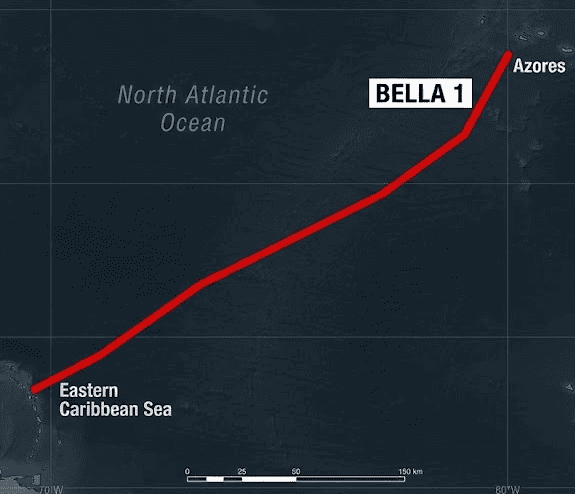
The tanker’s track has since shifted. U.S. officials briefed on the operation said Bella 1 recently altered course northwest, steering away from the Mediterranean, potentially towards waters near Greenland or Iceland. The officials don’t believe the ship to be carrying cargo. During the escape, the crew reportedly painted a Russian flag on the side of the vessel and is now claiming Russian status—an apparent attempt to complicate any boarding or seizure effort.

Given a rough heading NNE and a constant speed of 10kts, members of Faytuks Network’s all-volunteer OSINT team put Bella 1’s position potentially somewhere near the Azores, heading north for the Norwegian Sea and perhaps a final destination of Murmansk, Russia. Another posited destination is Iran, in which case she could potentially head for the Strait of Gibraltar.

Bella 1 still on the run

Federal officials have obtained a seizure warrant tied to Bella 1’s prior involvement in transporting Iranian oil, saying the ship is associated with a broader ā€œghost fleetā€ used to move oil for sanctioned regimes. Officials indicate that additional tanker seizures tied to Venezuela’s oil trade are planned as the U.S. expands efforts to curtail illicit oil revenue streams supporting the Maduro regime in Caracas.

Russia vows response to Ukrainian ‘terror attack’ against Putin’s residence

Spokeswoman for Russia’s Foreign Ministry Zakharova calls Zelensky a “terrorist outcast”. Credit: REUTERS/Maxim Shemetov

Russian officials are vowing a strong response to what they describe as a “terrorist attack” using 91 Ukrainian UAVs against Putin’s Valdai residence in Novgorod oblast. Russia’s Ministry of Defence says all drones were intercepted with no casualties or damage being reported.

Kremlin spokesman Dmitry Peskov says that Russia’s Armed Forces have deemed “how, with what, and when to respond” to Ukraine’s ‘terrorist attack’. Ukrainian monitoring channels have previously warned of a large Russian attack coinciding with New Year’s Eve. Putin told Trump that “Kiev’s terrorist actions” will not go unanswered, according to Russia’s TASS state news agency.

Spokeswoman for Russia’s Foreign Ministry Maria Zakharova also ramped up the rhetoric by calling Ukrainian President Zelensky a ‘terrorist outcast’, vowing that a strong response is coming. Dmitry Medvedev, deputy chairman of Russia’s Security Council, also said that Zelensky would “have to stay in hiding for the rest of his worthless life”.

Foreign Minister Sergey Lavrov said that the timing and nature of Russia’s response to “Kyiv’s state terrorism” has been decided

Ukraine denies

Ukraine vehemently denies being behind the reported drone attack against Putin’s residence, with President Zelensky saying that it is “a complete fabrication intended to justify additional attacks against Ukraine”. Zelensky and other Ukrainian officials have told Ukrainians to remain vigilant, warning that Russia is preparing ground to “strike Ukraine’s government buildings in Kyiv”

No evidence has been provided by Russia of the attack on Putin’s residence. Local residents have told independent Russian outlet SOTA that no air defence activity was heard in the proximity of Putin’s residence last night.

A source close to French President Macron told Reuters on Tuesday there was no evidence to corroborate Russia’s claims that Ukraine targeted Putin’s residence. Asked by reporters, Kremlin spokesman Peskov said there was no need to provide evidence of the attack.

Peace Negotiations

Russian officials have signalled a switch in their approach to the ongoing peace negotiations with Ukraine. Kremlin Spokesman Peskov said Russia would toughen its negotiating position. It’s not immediately clear what this would entail as no further information has been provided.

Kremlin aide Yuri Ushakov told Russian State Media that Trump told Putin that the drone attack would affect American approaches to working with Zelensky. US officials have not confirmed this.

International reactions

US President Donald Trump told press that he was angry when President Putin told him about the attack on his residence. In a phone call with the Russian leader, Trump reportedly said “Thank God, we did not give Tomahawks to Ukraine”, according to Kremlin aide Yuri Ushakov.

India, Pakistan, the United Arab Emirates and Nicaragua have condemned the purported attack against Putin’s residence. India’s Prime Minister Narendra Modi said in a post on X that he was “Deeply concerned by reports of the targeting of the residence of the President of the Russian Federation”.

Ukraine’s Foreign Minister Andrii Sybiha says they were “disappointed and concerned to see the statements by Emirati, Indian, and Pakistani sides expressing their concerns regarding the attack that never happened.

Latvia, Lithuania and Estonia have condemned the Kremlin for what they deem a false flag operation to justify possible strikes against Ukraine. Latvia’s Foreign Minister Baiba Braže said in response to the Russian claims that “The Kremlin butcher needs war, not peace, to justify existence”.