Iran has set new conditions for fully reopening the Strait of Hormuz, demanding major concessions from the United States as negotiations continue over restoring commercial traffic through one of the world’s most important energy corridors.
Iran’s Supreme National Security Council said Saturday that Washington must end threats against Tehran, terminate hostilities involving Iran and its regional allies, lift its naval blockade of Iranian ports and withdraw U.S. military forces from the region. Tehran also called for sanctions relief, the release of frozen Iranian assets and compensation for damage caused during the conflict.
The announcement comes as Iran and Oman continue negotiations over arrangements governing navigation through the strait. Iranian Foreign Minister Abbas Araghchi said the two countries were nearing an agreement on maritime transit routes, but stressed that such an agreement alone would not result in the waterway’s full reopening. Oman described the talks as continuing in a positive and constructive atmosphere.
Tensions increased Saturday after the United Arab Emirates said a carrier affiliated with state-owned Abu Dhabi National Oil Company (ADNOC) was struck by an Iranian missile while transiting the strait. No injuries were reported. Emirati authorities condemned the attack, while ADNOC said more than a dozen of its vessels have been targeted by missiles or drones since fighting began earlier this year.
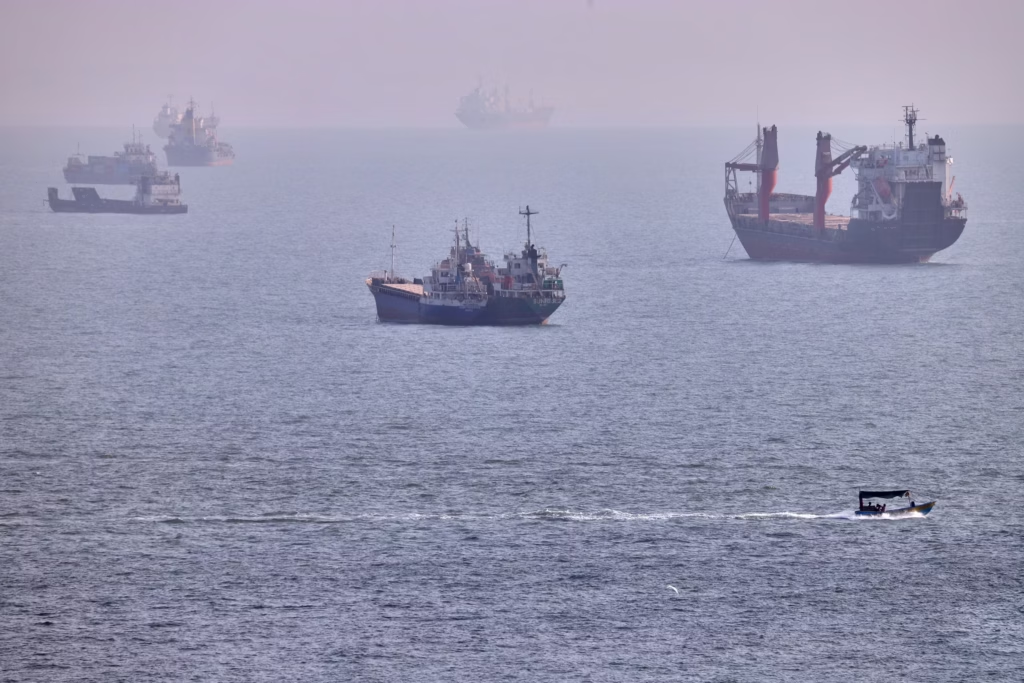
Commercial traffic through the Strait of Hormuz remains significantly reduced, creating continued uncertainty for a waterway central to global oil and liquefied natural gas shipments. A 60-day period established under an interim U.S.-Iran arrangement to negotiate a broader agreement is approaching its deadline, though negotiations could be extended.
Elsewhere in the region, Turkey, Saudi Arabia and Pakistan signed a mutual defense agreement under which an armed attack against one member would be considered an attack against all three. Turkish Foreign Minister Hakan Fidan said the agreement was not directed against Iran or any other country.
Yemeni government forces also launched attacks against Houthi positions following recent rebel strikes, while a Turkish parliamentary committee approved legislation establishing procedures for the disarmament and reintegration of members of the Kurdistan Workers’ Party as part of Ankara’s renewed peace initiative.