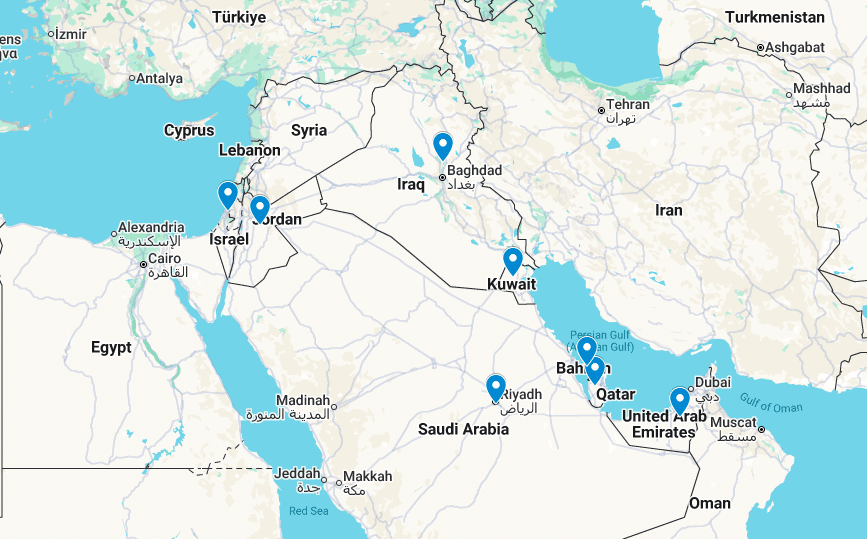
As of March 7, 2026, Iran’s fate is no longer a question of “next messy war or conclusion”—the messy war is actively unfolding. On February 28, 2026, the United States and Israel launched coordinated large-scale airstrikes (U.S. Operation Epic Fury; Israeli Operation Roaring Lion) against Iranian targets, including nuclear facilities, missile infrastructure, air defenses, naval assets, government buildings in Tehran, and leadership compounds. This has already killed Supreme Leader Ayatollah Ali Khamenei, dozens of senior IRGC and government officials, and over 1,300 Iranians (military and civilian), with significant damage to critical infrastructure.
Iran has retaliated with hundreds of ballistic missiles and thousands of drones targeting Israel, U.S. bases in the Gulf, and civilian/economic sites in the UAE, Qatar, Saudi Arabia, and beyond (including Cyprus, Azerbaijan, and tanker traffic near Oman). The Strait of Hormuz has faced temporary closures and disruptions, spiking global oil prices and threatening 20% of world oil trade. The conflict now in its second week builds directly on the unresolved June 2025 “Twelve-Day War” and collapsed 2025–2026 nuclear negotiations. This is not abstract forecasting. It is a live geopolitical rupture driven by miscalculation, maximum-pressure doctrine, and opportunity after Iran’s regional proxies (Hezbollah, Houthis, Iraqi militias) were severely degraded since October 2023.
Background and Immediate Triggers: From Proxy Attrition to Direct Confrontation
Iran’s “Axis of Resistance” strategy forward defense via proxies, missiles, and a advancing nuclear program provided deterrence but invited preemption. Post-2018 U.S. JCPOA withdrawal and “maximum pressure,” Iran enriched uranium to near-weapons-grade levels (enough theoretical material for multiple devices), rebuilt capabilities after 2025 Israeli/U.S. strikes, and faced reinstated UN sanctions in late 2025.
Domestic pressure compounded this: January 2026 protests (sparked by economic collapse—rial at historic lows, inflation >40%) were brutally suppressed, eroding legitimacy even among reformists. Failed indirect U.S.-Iran talks in Muscat/Geneva (February 2026) collapsed despite Iranian concessions on enrichment suspension; Trump and Netanyahu saw a window after intelligence indicated leadership vulnerability.
Geopolitically, U.S. (Trump administration) and Israeli objectives converged on degrading Iran’s missile/nuclear programs permanently and achieving de facto regime change without ground troops—echoing Venezuela 2025 dynamics. Iran miscalculated that its asymmetric toolkit and great-power patrons (Russia/China) would deter direct attack. They did not.
Key Geopolitical Factors Shaping the Conflict
- Military Asymmetry and Iranian Vulnerabilities: U.S./Israeli strikes have destroyed much of Iran’s air defenses, air force, navy (>30 warships sunk), and key missile production/launch sites. Retaliatory salvos have caused limited damage (dozens killed in Israel; hits on Gulf infrastructure) but depleted stocks and exposed overstretch. Proxies are sidelined: IRGC advisors fleeing Lebanon, Hezbollah under renewed Israeli pressure.
- Internal Fragility and Succession Crisis (Including Current Executive Power Vacuum): Khamenei’s death shattered the clerical-military compact. An interim Leadership Council (President Pezeshkian, Chief Justice Mohseni-Eje’i, Ayatollah Arafi) immediately assumed powers under Article 111 of the Constitution. Pezeshkian stated on state television March 1: “The interim leadership council has begun its work” and vowed to “powerfully crush the enemy’s bases” while staying “along the path set by Imam Khomeini.” The Assembly of Experts is tasked with selecting a permanent successor (Mojtaba Khamenei widely seen as frontrunner), but strikes have delayed proceedings. In practice, real executive authority has shifted to the IRGC, which now dominates defense, command-and-control, and internal security amid the decapitation of much of the civilian and clerical leadership (48–49 senior figures killed). This creates an acute executive power vacuum—constitutional on paper, IRGC-dominated in reality—with risks of elite infighting and command disarray. The vacuum compounds continuous pre-existing problems: economic implosion (rial exceeding 1 million to the USD on black market, inflation >40%, food prices up 70%), suppressed nationwide protests from December 2025–January 2026, chronic water/electricity shortages, and infrastructural decay. These structural crises predate the war and now accelerate legitimacy erosion, limiting the interim council’s ability to stabilize governance even as the IRGC hardens into a “garrison state.”
- Great-Power Dynamics: Russia provides satellite intel and verbal support but prioritizes Ukraine—no direct intervention. China evacuates citizens, condemns strikes, and faces a bind: Iran supplied discounted oil (80-90% of Iran’s exports), but Hormuz disruptions risk supply shocks. Europe is divided; Gulf states align with the U.S. umbrella.
- Economic and Energy Leverage: Sanctions + war isolate Iran further. Global oil volatility benefits Russia short-term but threatens recession risks elsewhere. The Strait of Hormuz remains Iran’s ultimate deterrent.
Scenarios: Messy War Toward Conclusion, or Entrenched Chaos?
Three plausible medium-term paths (12–24 months) emerge from current trajectories:
- Contained Regime Change or Forced Capitulation : Sustained U.S./Israeli strikes degrade capabilities until Iran offers “unconditional surrender” or internal collapse empowers opposition elements. Trump has signaled a 4-week horizon and easier post-strike negotiations. Decapitation, proxy weakness, power vacuum make sustained resistance costly. Outcome is weakened Islamic Republic, nuclear program set back years, possible reintegration talks.
- Protracted Attrition : Iran conserves missiles for guerrilla-style retaliation, closes Hormuz fully, or activates sleeper cells. IRGC hardens into “garrison state,” suppressing dissent amid the vacuum. Spillover is seen so far, but escalation could draw in more actors. Global energy shock deepens.
- Managed Transition or Fragmentation (Lower Probability): Elite deal produces pragmatic leadership seeking reintegration. Or chaos: factional fighting, Kurdish/Baloch opportunism, or popular uprising fueled by continuous economic pain.
Critical assessment
The war reflects U.S. assertion of dominance amid multipolar competition. Iran’s “resistance” model proved unsustainable once proxies eroded and the power vacuum exposed internal fragility. However, victory is illusory without “day-after” planning; a vacuum invites extremism or opportunistic footholds. Oil interdependence and proliferation risks mean no clean “conclusion” any resolution requires multilateral diplomacy that Trump has historically resisted.Human and strategic costs are getting increasingly immense. Long-term, Iran’s youth and resources could enable recovery under new governance but only if external powers avoid past errors.
Conclusion
Iran’s fate tilts toward a messy, violent conclusion regime transformation or indefinite stalemate that’s heading for yet another disaster in waiting. The 2026 war accelerates trends since 2023, with the executive power vacuum and continuous structural crises acting as decisive accelerants. The coming weeks will determine if this becomes a decisive pivot or another chapter in endless regional conflict. De-escalation windwos seems virtually closed.