Where exactly are Iranian Su-35s?

Amid rising tensions between Tehran and Washington, and months after reports first emerged of a multi-billion dollar deal between Iran and Russia for advanced Sukhoi Su-35 fighter jets, the anticipated warplanes have yet to appear on Iranian airbases, fueling uncertainty over the deal’s status and its implications.

Leaked Russian defense documents suggested Tehran had agreed to purchase up to 48 Su-35s in a contract worth roughly €7 billion, a move seen as part of a broader military partnership with Moscow. Despite these reports, and acknowledgments from Iranian commanders that Su-35s had been purchased, independent imagery and military observers have not verified the delivery of assembled Su-35 jets operating in Iran.

Were the Su-35s Diverted?

Some speculation suggests aircraft originally meant for Iran have been diverted elsewhere. However, this appears to be unsupported by the known documents. According to leaked documents obtained through United24, the delivery window for the initial 18 aircraft is after the end of 2025 and within 2028, meaning that contract-wise the delivery window has only just started. That said, despite being a strategic partner to Iran, Russia does not appear to have expedited delivery of the jets in the face of looming war, especially as deliveries for Algeria appear to be taking priority over Iran. Others note that pilots and technicians have trained on the type in Russia without any confirmed operational deployment in Iran. Preparations also appear to be underway at Iranian airbases to deploy and house the new jets.

Washington has significantly increased its military presence in the Middle East, deploying dozens of advanced fighter jets and aircraft carriers within reach of Iranian airspace, a show of force linked to long-running disputes over Tehran’s nuclear program and regional activities. Satellite imagery this week revealed a major surge in U.S. air power in neighboring Jordan and Saudi Arabia, increasing the stakes of the standoff.

In response to the buildup, Russia has publicly urged restraint while conducting joint naval exercises with Iran in the Gulf of Oman, underscoring Moscow’s strategic disposition: supportive of Tehran, yet cautious about direct confrontation with the United States. The broader U.S.–Iran confrontation has also included temporary closures of Iranian airspace and heightened alert status, reflecting fears in Tehran of possible American military action amid stalled nuclear negotiations.

For Iran, acquiring Su-35s would represent a significant upgrade to its aging air force, which has struggled to replace older aircraft and was seen as powerless during last year’s war with Israel. But for now, the aircraft remain conspicuously absent, and their potential deployment remains unclear as the situation has become one of the most volatile geopolitical flashpoints.

United States positions military assets for a potential strike against Iran

F15e in the air

Significant movement of tankers, jets and further cargo has taken place, entering the Middle East region as the United States prepares for a campaign against the Iranian regime.

In the last 72 hours, the influx of tankers and jets has significantly increased, with F35s, F22s, F15s, F16s, AWACS (Airborne Early Warning System) and other critical platforms being recorded entering the area. In addition to these, air-to-air refuelers such as the KC-135 and KC-46, are flying into bases throughout the area, suggesting the fact a more drawn-out conflict could be a part of possible options for Washington against Tehran.

Trump earlier today onboard Air Force One stated that a decision will be made within a 10-15 day window, although analysts have mention the potential for military action to commence in the next few days.

a deadline of 10-15 days has been established for any iran-US deal according to trump

Sources telling Axios state that action could begin within days, with it more than likely being a continued campaign lasting for weeks. Although further reports have also brought the fact that Donald Trump may prefer a more initial approach to military force, enough to bring them to the negotiation table.

As we continue to view large scale aerial movements from Washington, not seen since 2003, Iranian military assets have also taken part in live fire training within and around the Hormuz Strait. The threat of Iran halting global shipping through this critical waterway is still present, with it being a viable action in which Iran could potentially conduct in the event of offensive actions by Israel or the United States.

Tuesday last week, the second round of negotiations took place in Geneva, Switzerland. These talks were aimed at Tehran’s nuclear, ballistic programs alongside their support for proxy groups around the region. As of now, no concrete concessions have been given by either side, with both talks ending without any further progress.

Iran’s Foreign Minister, Abbas Araghci stated that “good progress” has been made, with Iran setting the framework for future talks. Despite the positivity from the Iranian diplomatic team, Washington says only “modest” compromises had been given surrounding the nuclear program, the main point of contention in the current talks. JD Vance also mentioned that talks went well “in some ways”. It is unclear what direction which may be taken in the future if diplomatic talks were to continue.

Currently, the United States has positioned over 126 land-based fighter aircraft alongside two carrier strike groups. Alongside this, Israel will likely participate in an attack with United State forces, with the IDF ready for a “large and multi-front” conflict, one which may involve Iran and its proxy forces.

Iran’s options for retaliation: bluff or not

Iranian Fateh-110 missile being fired - Iranian state media

As conflict continues to loom between Iran and the United States, Tehran is facing an increasingly acute military situation. Iran posses a large and comprehensive missile and drone force capable of reaching all United States military bases in the region in addition to Israel. As seen in the 12-day war, Tehran has the largest arsenal of ballistic missiles in the region. This ability was demonstrated with multiple strikes through the period of conflict in June 2025 leaving 32 Israeli civilians dead according to the Times of Israel.

Iran features thousands of SRBM (short range ballistic missiles) and MRBM (Medium range ballistic missiles), some capable of 2,000km in range, easily having the capacity to deliver large payloads across Israel and the surrounding region. The Khorramshahr and Emad missiles both feature this range, with the Emad having a potential 500 meter accuracy according to CSIS. Although not extremely accurate, the amount available to their disposal makes any volley a highly dangerous event.

In the event of war, Tehran would want to maintain a sizable missile force to prop up their own escalation ladder. This allows them to include multiple threats in the later parts of a conflict which could pose as a deterrence for Washington to continue. In doing so, Iran would want to keep their road-mobile launch vehicles in a safe area away from incoming Israeli/US offensive actions. In the 12-day-war, Tehran’s ability to perform large scale strikes on Israeli was greatly damaged by the fact they lost multiple launch vehicles, causing their missile volleys to dwindle

Despite the extensive missile forces Iran has present, this isn’t the only option to their advantage. Iran has affiliation with multiple terrorist-proxy forces dispersed throughout the region. Although most have been battered in the recent conflicts since October 7th, 2023, most still maintain a visible threat. One such example is the Houthis in Yemen, which have continued to demonstrate their capabilities, potentially harming Washington’s interests in the region.

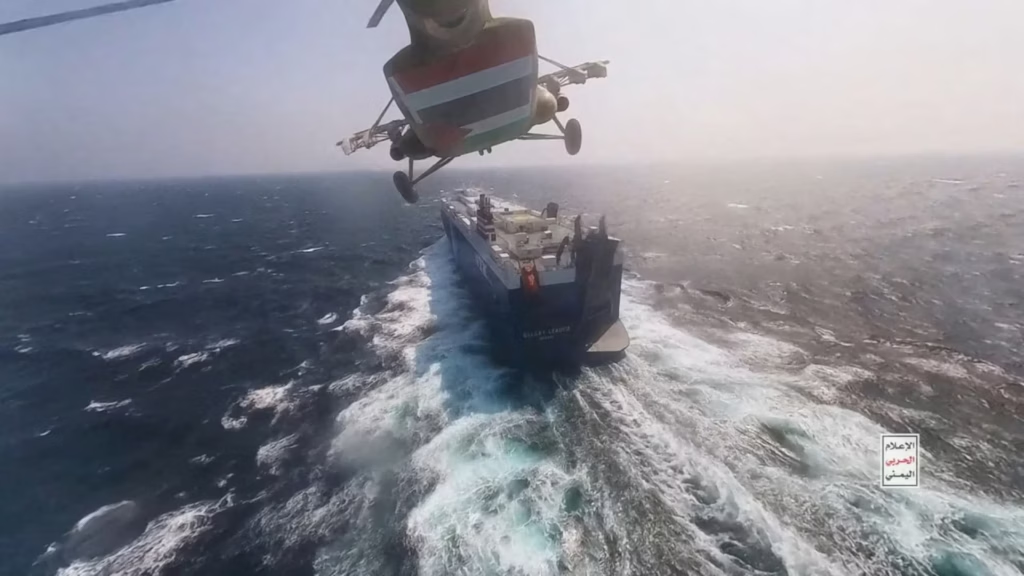
Houthis targeting shipping in the red sea
Houthis targeting commercial shipping in the red sea

This is a dominant strategy for Iran, although it depends on the willingness and capabilities Yemen still features since the continuous strikes which have since occurred after their continued campaign on global shipping from multiple other countries.

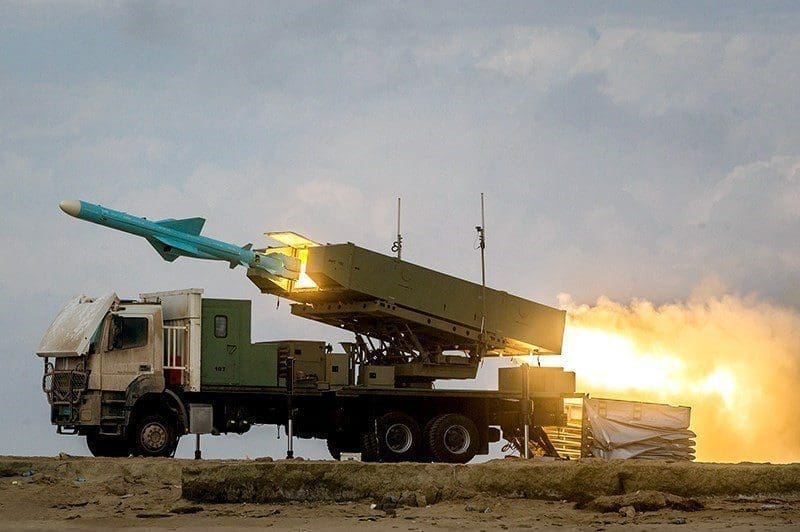
Alongside this, another choke point Iran has against their adversaries is the Strait of Hormuz. Iran has a well-developed anti-shipping missile capability. The Noor is an example of this, with a range of 120km and potential speed near 0.9 Mach (1100 KM/h or 690 MP/h). This would be a more risky option for Iran, with potential greater consequences if such operation was to materialize. Risking further damage to the regime may be something they seek to avoid, especially if initial strikes are successful in regards to decapitation of IRGC (Islamic Revolutionary Guard Corp) forces or other senior members of government.

Iran’s options for retaliation: bluff or not
Noor, an anti-shipping missiles developed by Iran which could be used in the event of conflict

Another option for Tehran is a campaign against oil facilities across the region. This would inflict the greatest damage to the region, although likely leading forces from the Gulf States being brought into the conflict, widening the strike package against Iran. This situation is undesirable for Tehran as it would bring a wider threat to the IRGC. Despite this, targeting these specific facilities would offer a more substantial effect to the region.

In any large scale conflict, Tehran would seek an option which provides the greatest deterrence whilst also offering a potential chance for an off-ramp. The extensive missile forces present alongside the political situation within the country makes it difficult to view potential operations Iran could conduct.

In regards to the United States and Israel, both have begun preparation including deploying an extensive array of air defense including Patriot and THAAD systems, in order to protect against damage to their forces or civilian population centers.

Echoes of Repression: The Regime’s War on Its Own People

In the wake of a deep economic crisis, Iran has been caught up in a spiral of ruthless crackdowns spearheaded by the nation’s security apparatus. The move comes amidst accusations of foreign involvement, labelling the anti-government protests as an orchestrated effort to spark unrest within the borders of the country. Consequently, the streets of Iran have shaken with unprecedented state violence designed to silence opposing voices, claiming the lives of thousands in the process.

Although there have been several instances of economic crises in Iran following the Iranian Revolution in 1979, the latest crisis marks a tipping point, resulting from many factors including reimposed sanctions by the U.S., high volatility in the market, and the Islamic Revolutionary Guard Corps (IRGC) rooting itself deeply within the institutions fueling the economy — prompting a major severance from Iran’s mercantile sphere, the Bazaaris.

On December 28, 2025, the Grand Bazaar of Tehran faded into silence, with shopkeepers going on strike in an act of protest against deteriorating economic indicators and the factors that led to them. Albeit limited initially to the vicinity of the Grand Bazaar, the strike gained momentum rapidly, evolving into nationwide strikes that eventually led to protests defying the authority of the Iranian government—a crisis in which the collapse of Iran’s rial played a significant role.

“If If I die and my death leads to positive change, I’m okay with that.”

Sourena Golgoun’s last message, ITV.


With protests erupting nationwide, the Iranian government has answered demands with lethal force. Relying on its domestic security apparatus, the Basij, to suppress dissent, the state also enforced a total internet blackout, effectively severing the country’s lifeline from the outside world.

As protests intensified in both scope and magnitude, they became the focus of several human rights groups, raising concerns about rights violations as the government’s response to the protestors grew harsher. Among monitoring organizations, the Human Rights Activists News Agency (HRANA) has confirmed 7,015 deaths since the protests began, with an additional 11,744 cases yet to be verified. Meanwhile, The Times reported that more than 16,500 people have lost their lives, in addition to 330,000 wounded. Although the true death toll remains unverified, Iran’s Foreign Minister Abbas Araghchi stated in an interview that only 3,117 people have died during the protests, directly disputing the claims of on-the-ground sources and human rights groups.

The treatment of protestors held in custody is also a point of concern, with a strict lid imposed on the nation’s detention centers and prisons, leaving the conditions in which detainees are being held mostly unknown. However, according to Iran International, reports allege that protestors in custody have been injected with ‘unspecified’ substances, a practice linked to several suspicious deaths. While some detainees have been released or, like Erfan Soltani, released on bail, many others remain imprisoned, awaiting a fair trial.

In spite of recent human rights violations and systematic oppression at home, the protests continue to resonate abroad, with many Iranians and supporters taking to the streets in a show of solidarity. Iran’s Crown Prince Reza Pahlavi’s call for a Global Day of Action on February 14th was honored by millions, as major cities around the world witnessed massive crowds answering the call.

Iran-US talks to be held in Geneva, Switzerland on Tuesday

Steve Witkoff meeting Israeli hostage families

Steve Witkoff meeting with hostage families in Tel Aviv, early 2025.

United States diplomats will meet with Iranian officials in Geneva on Tuesday to discuss relationships in hope to avoid a greater conflict. Reuters reports Steve Witkoff and Jared Kushner will be present, with members from Oman taking part for mediation efforts.

This new schedule comes after a week since the first talks were held in Oman, where no formal one-on-one discussion took place. So far, issues such as the Iranian nuclear program, ballistic arsenal and the support for proxies have not been cleared up, with Tehran stating their clear intentions of keeping their missile capabilities, although mixed signals in regards to the enrichment program.

In earlier negotiations, diluting the 60% enriched uranium in return for full sanction relief was brought up, although this solution did not lead to any further concrete deal. The thought of Iran’s supply being brought out of the country was also declined by officials, said by Iran’s atomic energy minister, Mohammad Eslami.

As this second round of talks begin, the USS Gerald R. Ford will continue en route to the Middle East from the Caribbean, continuing the large military buildup in the theatre. All this is alongside significant airlift operations, deploying air defence and jets around the region.

Ukraine and Russia diplomatic talks will also continue in Geneva at the same time, as the United States ramps up pressure for both sides to negotiate to end the 4-year-war.

US deploys second carrier strike group

USS Gerald R Ford (CVN-78)

As military intervention with Iran looms, Washington has indicated that the deployment of the USS Gerald R. Ford will take place, leaving the Caribbean and heading to an area situated around the Middle East. This comes a month after Ford’s role in Operation Absolute Resolve, which led to the capture of then-sitting Venezuelan president, Nicolás Maduro.

The USS Gerald R. Ford, the largest and most advanced currently afloat, will also supposedly be followed by its escort ships, allowing for a greater strike package if Washington ever decided to act against Iran.

This further deployment comes after continued air assets have been recorded entering military bases around the Middle East for the last couple weeks. So far, a Chinese satellite has confirmed air defence being positioned at a base in Jordan, likely to protect against missile volleys from Iran. This is a continued threat seen by both the United States and Israel.


Alongside this brand-new deployment, USS Abraham Lincoln which is believed to be in the Arabian Sea, has also been deployed in the region. Last week the Lincoln shot down an Iranian Shaded 139 which was actively surveilling the ship.

Us deploys second carrier strike group

Diego Garcia, as seen above, has had limited but noticeable movements of airframes

The Ford’s deployment away from the Caribbean theatre also extends its current operational time frame to at least April in accordance with reports from the New York Times, making it an unusual extension for an American carrier. This adds up to its current operational period being extended close to a year if the current projected time frame materialises.

This large military presence has added pressure onto Tehran to follow through with the negotiations laid out by the United States, which follows red lines such as limited ballistic weaponry, end of the nuclear program and removal of funding and assistance with their terrorist proxies across the region.

With already one set of talks having been carried through, there’s been limited hope of a  successful path to diplomacy, with certain agreements on the issues above not being resolved as of now.

On Wednesday, Israeli Prime Minister Benjamin Netanyahu met with President Trump and discussed issues surrounding Gaza and Iran, with Reuters also confirming that Israel announced their position in the “Board of Peace” group during this meeting. This is one of the five meetings held with Trump since his inauguration in late January 2025.

Israeli media also claimed this meeting was in effort to lay out conditions they wanted, including a harsher approach to negotiations with Tehran.