Middle East war spreads: multiple countries targeted by Iran

countries affected by iran

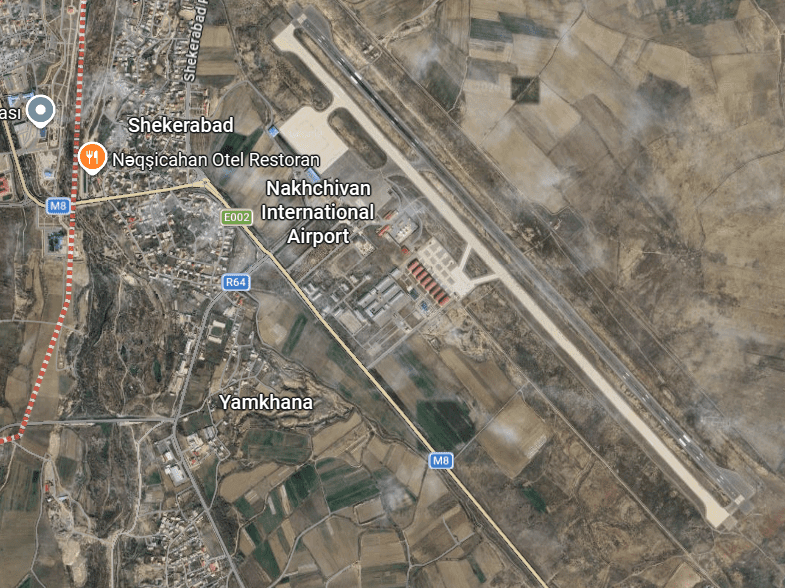
As the war in the Middle East continues to spread, in the last 24 hours, drones and missiles have targeted both Türkiye and Azerbaijan, with 3 drones originating from Iran hitting locations within the Nakhchivan Autonomous Republic, injuring two according to reports from officials.

Middle east war spreads: multiple countries targeted by iran
Nakhchivan International airport was targeted by Iranian drones

Azerbaijan in their official statement clarified their “right to take appropriate actions”, with them also summoning the Iranian ambassador in result of the strikes.

In a continued escalatory manner, Iran and its proxies have targeted multiple countries, including European regions. RAF Akrotiri in Cyprus, an oversea British military base came into direct contact from Iranian drones, with one impacting the base causing minor damage and no injuries or fatalities.

This new development in the Caucasus region comes less than 24 hours ago that Türkiye reported an Iranian missile being fired towards their territory, with the outcome of it being shot down by air defense.

Missiles and drones continue to fall in other regions too, with Saudi Arabia also confirming 3 cruise missiles being intercepted in al-Kharj, with other Gulf States continuing their operations in downing projectiles.

The continued attacks by Tehran comes as United States and Israeli forces continue to hit targets throughout Iran, with military installations and governmental locations coming under attacks since last Saturday.

Continued live coverage of breaking news updates about the current conflict can be found on our live feed

Iranian Supreme leader, Ali Khamenei killed in military strikes confirmed by state media

Ali Khamenei dead

Iranian state television has confirmed the death of the Supreme Leader, Ali Khamenei. This is alongside Israeli assessment earlier presenting the fact that strikes likely succeeded in assassinating him.

Earlier, Israeli and United States forces conducted an aerial operation against several key Iranian figures, in attempts to assassinate. Within this, Khamenei’s residency was targeted by multiple missiles.

The death of Khamenei demonstrates the intents of regime change with this operation, with previous conflicts such as the 12-day-war not showing similar aim.

Iranian Revolutionary Guards (IRGC) have vowed the “most intense” attack against Israeli and United States forces, which they believe will begin soon.

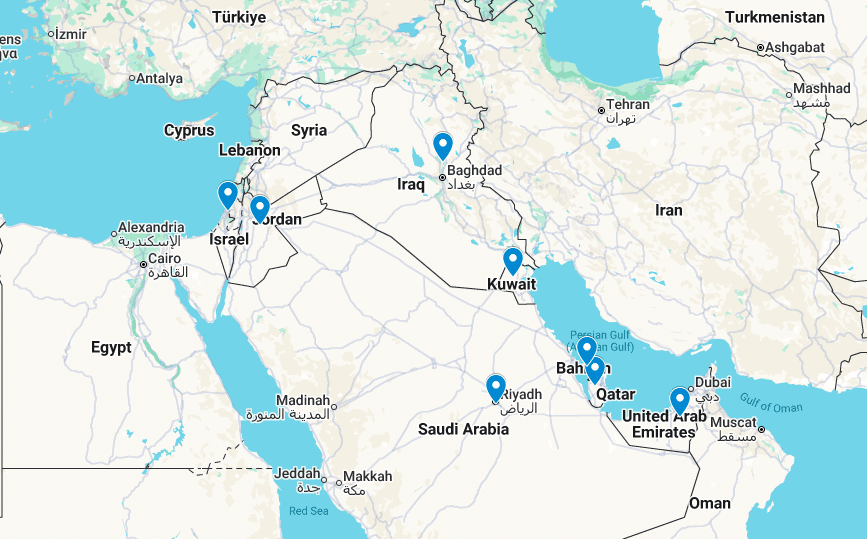
Strikes have so far been confirmed in Jordan, Israel, Qatar, Kuwait, Bahrain, United Arab Emirates and Iraq. Airports, military bases and civilian areas have all been hit by Iranian missiles and drones.

Iranian supreme leader, ali khamenei killed in military strikes confirmed by state media
Countries which have so far been targeted by Iranian missiles, drones and proxy force

More coverage can be found on our current live blog feed

US-Iran Talks: Full Efforts for Peace or Delaying the inevitable?

The second round of indirect high-stakes nuclear negotiations between the United States and Iran wrapped up in Geneva on Thursday with the Omani mediator hailing “significant progress,” but no breakthrough deal emerged. Technical discussions are now scheduled for next week in Vienna, even as the Trump administration maintains a firm stance on Iran’s uranium enrichment program and sanctions relief. The diplomatic momentum is tempered by aggressive US military posturing across the Middle East, a notable lack of public commentary from American negotiators, an urgent trip by Oman’s foreign minister to Washington, and a wave of international travel advisories for both Iran and Israel.

Omani Foreign Minister Sayyid Badr Al Busaidi, who has been shuttling between the two sides as intermediary, issued a measured update immediately after the day’s sessions. “We have finished the day after significant progress in the negotiation between the United States and Iran,” he posted. “We will resume soon after consultation in the respective capitals. Discussions on a technical level will take place next week in Vienna.” Iranian Foreign Minister Abbas Araghchi echoed the positive tone, calling the round one of the most intense yet and noting that Tehran had submitted written proposals. He added two sides agreed that technical teams will begin discussions and reviews in Vienna starting Monday and new round of negotiations will be held in less than a week.In stark contrast, the US delegation led by Special Envoy to Middle East Steve Witkoff and Jared Kushner has remained largely silent, with the White House declining to issue any detailed readout or optimistic statements of its own.

Oman FM’s Urgent Dash to Washington

Hours after the Geneva sessions concluded, Al Busaidi was already en route to the United States for high-level meetings in Washington today. The Omani minister is scheduled to brief Vice President JD Vance and other senior officials in an explicit push to keep the diplomatic path open and avert any military confrontation. The trip is highlighted as a last ditch effort to bridge remaining gaps before the Trump administration’s self-imposed deadline loom closer.

US Military Posturing Reaches Peak Intensity

While talks continue, the Pentagon has assembled what analysts describe as the largest US military presence in the Middle East in more than two decades. Two aircraft carrier strike groups including the USS Gerald R. Ford are converging on the region, accompanied by over 150 additional combat aircraft, including F-22 Raptors and F-35s forward-deployed to bases in Jordan, Qatar, Saudi Arabia, and even Israel. E-3 Sentry AWACS aircrafts and additional tankers support have been rushed into theater.

CENTCOM Commander General Brad Cooper personally briefed President Trump and Joint Chiefs Chairman General Dan Caine on potential strike options against Iranian targets. Reports also indicate non-essential personnel are being quietly moved out of vulnerable forward bases such as Al Udeid in Qatar and facilities in Bahrain a precautionary “evac” posture widely interpreted as “EVC” (enhanced vigilance and contingency evacuation measures) on US airbases in the Gulf. Iran has publicly highlighted these same bases as potential targets in any conflict.

Multiple Countries Issue Travel Advisories for Iran and Israel

Following the first round of negotiations and the subsequent escalation in rhetoric, embassies across the globe have issued urgent travel warnings. China became the latest major power to urge its citizens in Iran to evacuate immediately, citing the rapidly deteriorating security situation. Multiple other nations including Germany, France,Australia, India, and South Korea have advised their nationals to reconsider or defer travel to Israel as well as Australia, Brazil, China, Cyprus, Finland, Germany, India, Poland, Serbia, Singapore, Japan,South Korea, Sweden, and the United States have issued travel advisory for Iran.Note that some nations, such as the UK, have issued strong “do not travel” warnings or withdrawn diplomatic staff without explicitly calling for all citizens already in Iran to depart, so they are not included in this explicit evacuation list.The US State Department has gone further, authorizing non-essential embassy personnel and families in Israel to depart and warning American citizens to “reconsider travel” due to the risk of sudden escalation.

Israel Prepares Defenses, Strikes Hezbollah Targets, and Warns Against Involvement

On the Israeli front, the IDF has placed the entire country on heightened alert. Recent airstrikes have targeted Hezbollah missile production and storage sites in Lebanon’s Bekaa Valley, aimed at degrading the group’s ability to join any wider conflict. Israeli officials have delivered blunt warning to Hezbollah and Lebanese authorities: any involvement in a US-Iran war even limited will trigger massive retaliation, including strikes on civilian infrastructure such as Beirut’s airport. Hezbollah has signaled it will not intervene in a “limited” US strike on Iran but maintains red lines if Iranian leadership or territory faces existential threat. Israeli defense officials are simultaneously assessing the risk of Iran activating its full “axis of resistance,” including coordinated attacks from Yemen’s Houthis and Iraqi militias.

What Comes Next

The coming week will be decisive. Technical experts head to Vienna on Monday for detailed discussions on uranium stockpiles and verification mechanisms, while political-level talks could resume shortly thereafter. Oman’s intervention in Washington today is viewed by diplomats as the final push to find common ground before President Trump’s threats of military action become reality.


Where exactly are Iranian Su-35s?

Amid rising tensions between Tehran and Washington, and months after reports first emerged of a multi-billion dollar deal between Iran and Russia for advanced Sukhoi Su-35 fighter jets, the anticipated warplanes have yet to appear on Iranian airbases, fueling uncertainty over the deal’s status and its implications.

Leaked Russian defense documents suggested Tehran had agreed to purchase up to 48 Su-35s in a contract worth roughly €7 billion, a move seen as part of a broader military partnership with Moscow. Despite these reports, and acknowledgments from Iranian commanders that Su-35s had been purchased, independent imagery and military observers have not verified the delivery of assembled Su-35 jets operating in Iran.

Were the Su-35s Diverted?

Some speculation suggests aircraft originally meant for Iran have been diverted elsewhere. However, this appears to be unsupported by the known documents. According to leaked documents obtained through United24, the delivery window for the initial 18 aircraft is after the end of 2025 and within 2028, meaning that contract-wise the delivery window has only just started. That said, despite being a strategic partner to Iran, Russia does not appear to have expedited delivery of the jets in the face of looming war, especially as deliveries for Algeria appear to be taking priority over Iran. Others note that pilots and technicians have trained on the type in Russia without any confirmed operational deployment in Iran. Preparations also appear to be underway at Iranian airbases to deploy and house the new jets.

Washington has significantly increased its military presence in the Middle East, deploying dozens of advanced fighter jets and aircraft carriers within reach of Iranian airspace, a show of force linked to long-running disputes over Tehran’s nuclear program and regional activities. Satellite imagery this week revealed a major surge in U.S. air power in neighboring Jordan and Saudi Arabia, increasing the stakes of the standoff.

In response to the buildup, Russia has publicly urged restraint while conducting joint naval exercises with Iran in the Gulf of Oman, underscoring Moscow’s strategic disposition: supportive of Tehran, yet cautious about direct confrontation with the United States. The broader U.S.–Iran confrontation has also included temporary closures of Iranian airspace and heightened alert status, reflecting fears in Tehran of possible American military action amid stalled nuclear negotiations.

For Iran, acquiring Su-35s would represent a significant upgrade to its aging air force, which has struggled to replace older aircraft and was seen as powerless during last year’s war with Israel. But for now, the aircraft remain conspicuously absent, and their potential deployment remains unclear as the situation has become one of the most volatile geopolitical flashpoints.

United States positions military assets for a potential strike against Iran

F15e in the air

Significant movement of tankers, jets and further cargo has taken place, entering the Middle East region as the United States prepares for a campaign against the Iranian regime.

In the last 72 hours, the influx of tankers and jets has significantly increased, with F35s, F22s, F15s, F16s, AWACS (Airborne Early Warning System) and other critical platforms being recorded entering the area. In addition to these, air-to-air refuelers such as the KC-135 and KC-46, are flying into bases throughout the area, suggesting the fact a more drawn-out conflict could be a part of possible options for Washington against Tehran.

Trump earlier today onboard Air Force One stated that a decision will be made within a 10-15 day window, although analysts have mention the potential for military action to commence in the next few days.

a deadline of 10-15 days has been established for any iran-US deal according to trump

Sources telling Axios state that action could begin within days, with it more than likely being a continued campaign lasting for weeks. Although further reports have also brought the fact that Donald Trump may prefer a more initial approach to military force, enough to bring them to the negotiation table.

As we continue to view large scale aerial movements from Washington, not seen since 2003, Iranian military assets have also taken part in live fire training within and around the Hormuz Strait. The threat of Iran halting global shipping through this critical waterway is still present, with it being a viable action in which Iran could potentially conduct in the event of offensive actions by Israel or the United States.

Tuesday last week, the second round of negotiations took place in Geneva, Switzerland. These talks were aimed at Tehran’s nuclear, ballistic programs alongside their support for proxy groups around the region. As of now, no concrete concessions have been given by either side, with both talks ending without any further progress.

Iran’s Foreign Minister, Abbas Araghci stated that “good progress” has been made, with Iran setting the framework for future talks. Despite the positivity from the Iranian diplomatic team, Washington says only “modest” compromises had been given surrounding the nuclear program, the main point of contention in the current talks. JD Vance also mentioned that talks went well “in some ways”. It is unclear what direction which may be taken in the future if diplomatic talks were to continue.

Currently, the United States has positioned over 126 land-based fighter aircraft alongside two carrier strike groups. Alongside this, Israel will likely participate in an attack with United State forces, with the IDF ready for a “large and multi-front” conflict, one which may involve Iran and its proxy forces.

Iran’s options for retaliation: bluff or not

Iranian Fateh-110 missile being fired - Iranian state media

As conflict continues to loom between Iran and the United States, Tehran is facing an increasingly acute military situation. Iran posses a large and comprehensive missile and drone force capable of reaching all United States military bases in the region in addition to Israel. As seen in the 12-day war, Tehran has the largest arsenal of ballistic missiles in the region. This ability was demonstrated with multiple strikes through the period of conflict in June 2025 leaving 32 Israeli civilians dead according to the Times of Israel.

Iran features thousands of SRBM (short range ballistic missiles) and MRBM (Medium range ballistic missiles), some capable of 2,000km in range, easily having the capacity to deliver large payloads across Israel and the surrounding region. The Khorramshahr and Emad missiles both feature this range, with the Emad having a potential 500 meter accuracy according to CSIS. Although not extremely accurate, the amount available to their disposal makes any volley a highly dangerous event.

In the event of war, Tehran would want to maintain a sizable missile force to prop up their own escalation ladder. This allows them to include multiple threats in the later parts of a conflict which could pose as a deterrence for Washington to continue. In doing so, Iran would want to keep their road-mobile launch vehicles in a safe area away from incoming Israeli/US offensive actions. In the 12-day-war, Tehran’s ability to perform large scale strikes on Israeli was greatly damaged by the fact they lost multiple launch vehicles, causing their missile volleys to dwindle

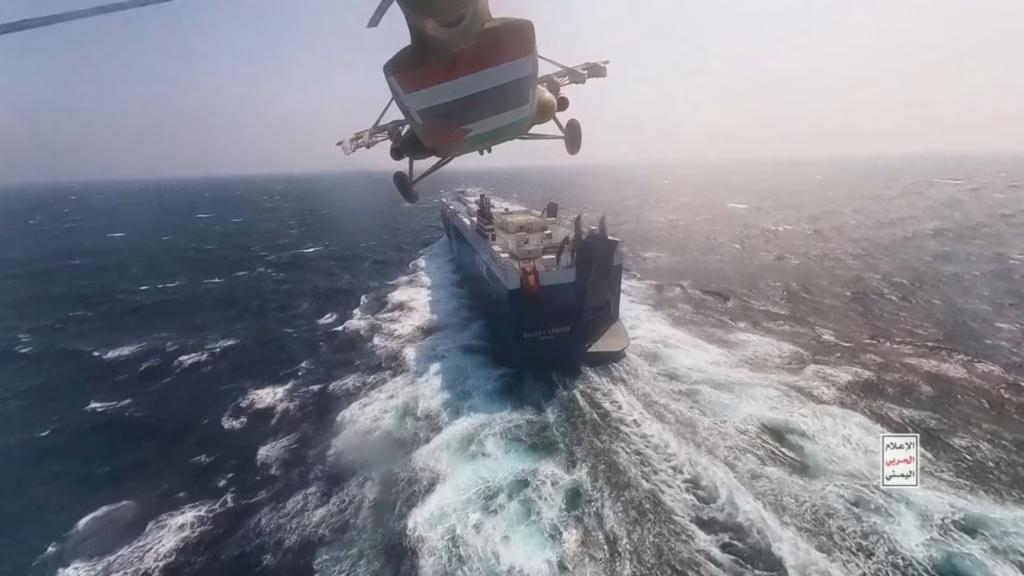
Despite the extensive missile forces Iran has present, this isn’t the only option to their advantage. Iran has affiliation with multiple terrorist-proxy forces dispersed throughout the region. Although most have been battered in the recent conflicts since October 7th, 2023, most still maintain a visible threat. One such example is the Houthis in Yemen, which have continued to demonstrate their capabilities, potentially harming Washington’s interests in the region.

Houthis targeting shipping in the red sea
Houthis targeting commercial shipping in the red sea

This is a dominant strategy for Iran, although it depends on the willingness and capabilities Yemen still features since the continuous strikes which have since occurred after their continued campaign on global shipping from multiple other countries.

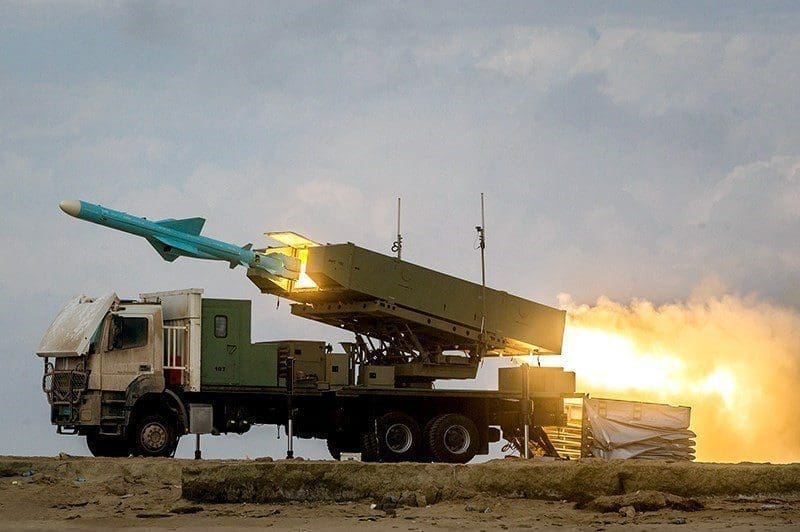
Alongside this, another choke point Iran has against their adversaries is the Strait of Hormuz. Iran has a well-developed anti-shipping missile capability. The Noor is an example of this, with a range of 120km and potential speed near 0.9 Mach (1100 KM/h or 690 MP/h). This would be a more risky option for Iran, with potential greater consequences if such operation was to materialize. Risking further damage to the regime may be something they seek to avoid, especially if initial strikes are successful in regards to decapitation of IRGC (Islamic Revolutionary Guard Corp) forces or other senior members of government.

Iran’s options for retaliation: bluff or not
Noor, an anti-shipping missiles developed by Iran which could be used in the event of conflict

Another option for Tehran is a campaign against oil facilities across the region. This would inflict the greatest damage to the region, although likely leading forces from the Gulf States being brought into the conflict, widening the strike package against Iran. This situation is undesirable for Tehran as it would bring a wider threat to the IRGC. Despite this, targeting these specific facilities would offer a more substantial effect to the region.

In any large scale conflict, Tehran would seek an option which provides the greatest deterrence whilst also offering a potential chance for an off-ramp. The extensive missile forces present alongside the political situation within the country makes it difficult to view potential operations Iran could conduct.

In regards to the United States and Israel, both have begun preparation including deploying an extensive array of air defense including Patriot and THAAD systems, in order to protect against damage to their forces or civilian population centers.

Iran-US talks to be held in Geneva, Switzerland on Tuesday

Steve Witkoff meeting Israeli hostage families

Steve Witkoff meeting with hostage families in Tel Aviv, early 2025.

United States diplomats will meet with Iranian officials in Geneva on Tuesday to discuss relationships in hope to avoid a greater conflict. Reuters reports Steve Witkoff and Jared Kushner will be present, with members from Oman taking part for mediation efforts.

This new schedule comes after a week since the first talks were held in Oman, where no formal one-on-one discussion took place. So far, issues such as the Iranian nuclear program, ballistic arsenal and the support for proxies have not been cleared up, with Tehran stating their clear intentions of keeping their missile capabilities, although mixed signals in regards to the enrichment program.

In earlier negotiations, diluting the 60% enriched uranium in return for full sanction relief was brought up, although this solution did not lead to any further concrete deal. The thought of Iran’s supply being brought out of the country was also declined by officials, said by Iran’s atomic energy minister, Mohammad Eslami.

As this second round of talks begin, the USS Gerald R. Ford will continue en route to the Middle East from the Caribbean, continuing the large military buildup in the theatre. All this is alongside significant airlift operations, deploying air defence and jets around the region.

Ukraine and Russia diplomatic talks will also continue in Geneva at the same time, as the United States ramps up pressure for both sides to negotiate to end the 4-year-war.