Last Saturday, Yemeni Houthi forces carried out a ballistic missile strike against Israel, triggering sirens over Beersheba and surrounding towns, entering the equation after declaring their firm support for the Islamic Republic.
Air Canada flight AC8646, operated by Jazz Airlines shortly after landing at LaGuardia Airport in New York collided with a ground vehicle situated on the taxiway. So far, reports have suggested multiple injuries and potential deaths. 4 firefighters have also been reported as critically injured according to local media.
According to NBC New York, 2 of the injured were Port Authority police officers.
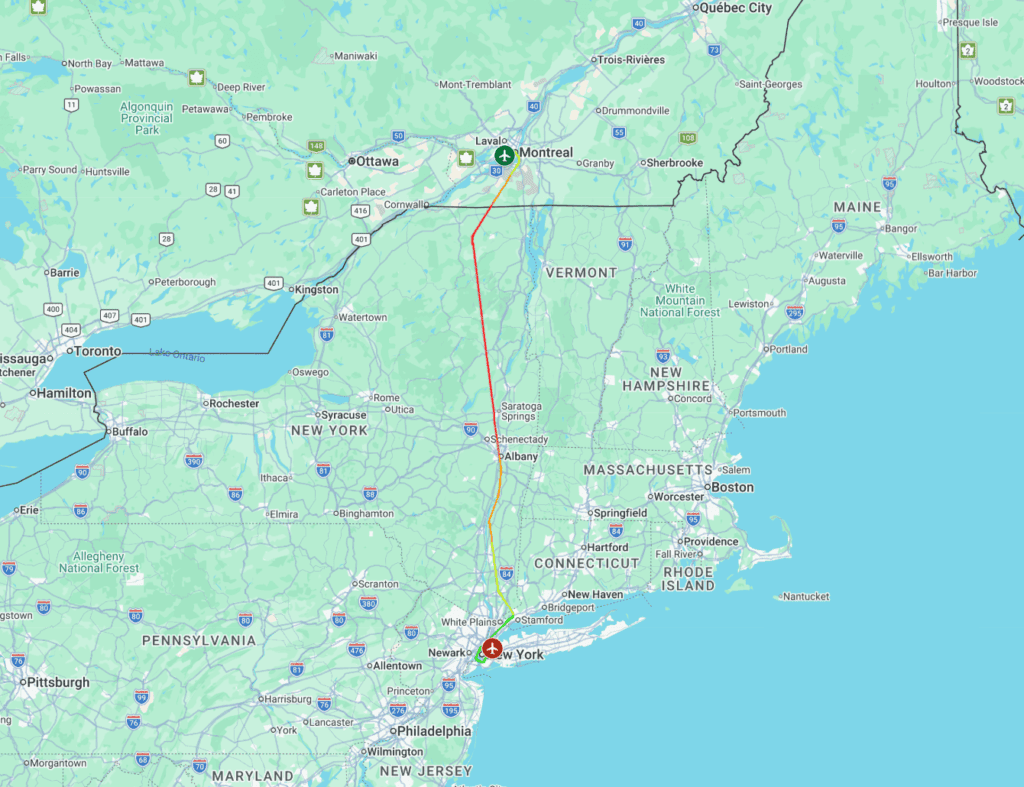
AC8646 coming from Montreal was a CRJ-900LR aircraft, a regional jet which often completes this same route, departing at around 10:35pm from Pierre Elliott Trudeau Airport.
The conditions recorded during the incident stated winds of 7 knots, 4 miles (≈6.4km) of visibility along with light rain also present. Cloud ceilings were around 700 feet the time of the incident. It is unknown whether conditions directly contributed to this incident.
Flight route of Air Canada flight JZA646
The FAA (Federal Aviation Administration) has ordered a ground stop at LaGuardia, noting it as due to an “aircraft emergency”. Multiple flights have had to return to the gates, with multiple cancellations and delays at the airport.
Emergency responders are currently at the scene, with more information expected to be released soon.
HAVANA — Cuba is facing one of its most serious internal crises in decades as a worsening energy shortage, economic decline, and rising public frustration combine to test the resilience of the island’s communist government.
Headlines
Rolling blackouts, some lasting more than a dozen hours per day in parts of the country, have become routine as Cuba struggles with fuel shortages and aging power infrastructure. The outages have disrupted transportation, food distribution, and access to essential services, amplifying an already severe economic crisis.
Rolling blackouts regularly affect the island for dozens of hours. (Ramon Espanosa/AP)
In recent days, the situation has spilled into public unrest. Residents in the central Cuban city of Morón protested prolonged power outages and shortages, with demonstrators vandalizing a local Communist Party office, an unusually direct confrontation with government authority in a country where dissent is tightly controlled. Cuban authorities later confirmed arrests following the incident.
Separately, students at the University of Havana staged a rare protest over power and internet disruptions earlier this month, highlighting how frustrations are spreading beyond working-class neighborhoods to include younger and more politically active segments of society.
Fuel shortages driving the crisis
At the center of the crisis is Cuba’s worsening fuel shortage. The island relies heavily on imported oil to run its power plants and transportation systems, and those supplies have become increasingly constrained.
Officials in Havana say the shortage stems from tightening U.S. sanctions and disruptions to oil deliveries from Venezuela, which has historically supplied Cuba with heavily subsidized fuel. The lack of fuel has forced authorities to ration electricity and suspend some industrial activity.
President Miguel Díaz-Canel acknowledged the severity of the situation in recent remarks, saying the government is exploring diplomatic avenues to ease pressure and stabilize fuel imports. Reuters reported that Cuba has held talks with the United States as the economic situation worsens.
Growing geopolitical tension
The crisis also carries broader geopolitical implications.
Cuba has sought diplomatic and economic support from Russia and China as it attempts to navigate sanctions pressure and energy shortages. Chinese officials recently expressed support for Cuba amid what Beijing described as “external interference,” while Russia has similarly criticized U.S. pressure on the island.
Analysts say neither country appears likely to fully rescue Cuba’s struggling economy, but both have incentives to maintain political ties with Havana and limit U.S. influence in the Caribbean.
The island’s location, roughly 90 miles from Florida, gives it outsized strategic importance in regional geopolitics. During the Cold War, Cuba served as a major Soviet ally and intelligence outpost in the Western Hemisphere, most notably during the 1962 Cuban Missile Crisis.
Today, the strategic concerns are different but still significant, including migration pressures, regional instability, and the potential expansion of foreign intelligence or economic influence in the region.
Unrest remains limited at this time
Despite the rising tensions, large-scale nationwide protests have not yet materialized. Cuba’s security apparatus remains highly capable of suppressing dissent, and past demonstrations have often been followed by arrests and surveillance.
Still, the frequency of recent protests and the increasingly confrontational tone of some demonstrations suggest growing strain inside the country.
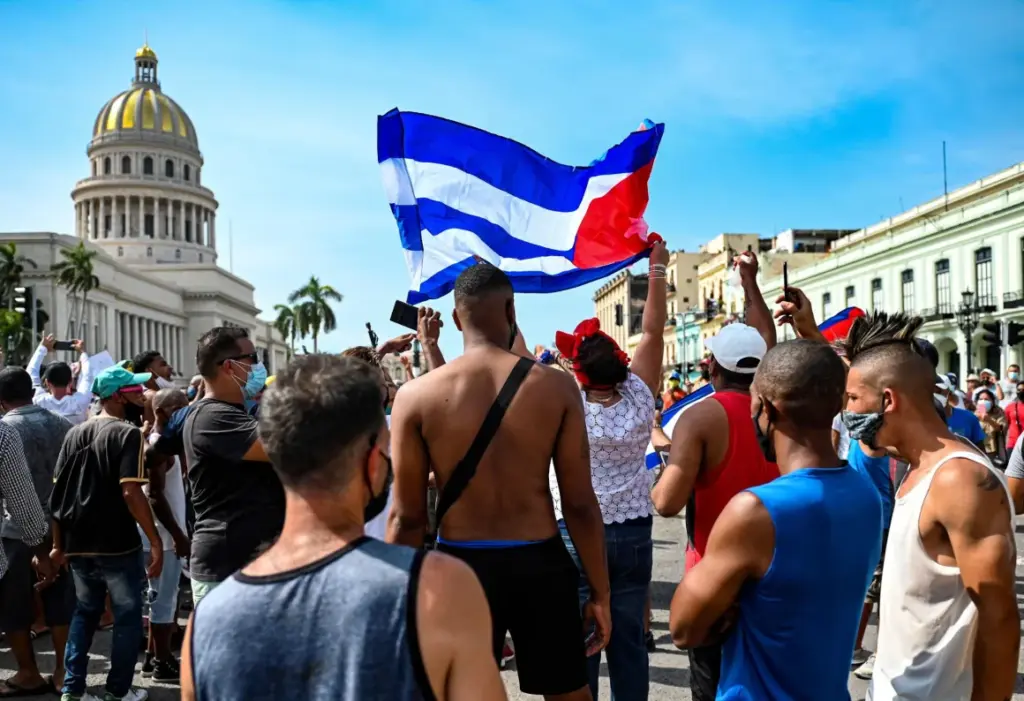
Many observers note parallels with the July 2021 protests, the largest anti-government demonstrations on the island in decades, which were sparked by similar frustrations over shortages and blackouts.
Cubans demonstrate in rare protests in Havana on July 11, 2021. Yamil Lage/AFP/Getty Images
For now, the Cuban government appears focused on managing the crisis through a combination of rationing, diplomatic outreach, and internal security measures. Whether that strategy can stabilize the country in the months ahead remains uncertain.
What happens next may depend largely on one critical factor: energy.
If fuel deliveries resume and electricity outages ease, tensions could stabilize. But if shortages worsen, or if the power grid suffers another major failure, then analysts warn the island could see broader unrest.
For a government already facing its most severe economic stress in decades, the margin for error is narrowing.
On Friday, U.S. forces struck over 90 targets designated as military infrastructure belonging to the Islamic Revolutionary Guard Corps (IRGC). The strikes destroyed naval mine storage facilities, missile bunkers, various air defense systems, and other strategic points of interest while keeping the oil infrastructure on the island intact.
Iran’s Assembly of Experts has named Mojtaba Khamenei, the 56-year-old son of the assassinated Ayatollah Ali Khamenei, as the Islamic Republic’s third Supreme Leader. The announcement, broadcasted on state television early Monday local time, marks the first hereditary transfer of power since the 1979 revolution and comes as the country reels from the devastating US-Israeli military campaign, resulting in the death of his father.
Mojtaba Khamenei, a low profile cleric with deep ties to the Islamic Revolutionary Guard Corps (IRGC), now holds ultimate authority over Iran’s military, judiciary, media, and foreign policy at the most perilous moment in the nation’s 47-year history.
Timeline of Succession
Who Is Mojtaba Khamenei?
Born on September 8, 1969, in Mashhad, Mojtaba is the second of Ali Khamenei’s six children. He briefly served in the Iran-Iraq War as a teenager, then pursued seminary studies in Qom from age 30 (unusually late for a cleric). He holds mid-ranking clerical credentials and has never held elected office or given a public speech. Despite his reclusive image, He wields significant backdoor influence. He is accused of orchestrating IRGC and Basij interference in the 2005 and 2009 presidential elections and of suppressing the Green Movement.
Reports indicate he lost mother and wife in addition to his father in the recent US-Israeli strikes.
Significance of the Appointment
The decision is historic and deeply controversial. The Islamic Republic has always rejected hereditary rule, emphasizing clerical merit over bloodlines. Mojtaba’s selection pushed by the IRGC represents the first father to son transfer of supreme power and cements hardliner dominance at a time when reformist voices have been sidelined. It seems like the appointment of Mojtaba is the establishment of a puppet as the figurehead to ensure their control and power in the regime. It also looks like the plot to ensure policy continuity for the regime, uncompromising opposition to the West, support for regional proxies and tight control over the nuclear program. However, it risks eroding legitimacy among a war affected population already facing economic collapse and civilian casualties from the protests.
What Lies Ahead: His Fate
Mojtaba Khamenei assumes power as a marked man in the middle of the Islamic Republic’s greatest existential crisis. Israel has explicitly threatened his life alongside Trump’s comments suggesting Washington will not accept him without concessions. His leadership remains untested; he has never managed public crises or addressed the nation. Mojtaba’s personal tragedy, his father, mother, his sister and wife may harden his stance against compromise. Yet the war’s devastation, severed oil revenues and international isolation pose enormous challenges. Whether he can unify a fractured elite, rally a grieving public and navigate potential further assassinations will define not only his fate but the survival of the Islamic Republic itself.
A senior cleric told state media,: “The nation must rally behind the new leader to preserve our dignity and independence.” In the streets of Tehran, however, the mood remains one of shock, defiance and uncertainty as explosions continue to echo across the region.
Update: As of about 6:20 a.m. local time (05:20 UTC) on March 8, police say there have been no major developments in the investigation into the blast at the U.S. Embassy in Oslo. Authorities have appealed for public tips, while reiterating that no one was injured and the damage was limited to the consular entrance. The large police response remains in place, but officials continue to say the situation is stable, contained, and poses no immediate danger to the public.
A blast struck the entrance to the consular section of the U.S. Embassy compound in Oslo early Sunday, damaging the entryway and sending heavy smoke into the air, but causing no reported injuries, according to Norwegian authorities and local media.
The explosion happened at about 1:00 a.m. local time at the embassy complex in Huseby, western Oslo. Police said the damage appears to be limited to the consular entrance, while emergency teams, bomb technicians and forensic investigators continue working at the scene. Authorities have not said what caused the blast, who may be responsible, or whether the incident was targeted.
By around 2:30 a.m. local time, police incident commander Michael Dellemyr said investigators had formed an idea of what caused the explosion but were withholding that information for investigative reasons. Officers were still searching the surrounding area with dogs, drones and helicopters to rule out any additional threat and to look for possible perpetrators.
UPDATE: Norwegian police are looking for suspects following the explosion at the US embassy in Oslo – NRK https://t.co/ZLvu62qKcQ
The response remained extensive through the early morning hours. Sørkedalsveien was closed, and police established a security cordon of roughly 700 meters around the embassy, with vehicle checkpoints and inspections in place.
Residents near the embassy told VG they were jolted awake by a powerful bang. One witness said the explosion was strong enough to shake nearby homes, and that heavy smoke could be seen rising from the embassy grounds.
Police said they remain in direct contact with embassy officials. As of the latest update, neither the U.S. Embassy in Oslo nor the U.S. State Department had issued a public statement. The embassy’s website also showed no security alerts, closures or disruptions to normal operations.
Authorities have so far linked the investigation to no broader event, and no suspects, motive or attribution have been announced. Police say this remains the only confirmed incident.
The investigation is ongoing, and more information is expected as Norwegian authorities continue examining the scene in the hours ahead.
A deadly tornado outbreak swept across parts of the central United States on Friday, March 6, leaving several people dead and causing widespread damage in multiple states.
Early reports say at least eight people were killed as tornadoes struck communities in states including Michigan and Oklahoma. Emergency crews spent Saturday searching damaged areas and assessing destruction while the National Weather Service works to confirm how many tornadoes touched down during the outbreak.
Some of the most severe damage occurred in southern Michigan, where a tornado hit areas near Union City and along the St. Joseph River. Officials in Branch County confirmed multiple fatalities and several injuries after homes were torn apart and debris scattered across roads and farmland. Another death was reported in nearby Cass County as the storm system moved through the region.
Residents described roofs ripped from houses, trees snapped in half, and vehicles thrown across yards. Hundreds of people were left without power overnight as crews worked to clear roads and restore electricity.
This video shows the Three Rivers tornado as it was touching down, captured by Walt Zablocki at the Waste Management facility on the southwest part of town. Note the multiple vortices swirling around the parent circulation. This as it was doing damage along US-131. #MIWxpic.twitter.com/AaPcoCpUrX
— Meteorologist Will Haenni WWMT (@WillWWMT) March 7, 2026
Earlier in the outbreak, two people were killed in western Oklahoma after a tornado struck near Fairview. Authorities said a mother and her teenage daughter died when their vehicle was caught in the storm along U.S. Highway 60. They have been identified as mother and daughter, Jodie and Lexi Owens.
Additional fatalities were reported in Okmulgee County, Oklahoma, where a tornado damaged homes and businesses in the town of Beggs. Emergency crews responded to reports of destroyed buildings, overturned vehicles, and downed power lines as the storms moved through the area.
The storms were part of a larger severe weather system that moved across the Plains and Midwest between Thursday and Saturday, producing several tornado warnings and large areas of damaging winds and hail.
Meteorologists say it may take several days for the National Weather Service to complete damage surveys and determine how many tornadoes formed and how strong they were.
IWX issues Damage Survey PNS (Max: EF3) at Mar 7, 1:15 PM EST …NWS Damage Survey for 03/06/26 Tornado Event… https://t.co/tNwLsRAPLz
Iran’s Supreme Leader Ayatollah Ali Khamenei was eliminated during joint U.S.-Israeli strikes in Tehran. His death marks a new chapter in Iranian history, one where the regime’s nuclear threat is no longer a reality.
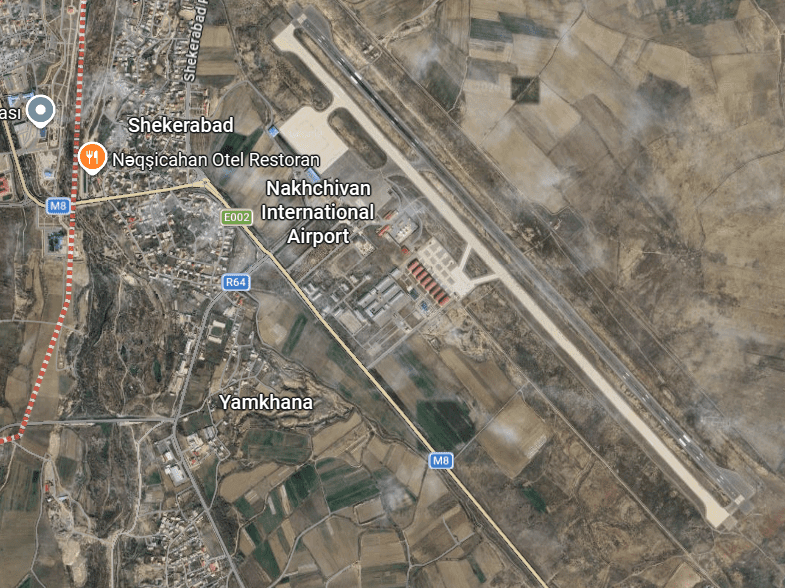
As the war in the Middle East continues to spread, in the last 24 hours, drones and missiles have targeted both Türkiye and Azerbaijan, with 3 drones originating from Iran hitting locations within the Nakhchivan Autonomous Republic, injuring two according to reports from officials.
Nakhchivan International airport was targeted by Iranian drones
Azerbaijan in their official statement clarified their “right to take appropriate actions”, with them also summoning the Iranian ambassador in result of the strikes.
In a continued escalatory manner, Iran and its proxies have targeted multiple countries, including European regions. RAF Akrotiri in Cyprus, an oversea British military base came into direct contact from Iranian drones, with one impacting the base causing minor damage and no injuries or fatalities.
This new development in the Caucasus region comes less than 24 hours ago that Türkiye reported an Iranian missile being fired towards their territory, with the outcome of it being shot down by air defense.
BREAKING: Turkey says an Iranian missile was fired at Turkey, intercepted before reaching target pic.twitter.com/Z6pzEhdWQf
Missiles and drones continue to fall in other regions too, with Saudi Arabia also confirming 3 cruise missiles being intercepted in al-Kharj, with other Gulf States continuing their operations in downing projectiles.
The continued attacks by Tehran comes as United States and Israeli forces continue to hit targets throughout Iran, with military installations and governmental locations coming under attacks since last Saturday.
We use cookies to ensure that we give you the best experience on our website. If you continue to use this site we will assume that you are happy with it.AcceptPrivacy Policy